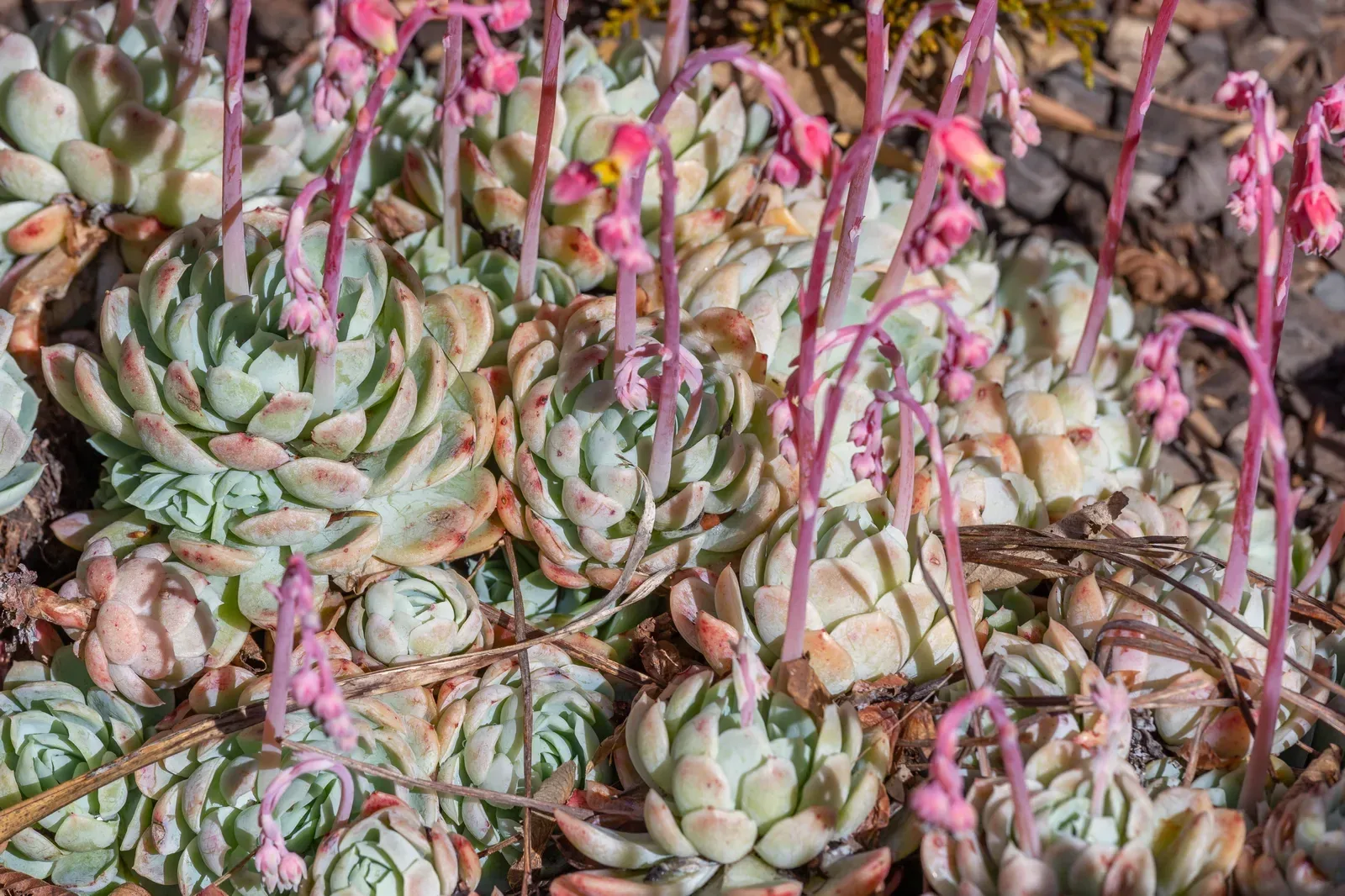
| ☀️ Light | Full sun |
|---|---|
| 💧 Water | Low (allow soil to dry) |
| 🪴 Soil | Gritty cactus mix |
| 🌡️ Temp | 5°C – 30°C |
| 🐾 Safety | Cats: non-toxic · Dogs: non-toxic (ASPCA Animal Poison Control) |
| 📏 Mature size | 15 cm |
Where It Grows & Climate Tolerance
Pet & Companion Animal Toxicity (Echeveria)
Rosette succulent that needs the sunniest window; pet-safe and drought tolerant.
Care instructions
Care Guide & Maintenance Routine
Full sun or strongest light, soak then dry fully, gritty mix.
Light & Sunlight
Sunniest window or grow light; stretches in low light.
Watering Schedule
Soak and dry fully. Very little in winter.
Potting Mix & Drainage
Gritty cactus mix
Temperature & Humidity
Protect from frost; summer outdoors in sun.
Echeveria rosettes are among the most bought succulents in Canada, but most indoor failures come from too little light.
Give the sunniest window you have or a grow light. Water deeply only when the gritty mix is dry, and very sparingly in winter.
Summer outdoors in full sun works after frost risk ends — harden it gradually. Bring it in before autumn frost. Echeveria is pet-safe per the ASPCA.
Remove dead lower leaves to keep pests away. New plants grow from single leaves laid on dry mix. Terracotta pots help soil dry faster in humid summers.
Most echeverias in Canadian homes stretch because winter windows are weak. A small LED grow light on a timer for 12 hours keeps rosettes tight. Water only when dry, and never leave water sitting in the leaf cup. Summer outdoors after frost, hardened slowly, builds the tightest shape.
Bring pots in before autumn frost. Pet-safe status makes echeveria a good shelf plant around cats that ignore succulents. Mealybugs hide between leaves — inspect new nursery plants. Gritty mix and terracotta are worth the small extra cost for Canadian winters indoors.
Rotate pots weekly so rosettes do not lean. If a stem elongates from winter dark, cut the top rosette, let the cut dry a day, and reroot on dry mix while the old stump may make pups. Never leave outdoor pots out through a Canadian freeze. Group succulents on a sunny plant stand to raise humidity slightly without wetting leaves. Label cultivars — many look similar when stressed and stretched.
Seasonal rhythm
Seasonal Calendar
A month-by-month calendar for Echeveria in Canada is coming soon. See the light, water and temperature notes above.
Diagnostics
Common Problems & Troubleshooting
Stretching (low light); mushy leaves (overwater); sunburn (sudden full sun).
Pests & seasonal watch: Mealybugs.
- Root rot — Roots turn brown and mushy in soil that stays wet.
- Mealybugs — White cottony clumps in leaf joints, often with sticky honeydew.
- Edema — Corky or blistered spots on leaf undersides after the plant takes up more water than it can lose.
- Stem rot — The stem goes soft, dark or black at soil level and the top collapses.
Care encyclopedia · 1 guide
Guides & Articles for Echeveria
Q&A
Frequently Asked Questions
Why is my echeveria stretching?
Not enough light. Move to a sunnier window or add a grow light.
Is it safe for pets?
Echeveria is listed as non-toxic by the ASPCA.
How often to water?
Only when fully dry — less in winter.
Can it live outside in Canada?
Summer yes; bring it in before frost.
Similar Botanical Matches
Grower field notes
Reader Field Notes in Canada
Share how this plant performs in your local Canada climate.