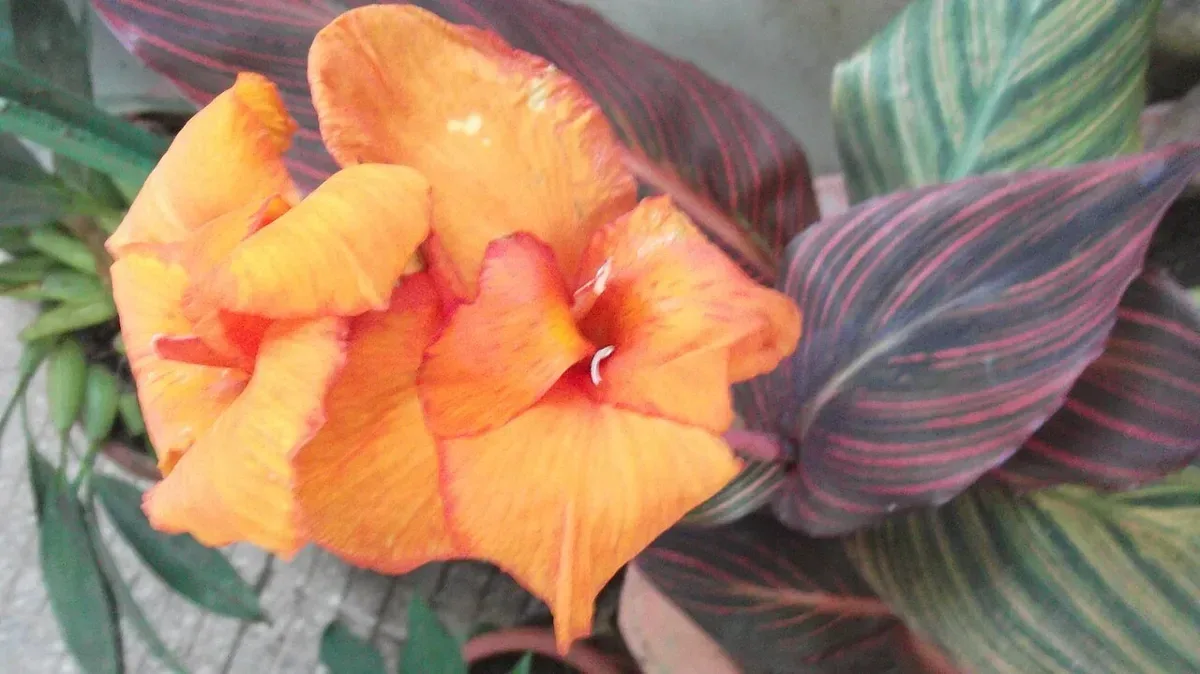
| ☀️ Light | Full sun |
|---|---|
| 💧 Water | High (consistently moist) |
| 🪴 Soil | Rich, moist soil high in organic matter |
| 🌡️ Temp | -4°C – 40°C |
| 🐾 Safety | Cats: non-toxic · Dogs: non-toxic |
| 📏 Mature size | 1.5 m |
Where It Grows & Climate Tolerance
Pet & Companion Animal Toxicity (How to Grow Canna Lily in Canada)
From Vancouver patios to Winnipeg boulevard planters and Muskoka cottage docks, cannas are a June-to-October showpiece. No Canadian province is mild enough to leave them out, so gardeners pot them up in April, plant after Victoria Day and haul them to the basement every autumn.
Care instructions
Care Guide & Maintenance Routine
Wake rhizomes on a sunroom shelf or under shop lights in April. Set them out once lilacs finish and nights stay mild. Soak beds weekly through the July heat, fertilize monthly, and snip spent spikes. When October frost blackens the foliage, fork them up, trim, air-dry in the garage, and box them in peat.
Light & Sunlight
NC State notes cannas flower poorly in shade, and UMN Extension recommends full sun and hot weather. A warm site with part-day sun, such as along a house wall, still gives flowers.
Watering Schedule
Cannas need steady moisture and plenty of water in hot weather. RHS notes they can grow at a pond edge with no more than 15 cm of water over the roots. Never let pots dry out in summer.
Potting Mix & Drainage
Rich, moist soil high in organic matter
Temperature & Humidity
Tender coast to coast. A late May cold snap in Calgary or Ottawa can set back early plantings, and the first September or October frost ends the display. Rhizomes left in frozen ground die, even in Niagara or Okanagan gardens.
Cannas in Canadian gardens
UMN Extension, writing for neighbouring Minnesota, notes that cannas are not hardy there and must be dug in fall after frost blackens the foliage. The same is true across Canada. Planted out as rhizomes or potted plants, they grow fast in July heat and flower from midsummer to frost, giving a tropical look to beds, boulevards and big patio pots. Université Laval's botanical garden in Québec City grows them in summer displays.
Getting a head start
Canadian summers are short, so start rhizomes in pots indoors 4 to 6 weeks before the last frost. RHS starts them at 10 to 16°C; a warm windowsill or basement under lights works. UMN Extension plants them 8 to 10 cm deep in pots and transplants them outside when the danger of frost has passed. Harden them off for a week first.
Planting out
- Vancouver, Victoria: late April to May.
- Toronto, Niagara, Montréal: after Victoria Day.
- Calgary, Edmonton, Regina, Saskatoon, Winnipeg: early June, after the last frost.
- Halifax, Moncton: early June in a warm, sheltered spot.
UMN Extension spaces rhizomes 45 to 90 cm apart in full sun, in soil high in organic matter.
Summer care
Water deeply in July and August, feed every few weeks, and deadhead spent spikes. Containers on a hot deck may need water every day. On the Prairies, give shelter from wind and hail, which shred the leaves.
Lifting and storing
Wisconsin Horticulture advises letting frost kill the tops but digging before a hard freeze turns the stems to mush. Dry the rhizomes for a day or two, then wrap them in newspaper or layer them in peat moss and store in paper bags or cardboard boxes at 7 to 10°C. UMN Extension suggests a basement at 4 to 10°C. Check them during winter; if they shrivel, add a little moisture. Divide in spring, keeping at least three eyes per piece.
Boulevards, cottages and short Prairie summers
Many Canadian cities use cannas in summer boulevard planters and civic flower beds, lifting them each autumn. At the cottage, a half barrel of cannas on the dock makes a bold show from the August long weekend until the Thanksgiving frost. In Edmonton or Saskatoon, choose shorter, earlier cultivars, start them indoors by mid-April, and plant them against a south-facing wall; the extra warmth makes a real difference in a frost-free season of only about four months.
A typical season in Toronto
Pot rhizomes in early April, move them outside to harden off in mid-May, and plant after the long weekend. The first spikes open in July and the show peaks in late August. The first frost usually arrives in October; dig within a few days and store in the basement until April.
Questions from Canadian readers
- Can I leave cannas in the ground with heavy mulch? Not reliably. NC State advises lifting cannas in zone 7 and colder, which covers nearly all of Canada.
Seasonal rhythm
Seasonal Calendar
| Month | Care Tasks | Seasonal Focus |
|---|---|---|
| Jan | protect | January: open the cardboard box; cut out mouldy spots. |
| Feb | protect | Family Day: spritz shrivelled pieces, repack in peat. |
| Mar | protect | March break: shop for fresh stock; reject mottled ones. |
| Apr | plant | April: split clumps, pot up under shop lights. |
| May | plant | Victoria Day long weekend: harden off, then plant. |
| Jun | feed | June: soak deck tubs; fertilize monthly. |
| Jul | prune | Canada Day: first spikes open; snip faded ones. |
| Aug | prune, feed | Civic holiday heat: water planters every morning. |
| Sep | prune | Labour Day: final fertilizer; keep tidying. |
| Oct | protect | Thanksgiving frost: fork up clumps, trim to stubs. |
| Nov | protect | Remembrance Day: wrap in newspaper, store near 8°C. |
| Dec | protect | December: keep boxes clear of the furnace. |
Diagnostics
Common Problems & Troubleshooting
No flowers in shade or dry soil; streaked, mottled leaves from virus; ragged leaves from wind or chewing insects; rust spots; rhizome rot in cold, wet storage; frost-blackened leaves.
Pests & seasonal watch: Japanese beetles skeletonize leaves in southern Ontario and Quebec during July. Slugs chew shoots in soggy BC beds. Big-box bargain rhizomes sometimes carry canna virus; reject any with mottled foliage. Damp basement storage invites mould.
- Yellow leaves — Leaves fade from green to yellow, often starting at the bottom.
- Root rot — Roots turn brown and mushy in soil that stays wet.
- Aphids — Clusters of small soft insects on new tips, often sticky.
- Leaf spot — Brown or tan spots with a yellow halo, sometimes with tiny dots in the centre.
- Underwatering — Soil is bone dry and leaves are crispy, curled or dull.
- Curling — Leaves cup, roll or twist instead of lying flat.
- Cold damage — Dark, water-soaked or blackened patches after a cold night or an AC blast.
- No flowers — A flowering houseplant stays leafy and will not bloom.
Similar Botanical Matches
Grower field notes
Reader Field Notes in Canada
Share how this plant performs in your local Canada climate.