
| ☀️ Light | Medium light |
|---|---|
| 💧 Water | Moderate (lightly moist) |
| 🪴 Soil | Fertile, well-drained soil with organic matter |
| 🐾 Safety | Cats: not verified · Dogs: not verified |
Where It Grows & Climate Tolerance
Pet & Companion Animal Toxicity (Wonga Wonga Vine (Pandorea pandorana) in Australia)
Not yet verified: Toxicity status for cats, dogs, and horses has not yet been confirmed against veterinary poison-control records. Keep out of reach of pets or consult your veterinarian.
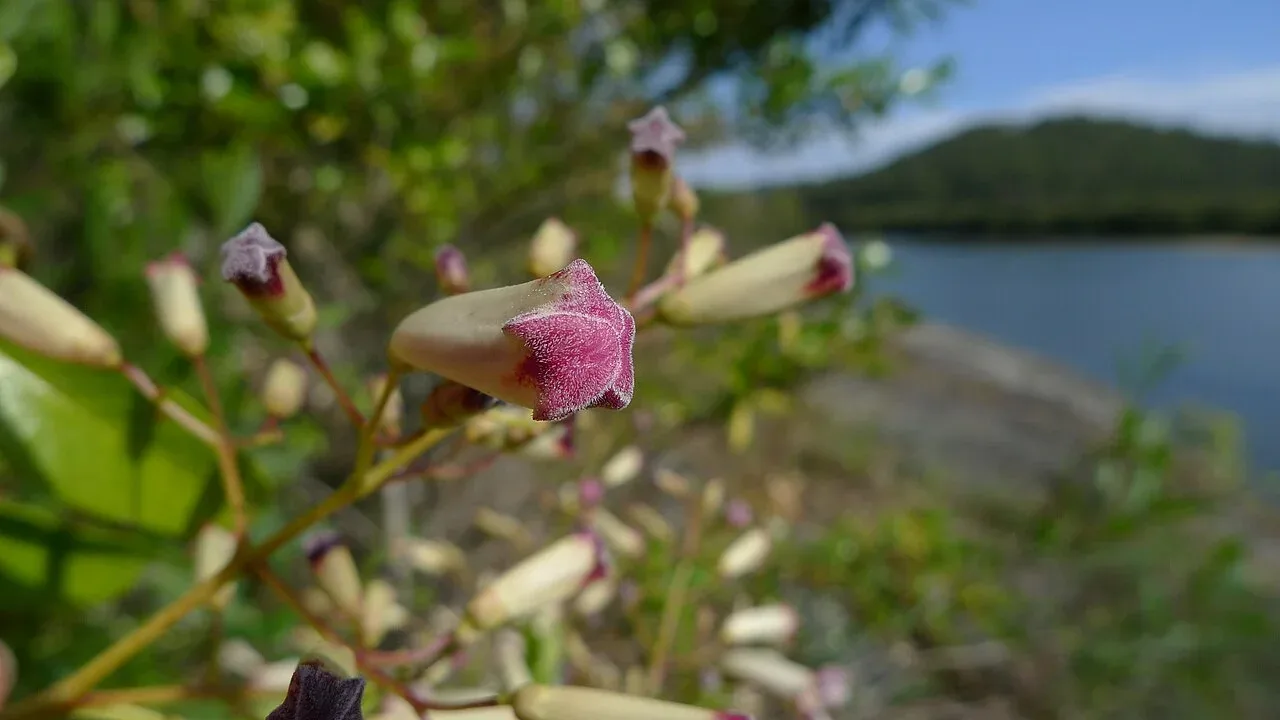
This vigorous native twining vine has glossy leaves and variable cream to brownish tubular flowers. Give it a strong support and dependable moisture.
Care instructions
Care Guide & Maintenance Routine
Train onto a sturdy trellis or pergola in semi-shade. Use fertile, drained soil that stays reasonably moist and shelter young plants from frost.
Light & Sunlight
Semi-shade supports strong growth. In cooler districts some morning sun is suitable; avoid an exposed hot site where soil dries rapidly.
Watering Schedule
Keep soil evenly moist during establishment and dry spells. Avoid prolonged drying or large swings in soil moisture; ensure drainage.
Potting Mix & Drainage
Fertile, well-drained soil with organic matter
Temperature & Humidity
In frost-prone areas choose a sheltered position. ANBG reports light-frost tolerance only for the Golden Showers cultivar, so avoid assuming all forms have the same hardiness.
Pandorea pandorana is a vigorous woody climber native across a wide range of Australian habitats. The tubular flowers are conspicuous in spring and can be cream, white or brownish, often with a darker throat. In NSW, PlantNET records flowering from June to December, so the precise season varies by place and form.
Australian National Botanic Gardens reports best performance in semi-shade and richer soil with fairly even year-round moisture. Guide stems onto a strong support and prune after flowering if they outgrow their space. Avoid letting the liana wind around younger trees. In cold districts choose a sheltered site; published frost advice is for the Golden Showers cultivar, not a guarantee for every plant. Check the botanical label: P. jasminoides is a separate species sometimes given the same common name.
Seasonal rhythm
Seasonal Calendar
| Month | Care Tasks | Seasonal Focus |
|---|---|---|
| Jan | Routine check | Check mulch and water during summer dry spells; keep the support secure. |
| Feb | Routine check | Guide long stems back onto the trellis and monitor moisture in hot weather. |
| Mar | Routine check | After heavy rain check drainage and remove stems crossing paths or gutters. |
| Apr | Routine check | In mild districts plant into prepared soil and water until established. |
| May | Routine check | Inspect supports and renew mulch before cool weather. |
| Jun | Routine check | In NSW some plants may flower in winter; avoid hard pruning while buds are present. |
| Jul | Routine check | Protect young growth from frost in exposed districts and keep soil from drying completely. |
| Aug | Routine check | Check for early flowers and tie in new shoots loosely. |
| Sep | Routine check | Enjoy spring flowering and monitor water as temperatures rise. |
| Oct | Routine check | After flowering, trim vigorous stems to keep the climber within its support. |
| Nov | Routine check | Use tip pruning for bushier young growth; check for volunteer seedlings. |
| Dec | Routine check | Water as needed and keep stems clear of small trees and structures. |
Diagnostics
Common Problems & Troubleshooting
Weak growth from dry soil; frost damage in exposed sites; excessive growth onto smaller trees or unsuitable supports.
Pests & seasonal watch: Monitor foliage and stems for pests or damage. ANBG found its Golden Showers planting pest free, which does not establish immunity elsewhere.
Similar Botanical Matches
Keep exploring
Related plants
Grower field notes
Reader Field Notes in Australia
Share how this plant performs in your local Australia climate.