
| ☀️ Light | Medium light |
|---|---|
| 💧 Water | Moderate (lightly moist) |
| 🪴 Soil | Well-drained garden soil |
| 🐾 Safety | Cats: not verified · Dogs: not verified |
Where It Grows & Climate Tolerance
Pet & Companion Animal Toxicity (Purple Coral Pea (Hardenbergia violacea) – Australia)
Not yet verified: Toxicity status for cats, dogs, and horses has not yet been confirmed against veterinary poison-control records. Keep out of reach of pets or consult your veterinarian.
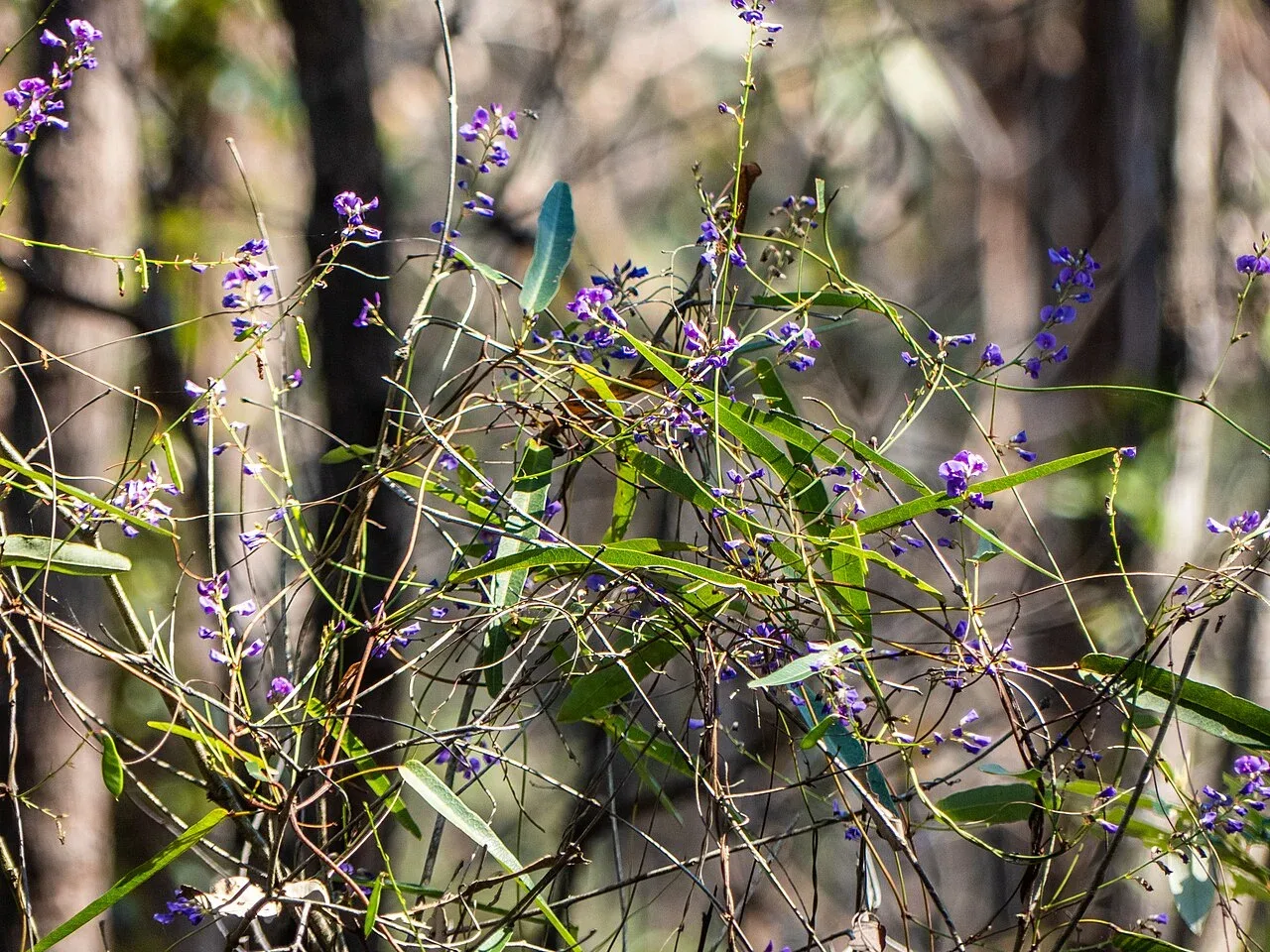
Purple Coral Pea is a native vine or groundcover with purple pea flowers, often seen around late winter and spring in eastern Australia.
Care instructions
Care Guide & Maintenance Routine
In NSW, Victoria, Queensland and the ACT, plant in sun or part shade with drainage. Support climbing stems and water new plants during dry periods.
Light & Sunlight
A sunny or partly shaded position suits this species; flowering may be stronger with adequate light.
Watering Schedule
Water new plants while establishing. Check soil moisture during extended dry periods.
Potting Mix & Drainage
Well-drained garden soil
Temperature & Humidity
Australian summer is December–February and winter is June–August. Growth and flowering vary across Queensland, NSW, Victoria and the ACT.
Hardenbergia violacea is a twining or scrambling Australian native found in eastern states. It can climb over supports or spread across the ground, so choose a form and site that match the available space. The purple pea flowers are a conspicuous late-winter and spring feature; around Canberra, the Australian National Botanic Gardens records flowering in September and October. Give it well-drained soil and sun or semi-shade. A sturdy trellis suits climbing forms, and regular guidance prevents stems from covering smaller neighbours. Establish new plantings with water through dry spells, then adjust to local rain and soil moisture. After flowering, trim long or dead stems to control size. In hotter Queensland gardens, monitor container plants more often in summer. In colder ACT or Victorian sites, avoid saturated winter roots. Ask a native nursery about local provenance when planting near bushland.
Seasonal rhythm
Seasonal Calendar
| Month | Care Tasks | Seasonal Focus |
|---|---|---|
| Jan | Routine check | In January, keep young vines watered during dry heat and check trellis ties for rubbing. |
| Feb | Routine check | February heat can dry containers quickly; water after checking soil moisture, not by fixed schedule. |
| Mar | Routine check | In March, remove dead stems and plan a well-drained site for autumn planting. |
| Apr | Routine check | April planting can suit mild districts; water in and guide shoots onto support. |
| May | Routine check | During May, check drainage before winter rains and keep mulch clear of the crown. |
| Jun | Routine check | In June, avoid unnecessary pruning of stems that may carry developing buds. |
| Jul | Routine check | July is a time to inspect supports and protect new plants from unusual local frost. |
| Aug | Routine check | In August, watch early blooms and avoid tangling with nearby shrubs. |
| Sep | Routine check | September brings peak spring colour in many temperate districts; observe flowers and pollinators. |
| Oct | Routine check | After October flowering, trim overlong shoots and remove damaged growth. |
| Nov | Routine check | In November, guide new extension growth and check irrigation before summer. |
| Dec | Routine check | December warmth increases growth; check climbing stems and water young plants through dry spells. |
Diagnostics
Common Problems & Troubleshooting
Poor drainage may stress roots; lack of support can leave climbing forms tangled.
Pests & seasonal watch: Check tender stems for aphids. If foliage yellows, test drainage and root moisture before treating for pests.
Similar Botanical Matches
Keep exploring
Related plants
Grower field notes
Reader Field Notes in Australia
Share how this plant performs in your local Australia climate.