| ☀️ Light | Full sun |
|---|---|
| 💧 Water | Moderate (lightly moist) |
| 🪴 Soil | Fertile, well-drained soil |
| 🐾 Safety | Cats: not verified · Dogs: not verified |
| 📏 Mature size | 15.0 m |
Where It Grows & Climate Tolerance
Pet & Companion Animal Toxicity (Jacaranda in Australia)
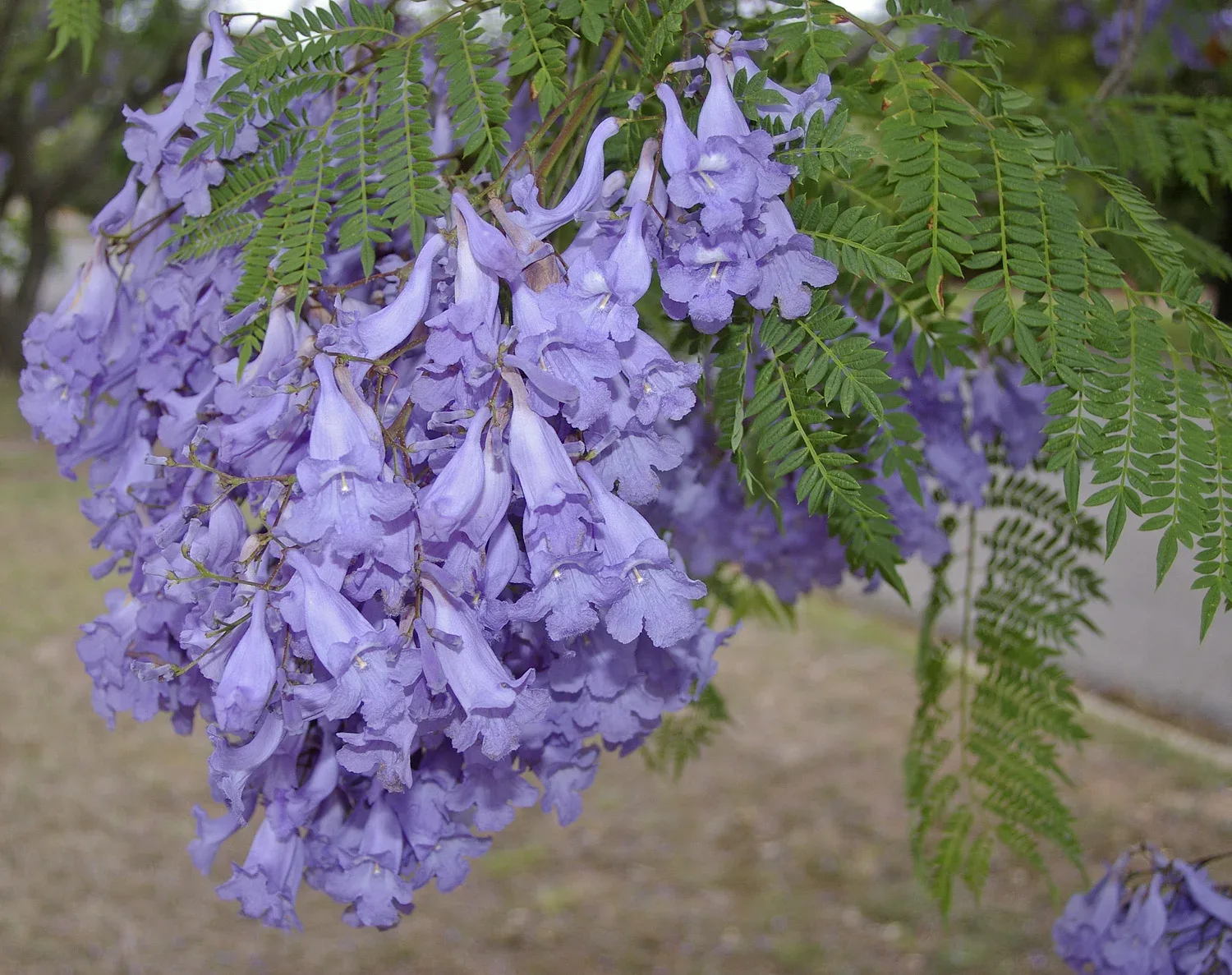
A large, blue-purple flowering tree suited to sunny, frost-sheltered gardens where local rules allow planting.
Care instructions
Care Guide & Maintenance Routine
Give this tree full sun, good drainage and room to spread. Water young trees in dry spells. Avoid planting near bushland where seedlings may escape.
Light & Sunlight
Full sun gives the strongest growth and flowering; young plants benefit from shelter.
Watering Schedule
Water new trees deeply during establishment. Established trees need extra water in extended drought.
Potting Mix & Drainage
Fertile, well-drained soil
Temperature & Humidity
Frost tender; young trees need a warm, sheltered site. Flowering is most reliable with full sun.
Australian jacarandas make their main blue-purple display in spring, often in November in New South Wales. The tree can reach about 15 m tall and needs space for a broad crown. It is best suited to warm, sunny sites with well-drained soil and protection from frost.
Water a new tree deeply during establishment. Keep mulch away from the trunk and prune lightly while young to develop a sound shape. A mature tree needs professional care if large limbs require work.
Jacaranda is an introduced species that has naturalised in parts of NSW and Queensland. Brisbane City Council identifies it as pest vegetation under a local law. Check local council guidance before planting and prevent seedlings from spreading into bushland or waterways.
Seasonal rhythm
Seasonal Calendar
| Month | Care Tasks | Seasonal Focus |
|---|---|---|
| Jan | Water young trees in summer heat; check seedlings. | |
| Feb | Deep-water new trees during dry weather. | |
| Mar | Check soil moisture; remove unwanted seedlings. | |
| Apr | Watch for frost in cooler districts; mulch young roots. | |
| May | Protect young trees from cold nights. | |
| Jun | Keep young trees sheltered from frost. | |
| Jul | Assess frost damage after the coldest weather. | |
| Aug | Water only if dry; plan spring planting. | |
| Sep | Plant after frost risk passes; water in well. | |
| Oct | Watch for new growth and flower buds. | |
| Nov | Enjoy flowers; keep fallen seed pods out of bushland. | |
| Dec | Water young trees in heat; monitor seed pods. |
Diagnostics
Common Problems & Troubleshooting
Poor flowering in deep shade or on immature trees; frost injury; seedling spread into nearby natural areas.
Pests & seasonal watch: Main local concern is seedling escape in some NSW and Queensland areas; inspect for pests or dieback but do not use routine pesticide.
Similar Botanical Matches
Grower field notes
Reader Field Notes in Australia
Share how this plant performs in your local Australia climate.