| ☀️ Light | Full sun |
|---|---|
| 💧 Water | Moderate (lightly moist) |
| 🪴 Soil | Deep, well-drained soil |
| 🐾 Safety | Cats: not verified · Dogs: not verified |
Where It Grows & Climate Tolerance
Pet & Companion Animal Toxicity (Gymea Lily (Doryanthes excelsa) in Australia)
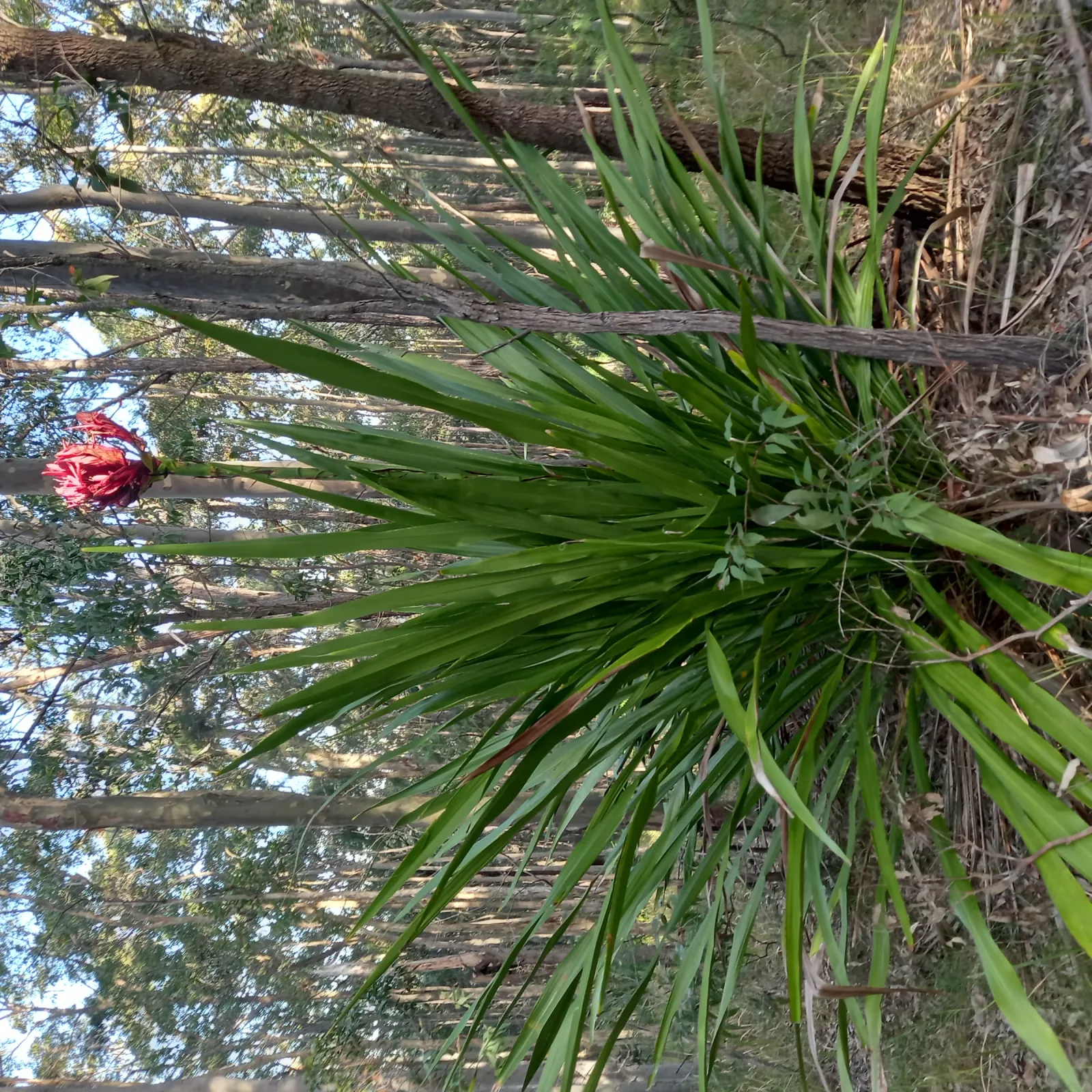
This NSW native makes a large leaf clump and a tall stem of red flowers. It needs space, deep soil and regular water.
Care instructions
Care Guide & Maintenance Routine
Plant in a large bed with deep, well-drained soil. Give sun or part shade and keep the plant watered in dry weather.
Light & Sunlight
Full sun or part shade suits Gymea Lily. Leave room above the plant for the tall flower stem.
Watering Schedule
Keep the soil watered, especially while the plant establishes and during dry spells. Drainage still matters.
Potting Mix & Drainage
Deep, well-drained soil
Temperature & Humidity
Leaves are frost resistant, but developing buds may need protection during heavy frost. ANBG has grown the species in Canberra.
Doryanthes excelsa is native to parts of coastal New South Wales. It has long, sword-shaped leaves and a tall flowering stem topped by red flowers. PlantNET records spring flowering in the wild. At the Australian National Botanic Gardens in Canberra, flowering has been seen in October and November. Timing varies by site.
Choose a large space with deep, well-drained soil. Sun or part shade both work. Water regularly, especially while the clump settles in. In places with heavy frost, protect developing flower buds. A plant raised from seed can take about eight years to bloom, so a young plant may not flower for some time.
Seasonal rhythm
Seasonal Calendar
| Month | Care Tasks | Seasonal Focus |
|---|---|---|
| Jan | Water during summer dry spells and check young clumps often. | |
| Feb | Check mulch and keep the leaf base clear. | |
| Mar | Watch for seed capsules on plants that flowered. | |
| Apr | Sow fresh seed if propagating; allow years before first bloom. | |
| May | Check drainage before winter rain. | |
| Jun | Protect developing flower buds where heavy frost occurs. | |
| Jul | Remove dead leaves, leaving healthy growth in place. | |
| Aug | Plan planting in deep soil with room for a tall flower stem. | |
| Sep | Give a small slow-release feed if growth is weak. | |
| Oct | Watch for spring flower stems; timing varies by district. | |
| Nov | Enjoy flowers where plants are mature enough to bloom. | |
| Dec | Water young plants as summer heat begins. |
Diagnostics
Common Problems & Troubleshooting
Poor growth in shallow or poorly drained soil; flower bud damage in heavy frost; lack of room for the tall stem.
Pests & seasonal watch: ANBG reports few pests or diseases in cultivation. Birds may visit the nectar-rich flower head.
Similar Botanical Matches
Grower field notes
Reader Field Notes in Australia
Share how this plant performs in your local Australia climate.