| ☀️ Light | Full sun |
|---|---|
| 💧 Water | Moderate (lightly moist) |
| 🪴 Soil | Well-drained, moderately acidic soil |
| 🐾 Safety | Cats: not verified · Dogs: not verified |
Where It Grows & Climate Tolerance
Pet & Companion Animal Toxicity (Flannel Flower (Actinotus helianthi) in Australia)
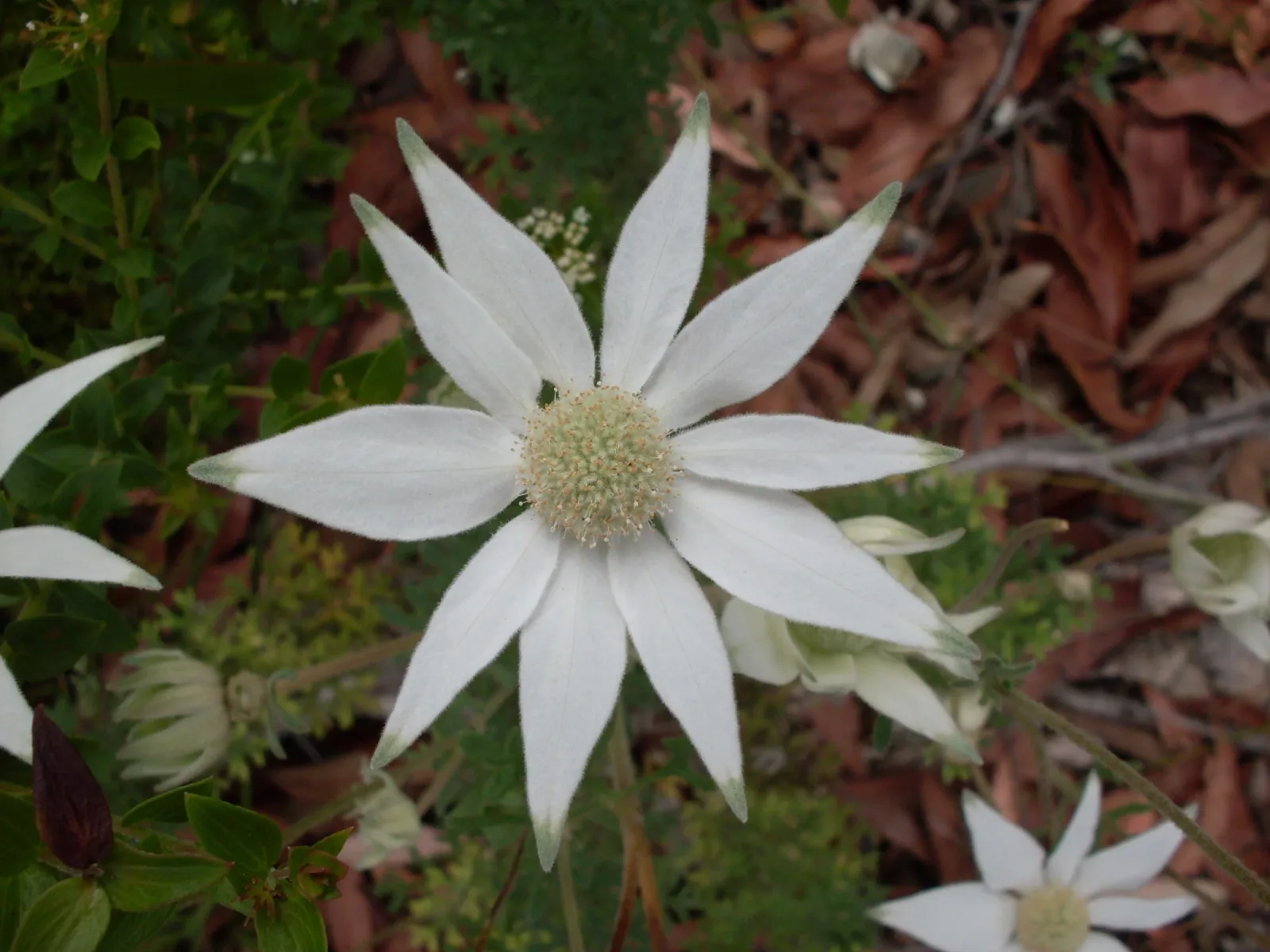
Soft white bracts surround small flowers above grey-green leaves. This native needs sharp drainage and gentle handling of its shallow roots.
Care instructions
Care Guide & Maintenance Routine
Use full sun or part shade and slightly acidic soil that drains fast. Keep roots out of wet ground and protect from strong wind.
Light & Sunlight
Full sun or part shade suits this plant. In hot exposed sites, offer some afternoon shelter.
Watering Schedule
Water during establishment and dry spells. Let excess water drain away; this species does not tolerate wet roots.
Potting Mix & Drainage
Well-drained, moderately acidic soil
Temperature & Humidity
Established plants can handle mild frost, but protect young plants in colder gardens. Avoid exposed wind that can disturb shallow roots.
Actinotus helianthi is native from south-eastern Queensland through New South Wales. Its leaves and white flower heads feel woolly. The showy white parts are bracts around small flowers. The ANBG reports flowers over much of the year, with a peak around September to November; timing varies by place.
Plant in well-drained, moderately acidic soil. Avoid wet feet. Its shallow root system makes it sensitive to wind and moving, so choose the final site carefully. A raised bed or well-drained pot can help. Mulch gently, water during dry spells and trim after flowering for a bushier plant.
Seasonal rhythm
Seasonal Calendar
| Month | Care Tasks | Seasonal Focus |
|---|---|---|
| Jan | Check pots often in summer heat, but do not leave roots wet. | |
| Feb | Water in dry spells and keep mulch clear of the stem. | |
| Mar | Trim only faded growth if the main flowering flush has passed. | |
| Apr | Check drainage after autumn rain. | |
| May | Keep shallow roots protected with a light mulch layer. | |
| Jun | Shelter young plants from hard frost in cool districts. | |
| Jul | Avoid moving established plants; check pots for drainage. | |
| Aug | Plan spring planting in a site sheltered from strong wind. | |
| Sep | Look for spring flowers and keep soil free-draining. | |
| Oct | Enjoy the main flowering season in many districts. | |
| Nov | Trim after the main bloom to keep growth bushy. | |
| Dec | Water new plants during warm, dry weather. |
Diagnostics
Common Problems & Troubleshooting
Root stress in wet soil, wind damage to shallow roots and transplant shock.
Pests & seasonal watch: If the plant declines, check soil drainage and root health first. Do not assume a pest without inspecting.
Similar Botanical Matches
Grower field notes
Reader Field Notes in Australia
Share how this plant performs in your local Australia climate.