
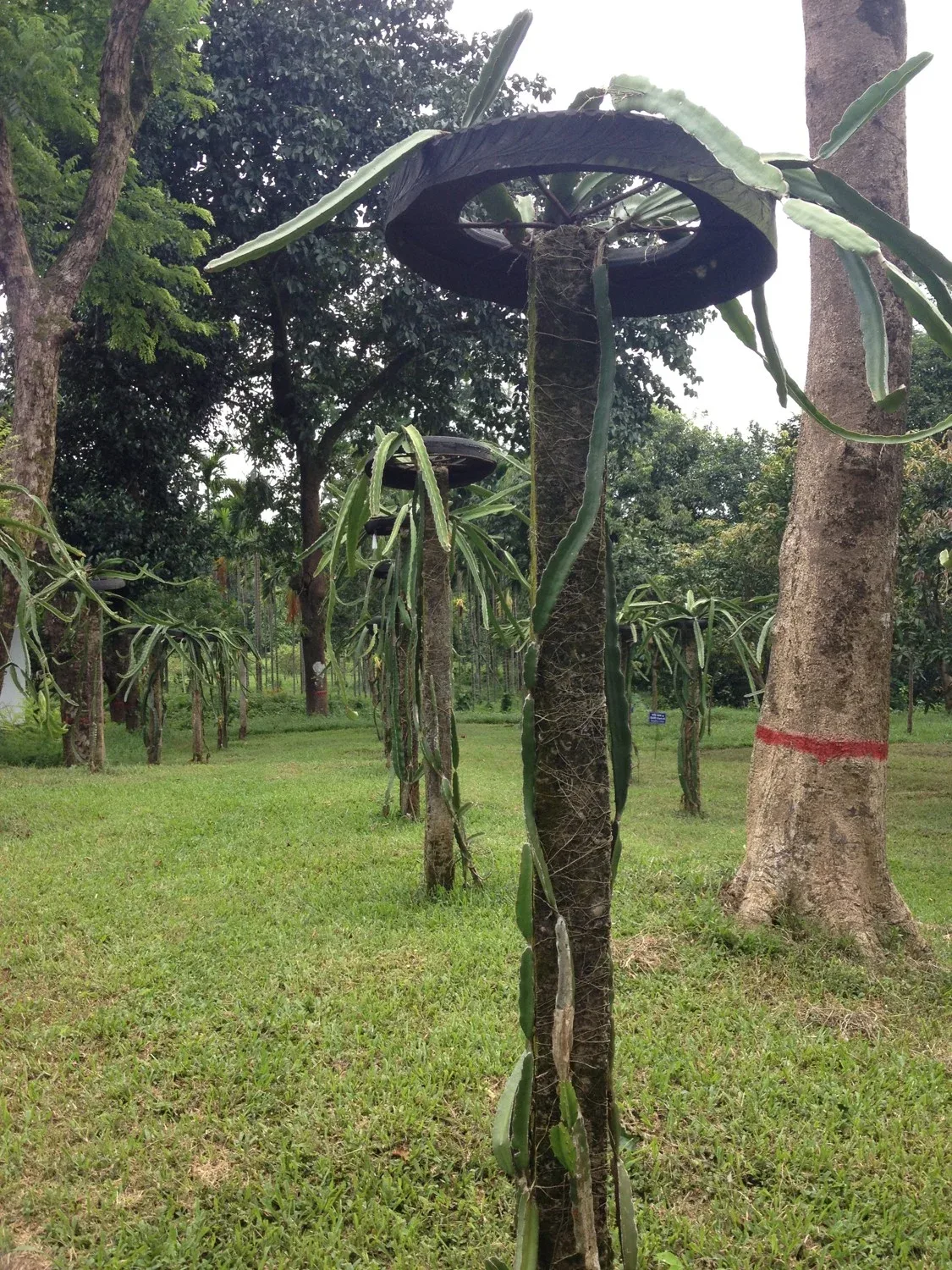
| ☀️ Light | Full sun |
|---|---|
| 💧 Water | Moderate (lightly moist) |
| 🪴 Soil | Free-draining cactus mix with coarse mineral particles |
| 🐾 Safety | Cats: not verified · Dogs: not verified |
Where It Grows & Climate Tolerance
Pet & Companion Animal Toxicity (Dragon Fruit Plant)
Not yet verified: Toxicity status for cats, dogs, and horses has not yet been confirmed against veterinary poison-control records. Keep out of reach of pets or consult your veterinarian.
A dragon fruit can climb a stout post in suitable parts of coastal Queensland and New South Wales. Cooler southern gardens benefit from a sunny wall, a mobile pot or a frost-free greenhouse.
Care instructions
Care Guide & Maintenance Routine
A dragon fruit can climb a stout post in suitable parts of coastal Queensland and New South Wales. Cooler southern gardens benefit from a sunny wall, a mobile pot or a frost-free greenhouse.
Light & Sunlight
Gradually introduce an established plant to several hours of sun. In extreme heat, use afternoon shade if stem surfaces start to bleach.
Watering Schedule
Water well in warm growing weather and let the top of the mix dry before watering again. Keep the stem base out of standing water.
Potting Mix & Drainage
Free-draining cactus mix with coarse mineral particles
Temperature & Humidity
Pitaya grows best in warmth and is frost sensitive. A greenhouse or a sheltered bright spot is needed where winters are cold.
A dragon fruit can climb a stout post in suitable parts of coastal Queensland and New South Wales. Cooler southern gardens benefit from a sunny wall, a mobile pot or a frost-free greenhouse.
Give summer storms somewhere to go
Use a draining mix and enough airflow around the canopy to dry the stems between showers. In exposed hot positions, watch for bleached patches and protect young plants from harsh afternoon sun.
Use the local winter temperature
Bring a container under cover in cooler districts before frosts. Water less often when the mix stays cold. Start more regular checks in spring as stems extend and prepare to hand-pollinate if your cultivar needs it.
Sources
Featured photo by Anik Sarker via Wikimedia Commons, CC BY-SA 4.0. Resized for display.
Seasonal rhythm
Seasonal Calendar
| Month | Care Tasks | Seasonal Focus |
|---|---|---|
| Jan | Routine check | Check open flowers at night while warm weather supports growth. |
| Feb | Routine check | Inspect the roots and lower stems after heavy summer rain. |
| Mar | Harvest | Watch fruit for even colour as it matures. |
| Apr | Routine check | Check the stability of posts before autumn wind. |
| May | Protect from frost/heat | Move exposed pots to a sheltered winter position. |
| Jun | Routine check | Reduce watering in cool southern gardens. |
| Jul | Routine check | Keep stems clear of frost and pots away from standing water. |
| Aug | Routine check | Inspect old ties before new spring growth. |
| Sep | Plant out | Root a healthy cutting in warm, bright shelter. |
| Oct | Routine check | Select a few leaders to train up the post. |
| Nov | Protect from frost/heat | Check new growth and offer shade during extreme heat. |
| Dec | Routine check | Check cultivar compatibility as flowers begin opening. |
Diagnostics
Common Problems & Troubleshooting
Soft, dark stem bases can develop in persistently wet mix. Bleached patches after a move into strong sun can be scorch. If flowers drop, check cultivar compatibility and night pollination.
Similar Botanical Matches
Keep exploring
Related plants

Grower field notes
Reader Field Notes in Australia
Share how this plant performs in your local Australia climate.