
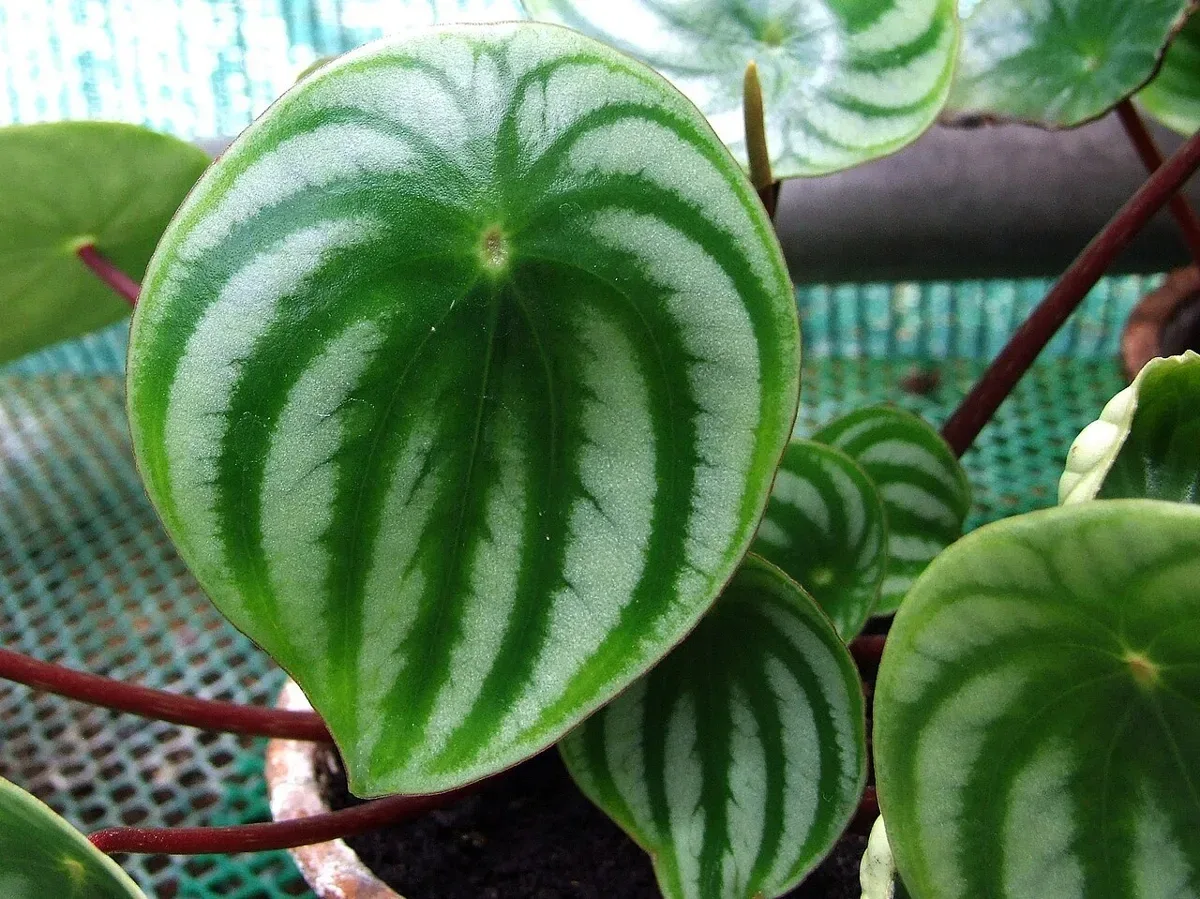
| ☀️ Light | Bright indirect light |
|---|---|
| 💧 Water | Low (allow soil to dry) |
| 🪴 Soil | Light, fast-draining potting mix with perlite or bark |
| 🌡️ Temp | 10°C – 30°C |
| 🐾 Safety | Cats: non-toxic · Dogs: non-toxic |
| 📏 Mature size | 20 cm |
Where It Grows & Climate Tolerance
Pet & Companion Animal Toxicity (Watermelon Peperomia Care in Indian Homes)
Watermelon peperomia is a popular desk and windowsill plant in Indian cities. It enjoys warmth, but the monsoon is its risky season, when wet mix quickly leads to rot.
Care instructions
Care Guide & Maintenance Routine
Keep near an east window or in bright shade. Water when the top of the mix is dry, about weekly in summer and much less in the monsoon. Use a small pot with cocopeat, perlite and a little compost. Keep away from AC vents and hot west windows.
Light & Sunlight
NC State says it prefers bright, indirect light. The RHS advises bright indirect light in active growth and full light in winter. Strong direct sun bleaches and burns the leaves; low light makes stems stretch and stripes fade.
Watering Schedule
NC State notes it is intolerant of both wet soil and very dry soil. Let the top of the mix dry to the touch before watering, and reduce watering in winter. The fleshy leaves store water, so it forgives a missed watering better than an extra one.
Potting Mix & Drainage
Light, fast-draining potting mix with perlite or bark
Temperature & Humidity
No frost risk indoors. In Delhi, Punjab and Uttar Pradesh, keep pots away from cold windows on December and January nights. In hill towns such as Shimla, Mussoorie or Darjeeling, keep indoors and above about 10°C in winter.
Watermelon peperomia in Indian homes
Watermelon peperomia has become a favourite gift plant and desk plant in Indian cities. It suits a work-from-home table, a bathroom with a frosted window or a bookshelf near the balcony door. Plants grow especially well in Bengaluru, Pune and the Nilgiris, where days are warm and nights mild.
Light in Indian flats
An east window with gentle morning sun is ideal. In Delhi, Lucknow or Nagpur, keep it well back from south and west glass from April to June, when the afternoon glare scorches leaves within days. In Mumbai and Kolkata, a north-facing balcony behind a grille gives steady, soft light.
Watering through the Indian year
- Summer, March to June: the mix dries fast; water about weekly in Delhi or Hyderabad once the top feels dry.
- Monsoon: the risky months. In Mumbai, Goa, Kochi and Guwahati, pots can stay damp for a week or more. Water only when the top is clearly dry, and never leave water in the saucer.
- Winter in the north: in Punjab and Delhi NCR, cool rooms slow growth; water every two to three weeks. In Chennai and Bengaluru, keep the summer routine but lighter.
A mix that suits Indian conditions
Combine cocopeat, perlite or coarse river sand, and a small amount of vermicompost. Avoid heavy garden mitti, which stays soggy after monsoon showers. A small terracotta gamla with a hole breathes better than a sealed ceramic planter.
AC rooms and summer heat
Split AC units chill and parch the air. Park the pot at least 2 m from the indoor unit, out of its draught. During loo winds in May, a sill pot bakes and needs a drink every few days; shift it to an inner table instead.
Leaf cuttings in India
February to April and September to October are good months to root leaf cuttings in most of India. In the monsoon, cuttings rot easily, so keep the mix barely moist and the cover open for air.
Pests and problems
Mealybugs turn up as white fluff, often during dusty, dry spells. Tiny black gnats hover over cocopeat that stays soggy in July and August. Mushy stalks at the base during the rains are a signal to tip the plant out, inspect the roots, and hold off on watering.
Gifting and buying
Watermelon peperomia is a common Diwali and housewarming gift in Indian cities, often in a sealed ceramic pot. Move it into a gamla with a drainage hole within a week or two, before the first heavy watering rots the roots.
City notes
- Bengaluru, Mysuru and Ooty: mild year-round; a bright verandah or bay window suits it, with rain protection from June to November.
- Chennai, Visakhapatnam and Thiruvananthapuram: steady warmth; a shaded east sill and a gritty mix through the northeast monsoon.
- Jaipur, Ahmedabad and Indore: dry heat in April and May; group it with other pots on an inner table, away from desert coolers that blow damp air straight at it.
- Shillong and Gangtok: cool, misty winters; a sunny indoor ledge and very little watering.
Seasonal rhythm
Seasonal Calendar
| Month | Care Tasks | Seasonal Focus |
|---|---|---|
| Jan | Protect from frost/heat | North: water sparingly; keep away from cold glass. |
| Feb | Plant out | Leaf cuttings root well as days warm. |
| Mar | Fertilize, Repot | Start light feeding. Repot only root-bound plants. |
| Apr | Fertilize, Protect from frost/heat | North: move back from hot south and west windows. |
| May | Protect from frost/heat | Loo winds: keep indoors; check mix more often. |
| Jun | Protect from frost/heat | Monsoon arrives in the south and west: cut back watering. |
| Jul | Protect from frost/heat | Check for soft stems; empty saucers after rain. |
| Aug | Protect from frost/heat | Peak rains: water only when the top is clearly dry. |
| Sep | Plant out, Fertilize | Last feed. Take cuttings as rains ease in the north. |
| Oct | Plant out | Good month to root cuttings and divide large plants. |
| Nov | Protect from frost/heat | Reduce watering as nights cool in the north. |
| Dec | Protect from frost/heat | North: protect from cold drafts. South: light watering. |
Diagnostics
Common Problems & Troubleshooting
Root rot and mushy stems from overwatering; wilting from very dry mix; drooping or dropped leaves after cold drafts; stretched stems and faded stripes in low light; scorched patches in direct sun.
Pests & seasonal watch: Mealybugs in dry months, fungus gnats and root rot in the monsoon, occasional scale. Overwatering is the main cause of loss in Indian homes.
- Drooping — Stems and leaves hang limp even though the plant was recently fine.
- Root rot — Roots turn brown and mushy in soil that stays wet.
- Mealybugs — White cottony clumps in leaf joints, often with sticky honeydew.
- Leggy — Long weak stems with big gaps between small leaves, leaning to the window.
- Fungus gnats — Tiny dark flies hover around wet potting mix.
- Scale — Hard or soft brown bumps stuck to stems and leaf ribs, often with sticky honeydew.
- Overwatering — Soil stays wet, leaves yellow or droop, and the pot feels heavy.
- Sun scorch — Bleached or crispy patches on the side that faces strong sun.
- Cold damage — Dark, water-soaked or blackened patches after a cold night or an AC blast.
Q&A
Frequently Asked Questions
Why is my watermelon peperomia drooping?
Drooping can come from both too much and too little water, or from cold drafts. Check the mix before watering: wet and heavy mix points to overwatering, bone-dry mix to underwatering. Look at the stems and roots too.
How often should I water it?
When the top of the mix is dry to the touch. That is often every 7 to 10 days in warm months and less often in winter. Always let excess water drain away.
Can I grow it from a single leaf?
Yes. NC State lists leaf cuttings as a propagation method. A leaf with a short stalk, or a halved leaf, can root in moist, free-draining mix.
Is watermelon peperomia safe for pets?
Yes. ASPCA lists Peperomia argyreia, under the name watermelon begonia, as non-toxic to dogs, cats and horses.
Is it a begonia?
No. Despite the old name watermelon begonia, it belongs to the pepper family, Piperaceae, not to Begoniaceae.
Why are the stripes fading?
Usually too little light. Move it to bright, indirect light. Very strong sun can also bleach the leaves.
How big does it get?
Small. NC State gives about 20 cm tall; the RHS range is 10 to 50 cm. It suits a desk or shelf.
Should I repot it every year?
No. NC State notes it grows happily when pot-bound. Repot only when roots fill the pot.
Why are the stems going soft at the base?
Soft, dark stems at soil level often go with mix that stays wet. Check the roots; firm white roots are healthy, brown mushy ones are rotting. Take leaf cuttings from healthy growth as a backup.
Similar Botanical Matches
Keep exploring
Related plants
Grower field notes
Reader Field Notes in India
Share how this plant performs in your local India climate.