
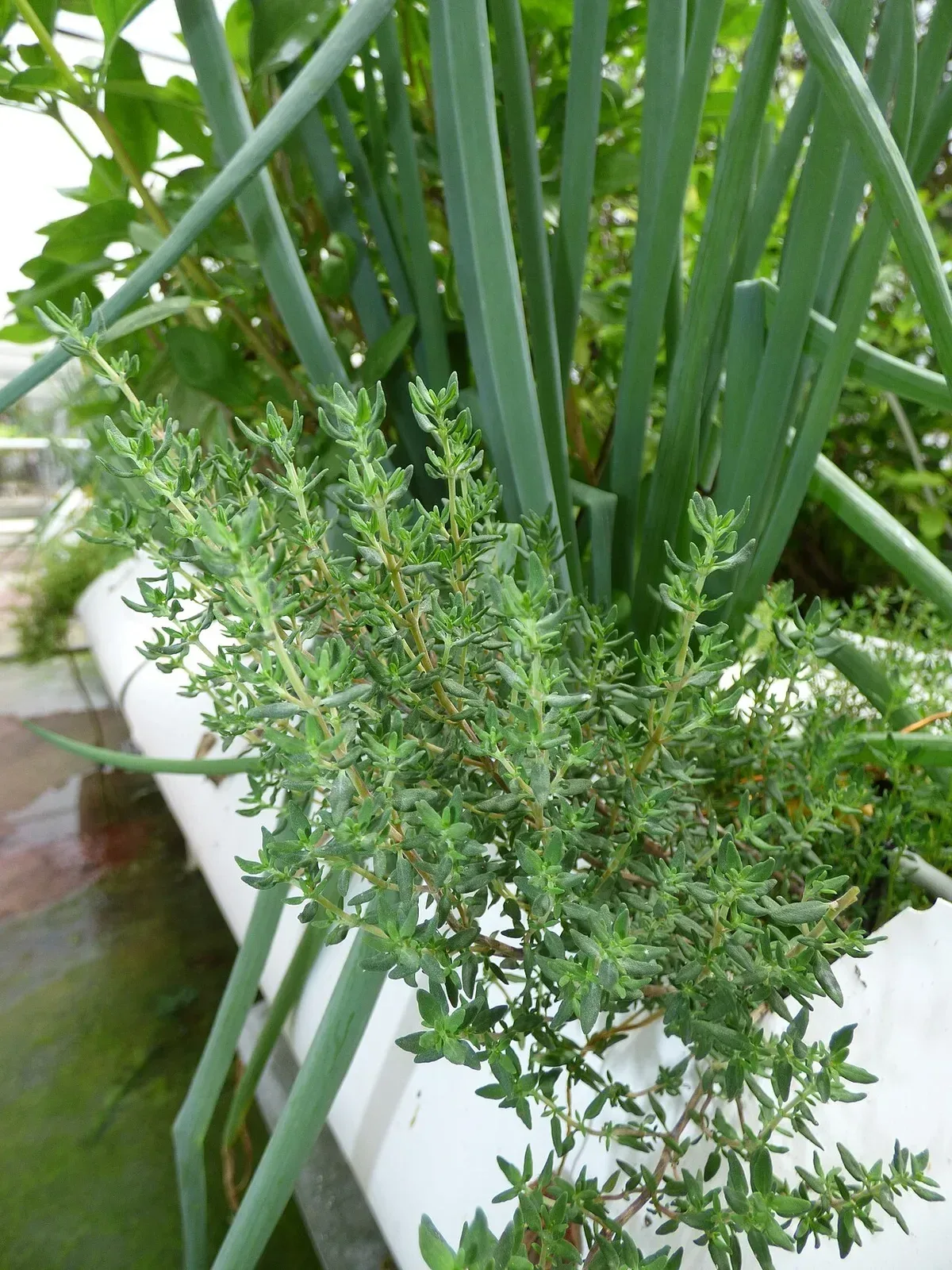
| ☀️ Light | Full sun |
|---|---|
| 💧 Water | Low (allow soil to dry) |
| 🪴 Soil | Dry, sandy or rocky, well-drained soil; neutral to alkaline |
| 🌡️ Temp | -23°C – 35°C |
| 🐾 Safety | Cats: non-toxic · Dogs: non-toxic |
| 📏 Mature size | 30 cm |
Where It Grows & Climate Tolerance
Pet & Companion Animal Toxicity (How to Grow Thyme in India)
The Spices Board notes thyme is cultivated in the western temperate Himalaya and the Nilgiris. Hill gardens can keep it for years; in the plains, grow it as a winter pot herb and protect it from rain.
Care instructions
Care Guide & Maintenance Routine
Hills: plant in March and April, harvest through summer, and keep it out of standing rain. Plains: plant from October to December, pick until March, and shade lightly from April. From June to September, keep pots under cover and nearly dry.
Light & Sunlight
NC State Extension lists full sun only. Six or more hours of direct sun keeps growth compact and aromatic; shade makes it thin and floppy.
Watering Schedule
NC State describes it as drought tolerant and suited to dry, sandy or rocky soils. Water established plants only in long dry spells; pots need water when the top of the mix is dry.
Potting Mix & Drainage
Dry, sandy or rocky, well-drained soil; neutral to alkaline
Temperature & Humidity
Takes frost and light snow in the hills when the soil is dry. Plains winters pose no risk. The danger months are May (heat) and the monsoon (wet roots and humid air), especially in coastal and eastern cities.
Thyme across India
The Spices Board of India lists thyme with the Hindi name banajwain and records that it is grown in the western temperate Himalaya and the Nilgiris, preferring a mild climate and upland soils. That sums it up well: Ooty and Shimla gardeners can grow it as a long-lived shrub, while gardeners in Delhi, Hyderabad or Kolkata treat it as a winter pot.
Not ajwain, not ajwain patta
The smell is close to carom seed (ajwain), which explains the Hindi name, but carom is a different plant in the carrot family. Thyme also is not the fleshy ajwain patta (Indian borage). True thyme has needle-thin leaves on wiry stems.
Season by region
- Nilgiris, Kodaikanal, Munnar: plant in the drier months before the southwest monsoon. Through June to August, grow it in raised beds or under cover.
- Himachal, Uttarakhand, Kashmir, Darjeeling: plant in March or April once hard frost is over. It grows through summer and takes winter cold if the soil drains.
- Punjab, Haryana, Delhi, UP: plant in October after the rains retreat (IMD normal withdrawal for Delhi is about 25 September, Chandigarh 23 September). Pick from December to March. April heat slows it; move to morning sun.
- Bengaluru and Pune: mild, dry winters suit it from November to May. A west-facing balcony is often too hot by April.
- Mumbai, Chennai, Kolkata, Kochi: humidity is the problem for most of the year. Try a terracotta pot under a roof edge from November to February.
Pots and mix
Fill a small terracotta gamla with equal parts garden soil, coarse river sand and brick grit, plus a handful of compost. Thyme likes neutral to alkaline soil, so a little crushed limestone or old plaster rubble is fine; skip peat-heavy mixes. Put a layer of pebbles on the surface so the stems sit dry.
Keeping thyme alive through the rains
Before the monsoon reaches your city (IMD normal onset: Kochi 1 June, Mumbai 11 June, Patna 16 June, Delhi 27 June), trim the plant lightly and move it under a shed, porch or polycarbonate sheet. Water only if the pot is bone dry. Take a few cuttings in May as insurance.
Using the harvest
Cut sprigs in the cool, dry months of January and February for drying. Tie small bundles and hang them in a shaded room, then rub the leaves off the stems into a jar.
Common questions
- Can thyme grow in Delhi summer? It struggles once days pass 40°C. Light shade and very careful watering help.
- Safe around our indie dog? ASPCA lists common thyme as non-toxic to dogs and cats.
Kitchen garden ideas
A trough of thyme beside tulsi and pudina on a sunny parapet makes a handy herb corner, but keep thyme in its own pot: pudina likes much wetter soil. Sprigs dried in March keep well for monsoon cooking.
Seasonal rhythm
Seasonal Calendar
| Month | Care Tasks | Seasonal Focus |
|---|---|---|
| Jan | Harvest | Delhi, Lucknow, Chandigarh: picking from autumn plants. Bengaluru: plants in steady growth. |
| Feb | Harvest | Best month in the northern plains for cutting bundles to dry. Ooty: trim after winter. |
| Mar | Plant out, Prune | Shimla, Mussoorie, Srinagar: plant once hard frost ends. Plains: trim and give morning sun. |
| Apr | Plant out, Harvest | Hill planting continues. Pune and Bengaluru: harvest before the heat builds. |
| May | Protect from frost/heat | Hot winds in Punjab and Rajasthan: move pots to light shade. Take insurance cuttings. |
| Jun | Prune, Protect from frost/heat | Light trim, then move pots under cover before monsoon onset in your city. |
| Jul | Protect from frost/heat | Peak rains: keep thyme dry under a roof edge. Hill beds: harvest between showers. |
| Aug | Protect from frost/heat | Remove any blackened stems. Check pots in Kochi, Goa and Mumbai for waterlogging. |
| Sep | Harvest, Protect from frost/heat | Rains withdraw from the North late in the month. Hill gardens: last summer harvest. |
| Oct | Plant out | Main planting month in Delhi NCR, Punjab, UP and the Deccan. Use gritty mix in terracotta. |
| Nov | Plant out | Chennai and Hyderabad: plant now that humidity drops. Hills: plants slow for winter. |
| Dec | Harvest | First sprigs from October plants in the plains. Hill thyme rests in the cold. |
Diagnostics
Common Problems & Troubleshooting
Rot at the base from wet soil or humid weather; woody, bare centre on older plants; thin growth in shade; leaves browning after a wet winter.
Pests & seasonal watch: Root and stem rot in July and August in high-rainfall areas. Spider mites on dry terrace pots in April and May. Few insect problems in winter.
- Root rot — Roots turn brown and mushy in soil that stays wet.
- Leggy — Long weak stems with big gaps between small leaves, leaning to the window.
- Spider mites — Fine webbing and pale speckled leaves, worse in dry heated rooms.
- Overwatering — Soil stays wet, leaves yellow or droop, and the pot feels heavy.
- Leaf drop — Many leaves fall in a short time, sometimes still green.
- Stem rot — The stem goes soft, dark or black at soil level and the top collapses.
Q&A
Frequently Asked Questions
What is the difference between thyme and creeping thyme?
Common thyme (Thymus vulgaris) is an upright little shrub grown mainly for cooking. Creeping thyme (Thymus serpyllum) is a low, mat-forming plant grown mostly as groundcover. Both are edible, but common thyme has the stronger flavour.
Why is my thyme turning woody?
Thyme naturally becomes woody with age. Trim it lightly after flowering and in early spring, never cutting into bare old wood, and replace very old plants with cuttings.
How do I harvest thyme without killing it?
NC State suggests cutting 12 to 15 cm off the top growth while leaving at least 12 cm of stem and the woody base. Harvest just before flowering for the strongest flavour.
Can I grow thyme from seed?
Yes, but NC State notes germination is uneven. Cuttings, layering or division give faster, more reliable plants.
Is thyme safe for cats and dogs?
ASPCA lists Thymus vulgaris as non-toxic to dogs, cats and horses.
How often should I water thyme?
Rarely. Water when the soil is dry a few centimetres down. Thyme is drought tolerant and dies from wet roots far more often than from dryness.
Does thyme need fertiliser?
Very little. Lean soil gives better flavour. One light feed in spring is enough for a potted plant.
Can thyme grow indoors?
Yes, on a very sunny windowsill or under a grow light, in a terracotta pot with gritty mix.
Why is my thyme dying in the middle?
Older plants often go woody and bare in the centre, and wet soil makes it worse. Trim lightly after flowering, improve drainage and replace the plant every few years with rooted cuttings.
Similar Botanical Matches
Keep exploring
Related plants
Grower field notes
Reader Field Notes in India
Share how this plant performs in your local India climate.