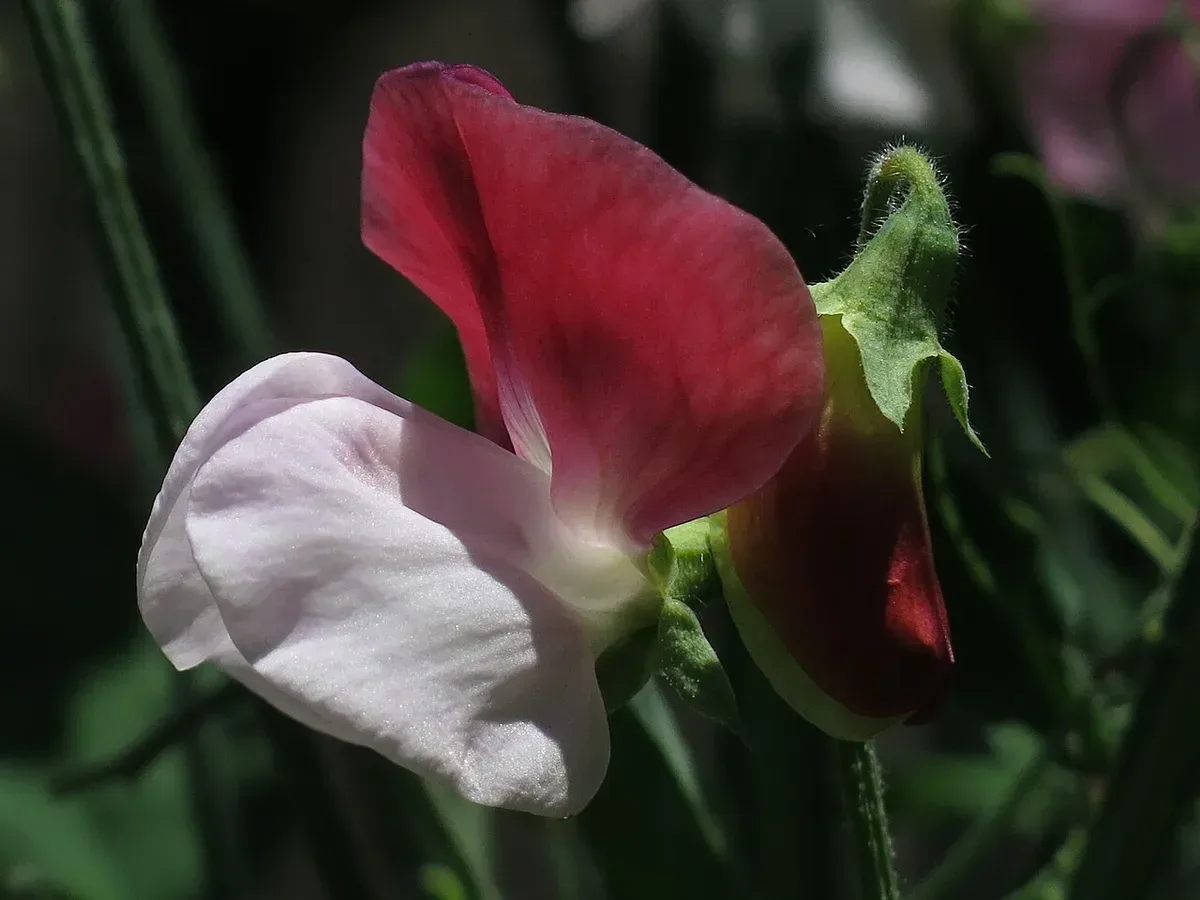
| ☀️ Light | Full sun |
|---|---|
| 💧 Water | Moderate (lightly moist) |
| 🪴 Soil | Deep, fertile, well-drained sandy loam with plenty of organic matter |
| 🌡️ Temp | -5°C – 30°C |
| 🐾 Safety | Cats: toxic · Dogs: toxic |
| 📏 Mature size | 2.0 m |
Where It Grows & Climate Tolerance
Pet & Companion Animal Toxicity (How to Grow Sweet Pea in India)
Sweet pea is a scented winter climber in North India. PAU advises sowing directly in the first fortnight of October, and plants flower from late March to the end of April.
Care instructions
Care Guide & Maintenance Routine
North Indian plains: dig in manure in September, soak seed for 24 hours and sow in the first half of October (PAU). Train vines on netting from December. Flowers run from late March to April. Hills: sow in spring. Avoid clay soil and overwatering around flowering.
Light & Sunlight
NC State Extension lists full sun, and PAU warns that seedlings grow weak and leggy in shade. The RHS also accepts partial shade. A spot with sun all morning is the minimum.
Watering Schedule
NC State advises keeping soil evenly moist and mulching. PAU warns that excessive watering before and after flowering rots roots and stems. Water deeply but let the surface dry a little between waterings.
Potting Mix & Drainage
Deep, fertile, well-drained sandy loam with plenty of organic matter
Temperature & Humidity
Handles cold North Indian nights and light ground frost in December and January. PAU gives an ideal of 25 to 30°C by day and 17 to 18°C at night. Flowering ends once April days in Delhi and Rajasthan climb past about 30 to 35°C.
Sweet pea in Indian winter gardens
Sweet pea is a long-standing favourite of North Indian winter gardens and flower shows, prized for scent more than size. Punjab Agricultural University includes it in its floriculture package and released five varieties in 2016: Punjab Sweet Pea-1 (magenta), -2 (pink), -3 (maroon), -4 (purple) and -5 (cream). They take about 102 to 106 days to flower and bloom for 42 to 48 days.
When to sow
PAU advises sowing directly in moist soil in the first fortnight of October under North Indian conditions, after soaking the seed in water for 24 hours. Germination follows within about 10 days. Plants reach about 1.5 to 2 feet by December, when tendrils appear and training starts. Flowering begins in the last week of March and runs to the end of April.
Region by region
- Punjab, Haryana, Delhi, UP, Bihar: follow PAU dates. Sow after the monsoon has fully withdrawn (IMD normal withdrawal: Delhi 25 September, Patna 8 October).
- Rajasthan: sow in early October. Hot winds in Jaipur and Jodhpur can end flowering early in April, so pick a spot sheltered from afternoon sun.
- Madhya Pradesh and Maharashtra: Bhopal, Indore and Pune winters are cool enough; sow in October and November and expect flowers from February.
- Himachal, Uttarakhand, Kashmir, Darjeeling: in the colder hills, sow in spring once hard frosts finish, for flowers in early summer. SKUAST-Jammu lists sweet pea among the winter annuals sown directly in the subtropical belt.
- South India and coastal regions: warm nights limit flowering. Bengaluru and hill stations such as Ooty can manage a winter crop; coastal Chennai, Kochi and Mumbai usually cannot.
Soil and support
PAU recommends fertile, well-drained sandy loam, dug two feet deep with well-rotted farmyard manure or leaf mould about a month before planting, and warns against clay. For support, it suggests wooden poles, galvanised pipes or chicken-wire netting. On a terrace, a bamboo frame with jute string tied to a parapet railing works well.
Watering
Water regularly while vines grow, but PAU cautions that too much water just before and after flowering rots roots and stems. In late March, water in the early morning and mulch with dry leaves.
Picking and seed
Remove faded flowers regularly to stretch the season, as PAU advises. If you want seed, leave a few pods; they mature and are picked in May, each holding five or six seeds. Store them in an airtight jar and label them clearly as not edible.
Safety at home
Sweet pea seeds look like ordinary matar but are poisonous. Keep stored seed away from the kitchen and children, and never cook the pods.
On terraces and rooftops
In Delhi, Noida, Gurugram and Lucknow flats, grow sweet peas in deep grow bags or cement troughs against a south-facing parapet, with jute sutli strung from a bamboo frame. Rooftop sun in March is strong, so a light hara shade net from mid-March stretches the season.
Flower show tips
For long show stems in Chandigarh or Ludhiana, PAU's single-stem training suits tall named varieties. Cut stems early on show day, keep them in a bucket of cool water and carry them upright.
Seasonal rhythm
Seasonal Calendar
| Month | Care Tasks | Seasonal Focus |
|---|---|---|
| Jan | protect | Vines climbing slowly through cold, foggy weeks in the North. Keep tying shoots to the netting. |
| Feb | feed | Light feed as growth speeds up. Watch for aphids on soft tips in Punjab and Delhi. |
| Mar | harvest | Flowering starts in the last week of the month in the North (PAU). Pick every few days. |
| Apr | harvest | Peak scent and colour until month end. Water early in the morning; do not overwater. |
| May | harvest | Pods mature; pick for seed in the North (PAU). Hill sowings come into flower. |
| Jun | protect | Plains: clear old vines. Hills: support and pick summer flowers. |
| Jul | protect | Monsoon: no sowing in the plains. Store seed in an airtight jar away from the kitchen. |
| Aug | protect | Plan the bed and buy fresh seed. Hill vines finishing. |
| Sep | plant | Dig in manure or leaf mould about a month before sowing (PAU). Fix poles and netting. |
| Oct | sow | Soak seed 24 hours and sow in the first fortnight in Punjab, Haryana and Delhi (PAU). |
| Nov | sow | Late sowings in Pune, Bhopal and Bengaluru. Thin seedlings; protect from birds. |
| Dec | prune | Plants reach 1.5 to 2 feet and start tendrils (PAU); train them onto supports. |
Diagnostics
Common Problems & Troubleshooting
Buds dropping in heat; powdery mildew on older leaves; root rot from heavy, wet soil; poor flowering when pods are left on; seedlings eaten by slugs, snails or birds.
Pests & seasonal watch: Aphids on young shoots in February. Powdery mildew in March as days warm. Root rot in clay soil or overwatered pots (PAU). Birds pull up fresh seedlings in October.
- Yellow leaves — Leaves fade from green to yellow, often starting at the bottom.
- Root rot — Roots turn brown and mushy in soil that stays wet.
- Leggy — Long weak stems with big gaps between small leaves, leaning to the window.
- Aphids — Clusters of small soft insects on new tips, often sticky.
- White powder — A white powdery film on leaves, usually in still, humid air with dry soil at the roots.
- Overwatering — Soil stays wet, leaves yellow or droop, and the pot feels heavy.
Q&A
Frequently Asked Questions
Are sweet peas edible?
No. NC State warns the seeds are poisonous and can cause lathyrism, and the RHS says the pods and seeds are not edible. Do not grow them next to edible garden peas where they could be confused.
Should I soak sweet pea seeds?
Yes. PAU soaks seed in water for 24 hours before sowing to soften the hard seed coat, and germination follows in about 10 days.
Why have my sweet peas stopped flowering?
Usually heat, dry soil or pods left on the plant. NC State notes flowering decreases if pods develop, so pick flowers often.
Do sweet peas need support?
Climbing types reach up to 2 m or more and need netting, canes or a trellis. Dwarf bush types can grow without support.
When should I sow sweet peas?
In warm climates, sow in autumn; PAU advises the first fortnight of October in North India. In cold climates, sow in early spring or start indoors in late winter.
Are sweet peas safe for pets?
Treat them as unsafe. The seeds and pods are poisonous. ASPCA has no page for Lathyrus odoratus; its sweet pea entry covers a related species that is toxic to horses.
Why are the leaves white and powdery?
Powdery mildew, common late in the season. Improve airflow, water at the base and remove badly affected leaves.
Can I grow sweet peas in pots?
Yes, in a deep pot at least 30 cm deep with supports, or choose dwarf types for smaller containers.
Why are my sweet pea buds dropping?
Usually heat, dry roots or a sudden cold night. Water deeply, mulch the roots and keep picking flowers.
Similar Botanical Matches
Grower field notes
Reader Field Notes in India
Share how this plant performs in your local India climate.