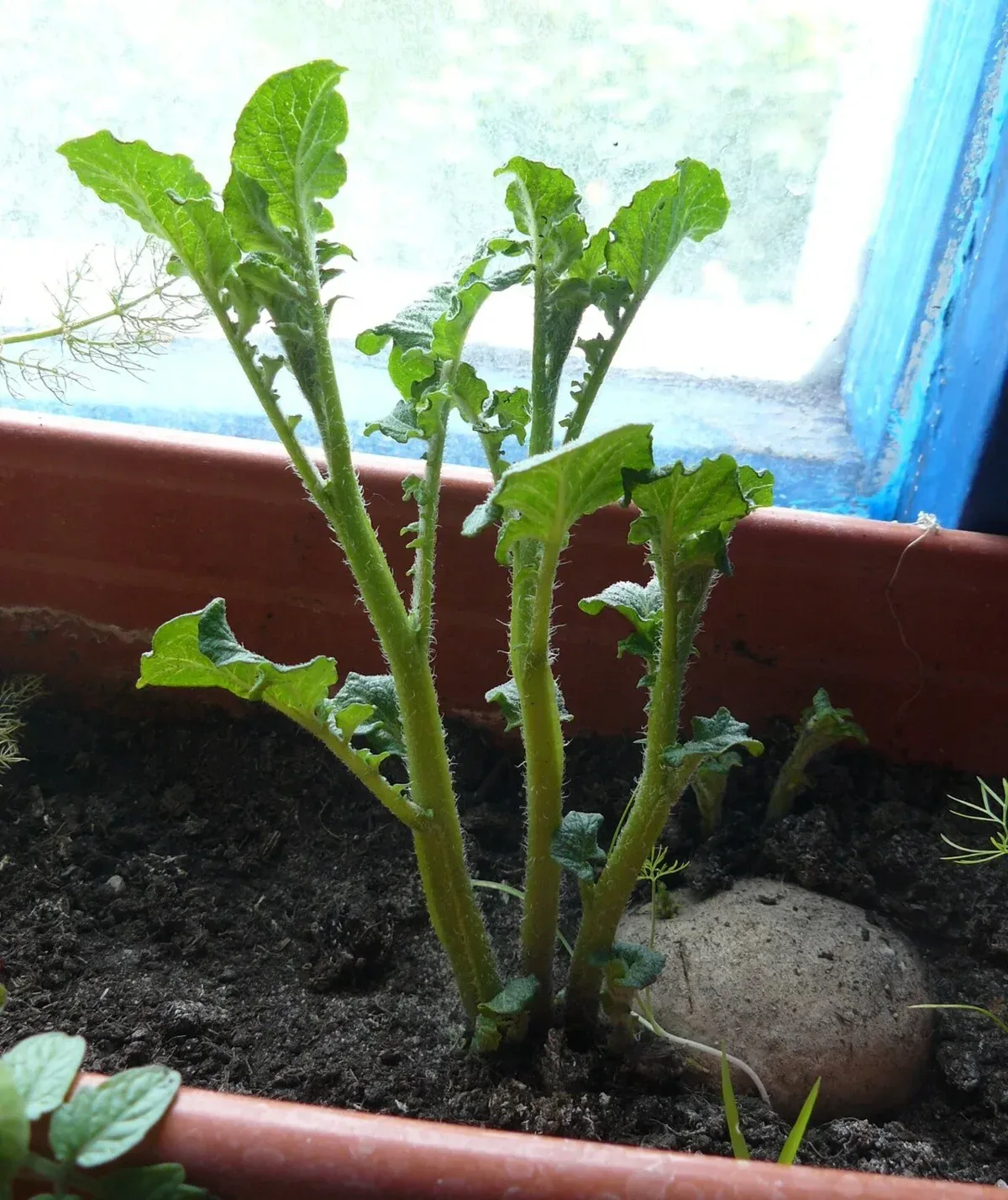
| ☀️ Light | Full sun |
|---|---|
| 💧 Water | Moderate (lightly moist) |
| 🪴 Soil | Loose, well-drained sandy loam with organic matter; slightly acidic is ideal |
| 🌡️ Temp | 0°C – 30°C |
| 🐾 Safety | Cats: toxic · Dogs: toxic |
| 📏 Mature size | 60 cm |
Where It Grows & Climate Tolerance
Pet & Companion Animal Toxicity (How to Grow Potatoes (Aloo) in India)
Aloo is a Rabi crop on the Indian plains, planted from late September to November and dug from January to March. In the hills it is grown in summer, and in the Nilgiris there are several seasons.
Care instructions
Care Guide & Maintenance Routine
Plains: plant sprouted seed tubers after the monsoon withdraws and the days fall below 30°C. Earth up after about a month. Hills: plant in March and April. Keep grow bags evenly moist through the cool months and stop watering as the haulm yellows.
Light & Sunlight
NC State Extension lists full sun. Plants in shade make long, weak stems and few tubers. Six or more hours of direct sun is a good minimum for beds and grow bags.
Watering Schedule
Even moisture matters most once tubers start to form, which is around flowering in many varieties. Dry spells followed by heavy watering can cause cracked or knobbly tubers. Ease off as the foliage yellows so skins firm up before digging.
Potting Mix & Drainage
Loose, well-drained sandy loam with organic matter; slightly acidic is ideal
Temperature & Humidity
Plains: plant only after days drop below about 30°C. Ground frost in late December and January in Punjab, Haryana and western UP can scorch haulms; light irrigation before a cold night helps. Hills: frost kills tops, so plant after the frost season ends.
Aloo in Indian gardens
Every Indian kitchen uses aloo, and it is one of the easiest crops to try on a chhat or in a backyard kyari. NC State Extension notes that India is among the world's largest potato producers. Most of that crop comes from the Indo-Gangetic plains in Rabi, when Punjab, Haryana, Uttar Pradesh, Bihar and West Bengal enjoy cool nights and sunny days.
When to plant, region by region
- Punjab, Haryana, Delhi: PAU Ludhiana recommends the last week of September to mid-October for the autumn crop and the second half of January for a spring crop. Sowing time in September depends on the heat. IMD's normal monsoon withdrawal for Delhi is 25 September.
- Uttar Pradesh, Bihar, West Bengal: October and November plantings are usual, once the soil is workable after the rains. Patna's normal withdrawal date is 8 October.
- Tamil Nadu plains and the Deccan: TNAU gives October to November for the plains. Bengaluru, Hosur and Pune gardeners also plant in this window.
- Nilgiris and Kodaikanal: TNAU lists three hill seasons: summer (March to April), autumn (August to September) and irrigated (January to February).
- Himachal, Uttarakhand, Kashmir, Sikkim, Meghalaya: plant in March and April once frosts ease, and dig in July or August.
Kufri varieties to ask for
PAU lists Kufri Pukhraj as an early variety giving a crop in 70 to 90 days, and Kufri Surya as heat tolerant and suited to early September planting. Kufri Jyoti, Kufri Chandramukhi and Kufri Bahar are older favourites. Kufri Chipsona-1 and Chipsona-3 are bred for chips, and Kufri Frysona for French fries. TNAU names Kufri Jyoti, Kufri Swarna, Kufri Thangam, Kufri Malar, Kufri Giriraj and others for Tamil Nadu. PAU also advises replacing seed every three to four years, because yields drop when the same tubers are replanted year after year.
Ridges, bags and mulch
PAU plants on ridges 60 cm apart with tubers 20 cm apart and earths up 25 to 30 days after planting. TNAU uses 45 cm ridges and does the second hoeing and earthing up around day 60, taking care not to disturb the stolons. On a terrace, a 40 to 45 litre grow bag holds three or four tubers. Paddy straw, which PAU recommends as a mulch, is easy to find in Punjab and Haryana in October.
Watering in Rabi
Irrigate lightly after planting and then at regular intervals. PAU warns against over-flooding the ridges, which crusts the surface. In Kolkata or Patna, winter fog slows drying, so check the mix with a finger before watering.
Cold-store seed
PAU notes that tubers taken straight from cold storage should not be planted at once. Spread them in shade with diffused light for 8 to 10 days so the sprouts start and harden.
Questions from Indian growers
- Can I grow aloo in Chennai or Mumbai? It is possible in the coolest months, November to February, but tubers stay small. Choose an early variety.
- Our dog digs the kyari. Is that a problem? NC State lists the leaves, sprouts and green tubers as poisonous to dogs and cats, so fence the bed.
Seasonal rhythm
Seasonal Calendar
| Month | Care Tasks | Seasonal Focus |
|---|---|---|
| Jan | plant, harvest | Punjab, Haryana: dig the autumn crop. Second half of the month: plant the spring crop (PAU). |
| Feb | harvest, protect | UP, Bihar, Bengal: main digging. Watch foggy spells for blight. |
| Mar | plant, harvest | Plains: last harvests; cure in shade. Nilgiris and Himachal: plant the summer crop. |
| Apr | plant, protect | Kashmir, Uttarakhand, Sikkim: planting continues. Plains: store tubers in dark, airy rooms. |
| May | protect | Hills: earth up and water. Plains: too hot for potatoes. |
| Jun | protect | Hills: keep earthing up as the monsoon arrives. Plains: rest the beds. |
| Jul | harvest | Himachal and Uttarakhand: dig the summer crop when tops die back. |
| Aug | plant, harvest | Nilgiris: autumn season planting (TNAU). Upper hills: final digging. |
| Sep | plant | Late month: first plantings in Punjab with heat-tolerant Kufri Surya. Nilgiris: autumn planting. |
| Oct | plant | Main planting in Punjab, Haryana, Delhi and western UP. |
| Nov | plant, protect | Plant in Bihar, Bengal, Tamil Nadu plains and the Deccan. Earth up October crops. |
| Dec | harvest, protect | Earth up, light irrigation before frosty nights. Early varieties ready for new potatoes. |
Diagnostics
Common Problems & Troubleshooting
Green tubers from light exposure; scab on the skin; hollow or cracked tubers after uneven watering; blackened, collapsing foliage in wet weather; small crops from shade, crowding or late planting.
Pests & seasonal watch: Aphids build up from late December in the northern plains and spread viruses. Late blight risk rises in foggy, humid spells of December and January. White grubs and cutworms damage young crops in some hill areas. Ask the local KVK before spraying.
- Yellow leaves — Leaves fade from green to yellow, often starting at the bottom.
- Aphids — Clusters of small soft insects on new tips, often sticky.
- Leaf spot — Brown or tan spots with a yellow halo, sometimes with tiny dots in the centre.
- Overwatering — Soil stays wet, leaves yellow or droop, and the pot feels heavy.
- Underwatering — Soil is bone dry and leaves are crispy, curled or dull.
- Nutrient shortage — Overall pale growth, or yellowing between veins, on a plant that is otherwise watered well.
- Tired mix — Water races down the inside of the pot and the root ball stays dry, or the mix is a hard brick.
Q&A
Frequently Asked Questions
Can I plant potatoes from the kitchen?
It is possible, but NC State and the RHS both recommend certified seed potatoes. Shop potatoes may carry viruses or be treated so they do not sprout, which gives weak or patchy plants.
Why do potatoes turn green, and are they safe?
Tubers exposed to light turn green and build up solanine. NC State lists green tubers, sprouts and green parts as poisonous. Cut away small green patches generously or discard badly greened tubers, and keep the crop covered while it grows.
What is earthing up?
Drawing soil or mulch up around the stems as they grow. It keeps forming tubers in the dark, gives more room for them along the buried stem, and the RHS notes it protects early shoots from frost.
How long do potatoes take?
NC State says new potatoes can be dug about 7 to 8 weeks after planting and a mature crop takes 3 to 4 months. The RHS says early varieties can be ready in as little as 12 weeks.
When are potatoes ready to dig?
For new potatoes, start after flowering and check under one plant. For storing, wait until the foliage yellows and dies back, then leave the tubers in the ground for a further week or two so the skins set.
Can I grow potatoes in pots?
Yes. NC State suggests a container at least 60 cm deep. Grow bags work well because you can roll the sides up as you add mix.
Should I cut seed potatoes?
Small seed tubers of 40 to 50 g are planted whole. Larger ones can be cut into pieces with at least two eyes; let the cut surfaces dry for a day before planting so they do not rot.
Are potato plants toxic to pets?
Yes. NC State lists the leaves, stems, sprouts and green tubers as poisonous to cats, dogs and horses. Keep pets away from the plants and from sprouting potatoes in storage.
How should I store potatoes?
Brush off soil, let tubers dry out of the sun for a few hours, and store them in a cool, dark, airy place in sacks or boxes. Light turns them green, and warmth makes them sprout sooner.
Similar Botanical Matches
Grower field notes
Reader Field Notes in India
Share how this plant performs in your local India climate.