
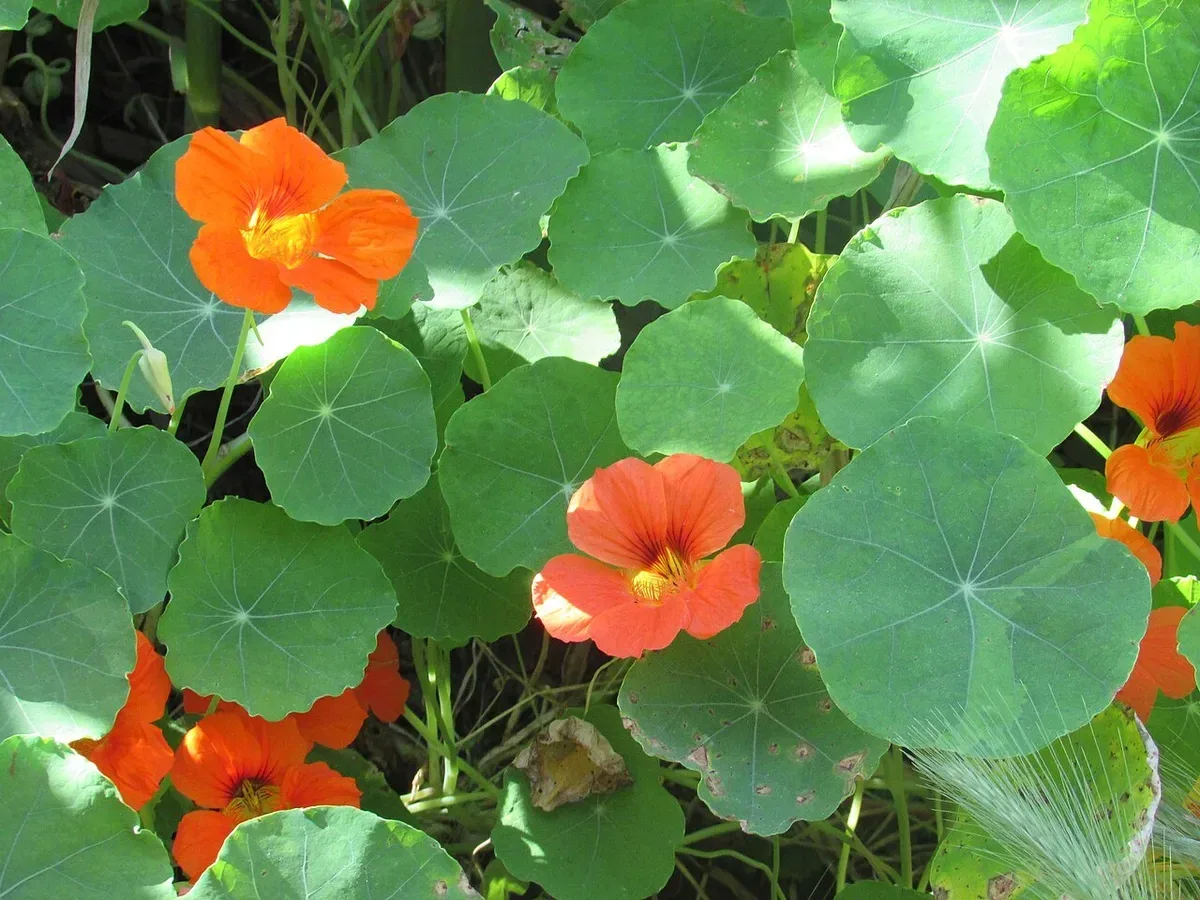
| ☀️ Light | Full sun |
|---|---|
| 💧 Water | Moderate (lightly moist) |
| 🪴 Soil | Poor to average, well-drained soil; sandy or gritty mixes work well |
| 🌡️ Temp | 0°C – 35°C |
| 🐾 Safety | Cats: non-toxic · Dogs: non-toxic |
| 📏 Mature size | 2.0 m |
Where It Grows & Climate Tolerance
Pet & Companion Animal Toxicity (How to Grow Nasturtium in India)
In North India, nasturtium is a winter-sown annual that flowers from mid-March. PAU advises sowing seeds directly in mid-November at 30 x 30 cm, with peak bloom from late March to mid-April.
Care instructions
Care Guide & Maintenance Routine
Plains of the North: sow directly in mid-November (PAU). Central and South India: sow in October to December. Hills: sow from February to April. Full sun in winter, afternoon shade once March warms up, no manure, regular light watering.
Light & Sunlight
Wisconsin Horticulture advises full sun and notes plants grow in partial shade but do not bloom well there. NC State suggests some afternoon shade during hot summers.
Watering Schedule
Nasturtium tolerates drought, but Wisconsin Horticulture recommends regular watering through the season to keep plants blooming strongly. Let the top few centimetres dry between waterings and never leave pots standing in water.
Potting Mix & Drainage
Poor to average, well-drained soil; sandy or gritty mixes work well
Temperature & Humidity
Grows best in cool, sunny weather of about 15 to 25°C. Light frost on North Indian plains in late December and January can scorch leaves, so cover beds on cold nights. Flowering slows sharply once April days pass about 35°C.
Nasturtium in Indian gardens
Nasturtium is a familiar sight in winter flower beds, terrace pots and hill-station gardens across India. Punjab Agricultural University lists it among the winter annuals that are sown directly in the field because the seed is large.
PAU timing for the North
PAU's floriculture package says the seeds are sown directly in beds in mid-November at 30 x 30 cm. Plants come into bloom after mid-March, with peak flowering from the end of March to mid-April. Do not sow too early in hot October soil.
Region by region
- Punjab, Haryana, Delhi, western UP: sow in mid-November. Cover seedlings on nights with ground frost in late December and January.
- Rajasthan and Gujarat: sow in November. Flowering ends quickly in April heat in Jaipur and Ahmedabad; give afternoon shade from March.
- Bihar, eastern UP, Odisha and West Bengal: sow in late October to November, once the monsoon has withdrawn (IMD normal withdrawal at Patna: 8 October).
- Maharashtra, Karnataka, Telangana: sow from October to December for flowers through January to March. Pune and Bengaluru winters suit it well.
- Hills (Himachal, Uttarakhand, Kashmir, Darjeeling, Nilgiris): sow from February to April after frosts. Plants flower through summer and stop when frost returns.
- Coastal Kerala and Tamil Nadu: hot, humid winters keep it short-lived. Try a December sowing in a sunny, airy spot.
Soil and pots
Use plain garden soil mixed with sand. Do not add cow dung manure or vermicompost to the pot: rich soil gives a mound of leaves and few flowers. A 20 to 25 cm pot holds one plant; a long balcony planter holds three.
Water and sun
Water when the top few centimetres dry. In December and January, give full sun. From March in the plains, move pots where they get afternoon shade.
Pests in Indian gardens
Aphids gather on young shoots in February. Cabbage caterpillars also visit. Spray off aphids with water and pick caterpillars by hand.
Using the harvest
Young leaves and flowers can go into salads or raita, for a peppery bite. Use only plants grown without pesticide sprays.
Seed saving
Collect the ridged seeds when they turn tan in April and store them in a paper bag through the monsoon. Hill gardens often see self-sown seedlings the next spring.
School and community gardens
Nasturtium is a good first plant for school gardens in Bengaluru, Pune and Dehradun because the big seeds are easy for small hands. Sow in November so plants flower before the exam season ends.
Mixed with marigold
Planted with genda along the edge of a vegetable bed, nasturtium gives bright colour from February. Keep both away from tomato plants that need space and air.
Seasonal rhythm
Seasonal Calendar
| Month | Care Tasks | Seasonal Focus |
|---|---|---|
| Jan | Protect from frost/heat | Plains of the North: cover seedlings on frosty nights. South: plants coming into flower. |
| Feb | Sow, Protect from frost/heat | Hills: start sowing after frost risk eases. Plains: watch for aphids. |
| Mar | Harvest | Bloom begins after mid-March in the North (PAU). Pick leaves and flowers. |
| Apr | Sow, Harvest | Peak bloom until mid-April in Punjab (PAU). Hill sowings continue. |
| May | Protect from frost/heat | Plains: plants end in heat; collect seed. Hills: flowering begins. |
| Jun | Harvest | Hills: summer flowers in Shimla, Mussoorie and Ooty. Pick often. |
| Jul | Protect from frost/heat | Monsoon: hill plants need sharp drainage. Store plains seed dry. |
| Aug | Protect from frost/heat | Hill plants continue in sun breaks. Plains: plan beds for winter. |
| Sep | Protect from frost/heat | Hills: collect seed. Plains: keep seed dry until sowing. |
| Oct | Sow | Sow in Maharashtra, Karnataka and Telangana as days cool. |
| Nov | Sow | Sow directly in mid-month at 30 x 30 cm in Punjab and Delhi (PAU). |
| Dec | Protect from frost/heat | Thin seedlings and water lightly. Hill plants end with frost. |
Diagnostics
Common Problems & Troubleshooting
Lots of leaves and few flowers from rich soil or feeding; poor flowering in shade; yellowing in heat or waterlogged pots; collapse at first frost.
Pests & seasonal watch: Aphids on tender shoots in February and March; cabbage butterfly caterpillars; leaf miner trails on older leaves in spring. Whiteflies on terrace pots in warm, dry weather.
- Yellow leaves — Leaves fade from green to yellow, often starting at the bottom.
- Mealybugs — White cottony clumps in leaf joints, often with sticky honeydew.
- Aphids — Clusters of small soft insects on new tips, often sticky.
- Whitefly — Tiny white insects fly up in a cloud when you touch the plant.
- Overwatering — Soil stays wet, leaves yellow or droop, and the pot feels heavy.
- Cold damage — Dark, water-soaked or blackened patches after a cold night or an AC blast.
- No flowers — A flowering houseplant stays leafy and will not bloom.
Q&A
Frequently Asked Questions
Can you eat nasturtiums?
Yes. NC State lists the leaves, buds, flowers, pods and seeds as edible, with a spicy, peppery taste. Young leaves taste best, and only eat plants not sprayed with pesticides.
Why does my nasturtium have leaves but no flowers?
Usually too much fertiliser or rich soil, or too much shade. Both NC State and Wisconsin Horticulture say feeding increases leaves and reduces flowers.
Should I soak nasturtium seeds?
Soaking for a few hours or overnight can improve germination, according to Wisconsin Horticulture. Sow about 1 cm deep.
Is nasturtium safe for cats and dogs?
ASPCA lists it as non-toxic to dogs, cats and horses. NC State tags it as a possible problem for pets, so do not let pets eat large amounts.
Why is my nasturtium covered in black bugs?
Most likely aphids, which cluster on stems and leaf undersides. Hose them off or remove badly hit shoots.
Do nasturtiums come back every year?
They are grown as annuals. Wisconsin Horticulture notes they are perennial only in mild climates such as zone 9a, but they self-seed readily.
Can nasturtiums climb?
Trailing types scramble and can be tied to a trellis, but Wisconsin Horticulture notes they lack tendrils and do not climb well on their own.
What are the white trails on nasturtium leaves?
Leaf miners tunnel inside the leaves. Wisconsin Horticulture says the trails do not seriously harm the plant; pick off affected leaves if you like.
Which nasturtium varieties are best for pots?
Compact bush types. Wisconsin Horticulture describes 'Tom Thumb', 'Peach Melba' and 'Empress of India' as good choices for containers.
Similar Botanical Matches
Keep exploring
Related plants
Grower field notes
Reader Field Notes in India
Share how this plant performs in your local India climate.