
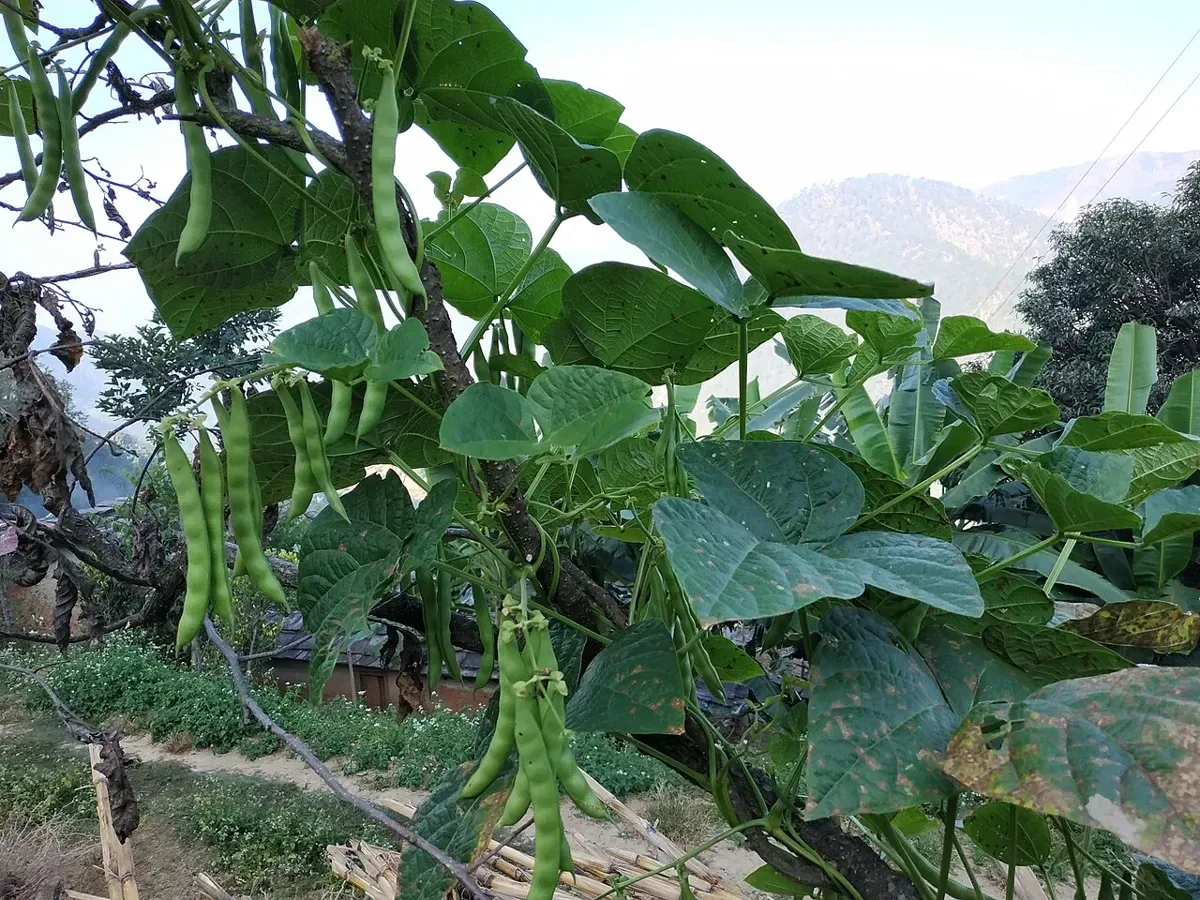
| ☀️ Light | Full sun |
|---|---|
| 💧 Water | Moderate (lightly moist) |
| 🪴 Soil | Well-drained loam, slightly acidic (about pH 5.5 to 6.5) |
| 🌡️ Temp | 10°C – 30°C |
| 🐾 Safety | Cats: not verified · Dogs: not verified |
| 📏 Mature size | 45 cm |
Where It Grows & Climate Tolerance
Pet & Companion Animal Toxicity (How to Grow French Beans in India)
Not yet verified: Toxicity status for cats, dogs, and horses has not yet been confirmed against veterinary poison-control records. Keep out of reach of pets or consult your veterinarian.
French beans grow in the cool, dry season on the Indian plains and in spring and summer in the hills. Bush varieties from ICAR institutes crop in about 70 days and fit a terrace grow bag.
Care instructions
Care Guide & Maintenance Routine
Plains: sow October to November, with a second sowing in February and early March where summers allow. Hills: sow February to March (TNAU). Water at sowing, on the third day and then weekly. Avoid the hottest months and heavy monsoon rain, which drop flowers.
Light & Sunlight
NC State Extension and the University of Saskatchewan both recommend full sun. Beans tolerate a little shade but crop less.
Watering Schedule
The University of Saskatchewan suggests about 2.5 cm of water a week for actively growing beans. Dry soil at flowering makes flowers drop, and waterlogging at any stage harms the crop, as an ICAR Indian Horticulture article notes.
Potting Mix & Drainage
Well-drained loam, slightly acidic (about pH 5.5 to 6.5)
Temperature & Humidity
Frost kills plants, so northern plains sowings must avoid late December and January. Growth stops below about 10°C. Above 30°C in March and April flowers drop, and above 35°C pods may not set (ICAR Indian Horticulture).
French beans in Indian gardens
French beans are among the quickest vegetables for a chhat or kitchen garden. An ICAR Indian Horticulture article notes the crop is grown across the country, mostly for green pods, with India also the leading producer and consumer of rajma, the dried seed of the same species.
Sowing seasons by region
- Tamil Nadu plains, Karnataka, Andhra and Telangana: TNAU recommends October to November on the plains. Bengaluru and Hyderabad terrace gardens also manage a February sowing.
- Nilgiris, Kodaikanal and Shevaroys: TNAU gives February to March for the hills.
- Punjab, Haryana, Delhi, UP and Bihar: sow after the monsoon withdraws (IMD normal date for Delhi is 25 September) so plants crop before the coldest weeks, and again in February once frost risk passes. Growth stops below about 10°C, so December and January plantings stall.
- Maharashtra and Gujarat: October to January sowings do well in Pune and Nashik.
- Himachal, Uttarakhand, Sikkim, Meghalaya: sow from March to June. Pole beans on bamboo frames crop through the summer.
Varieties to look for
ICAR-IIHR Bengaluru describes Arka Komal as an erect, bushy, photo-insensitive variety with flat, straight green pods, ready in about 70 days. Arka Suvidha is a bush type with stringless, crisp pods and resistance to rust. TNAU names YCD 1, Ooty (FB) 2, Ooty 3 (a pole type) and Premier for the hills. The ICAR Indian Horticulture article adds Kashi Rajhans and Kashi Sampann from ICAR-IIVR Varanasi, which suit both hills and plains, and pole types such as Swarna Lata and Pusa Himalaya.
Spacing and watering
TNAU sows two seeds per hill on the sides of ridges at 45 x 30 cm on the plains and at 30 x 15 cm on hill beds. It advises watering just after sowing, again on the third day and then once a week. On a terrace, a 30 cm grow bag holds three or four bush plants.
Heat and the monsoon
The ICAR article says buds and flowers drop above 30°C and pods may not set above 35°C. Heavy rain also drops flowers and spreads leaf spot. That rules out May and June on most plains and makes July and August risky on the Konkan coast, in Kerala and in Kolkata.
Rhizobium culture
TNAU suggests treating seed with Rhizobium culture the first time beans are grown in a field. Small packets are sold by KVKs and agricultural university counters.
Hill whitefly
TNAU notes glasshouse whitefly on beans in the hills from May to August and recommends yellow sticky traps coated with castor oil.
Questions from Indian growers
- Can I grow beans in Chennai? Yes, from October to February. Pick early in the morning in warm spells.
- Bush or pole for a balcony? Bush types need no frame. Pole beans give more per pot if you can fix a net to a railing.
Seasonal rhythm
Seasonal Calendar
| Month | Care Tasks | Seasonal Focus |
|---|---|---|
| Jan | Harvest, Protect from frost/heat | Tamil Nadu and Karnataka plains: picking from October sowings. North: plants stalled by cold. |
| Feb | Sow | Plains of Punjab, UP and Bihar: sow once frost risk passes. Nilgiris: start hill sowings. |
| Mar | Sow, Harvest | Hills: main sowing (TNAU). Deccan: pick February sowings. |
| Apr | Harvest, Protect from frost/heat | Plains: last pickings before heat drops the flowers. Himachal: sow pole beans. |
| May | Protect from frost/heat | Plains: too hot. Uttarakhand and Sikkim: water and train pole beans. |
| Jun | Harvest, Protect from frost/heat | Hills: picking begins. Watch whitefly from May (TNAU). |
| Jul | Harvest, Protect from frost/heat | Hills: keep picking. Plains: monsoon rain; no sowing. |
| Aug | Protect from frost/heat | Konkan, Kerala, Bengal: too wet. Hills: remove spotted leaves. |
| Sep | Sow | Deccan and Pune: sow as rains ease. North: prepare raised beds. |
| Oct | Sow | Main sowing for Tamil Nadu, Karnataka and Telangana plains (TNAU). Delhi and Punjab: early month. |
| Nov | Sow, Harvest | Last plains sowings. Pick September crops in Pune and Hyderabad. |
| Dec | Harvest, Protect from frost/heat | South: steady picking. North: cover plants on cold nights. |
Diagnostics
Common Problems & Troubleshooting
Seed rotting in cold, wet soil; flowers dropping in heat or drought; stringy, tough pods when picking is left too late; yellowing leaves in waterlogged soil; poor germination from old seed.
Pests & seasonal watch: Aphids and thrips in dry spells on the plains. Pod borer during flowering. Whitefly in the hills from May to August (TNAU). Rust and leaf spot after rain. Ask the local KVK before spraying.
- Yellow leaves — Leaves fade from green to yellow, often starting at the bottom.
- Thrips — Silvery streaks and twisted new leaves, sometimes with black specks of frass.
- Aphids — Clusters of small soft insects on new tips, often sticky.
- Whitefly — Tiny white insects fly up in a cloud when you touch the plant.
- White powder — A white powdery film on leaves, usually in still, humid air with dry soil at the roots.
- Leaf spot — Brown or tan spots with a yellow halo, sometimes with tiny dots in the centre.
- Underwatering — Soil is bone dry and leaves are crispy, curled or dull.
Q&A
Frequently Asked Questions
What is the difference between bush and pole beans?
Bush types grow about 45 cm tall, need little or no support and crop over a few weeks. Pole types climb 2 to 3 m on a trellis or wigwam and crop for longer. NC State notes bush types suit containers.
When should I sow French beans?
When the soil is warm and frost has passed. The University of Saskatchewan says seed germinates in soil of 15°C or warmer and may rot in colder soil. In hot regions, sow in the cooler part of the year.
How long until I can pick beans?
Most bush varieties start cropping about 50 to 70 days after sowing. ICAR-IIHR gives a duration of about 70 days for Arka Komal and Arka Suvidha.
Why are the flowers falling off?
Heat above about 30°C, dry soil at flowering or heavy rain can all cause flower drop, according to an ICAR Indian Horticulture article. Water evenly and mulch the soil.
Do French beans need fertiliser?
Very little. Beans fix nitrogen with root bacteria, so compost at sowing is usually enough. Too much nitrogen gives leafy plants with few pods.
Are rajma and French beans the same plant?
Yes. Rajma is the dried seed of Phaseolus vulgaris varieties grown for grain, while French beans are the same species picked as green pods.
Can I grow French beans in a pot?
Yes. Bush types do well in a container at least 25 cm deep. Three or four plants in a 30 cm pot give several small pickings.
Are raw beans safe for pets?
NC State lists the seeds as poisonous because raw beans contain a lectin that cooking destroys. No ASPCA entry was found, so pet safety is marked as not verified. Keep raw dry beans away from pets.
How do I save bean seed?
Leave a few pods of an open-pollinated variety on the plant until they turn dry and papery. Shell the seeds, dry them for another week indoors and store them in a sealed jar.
Similar Botanical Matches
Keep exploring
Related plants
Grower field notes
Reader Field Notes in India
Share how this plant performs in your local India climate.