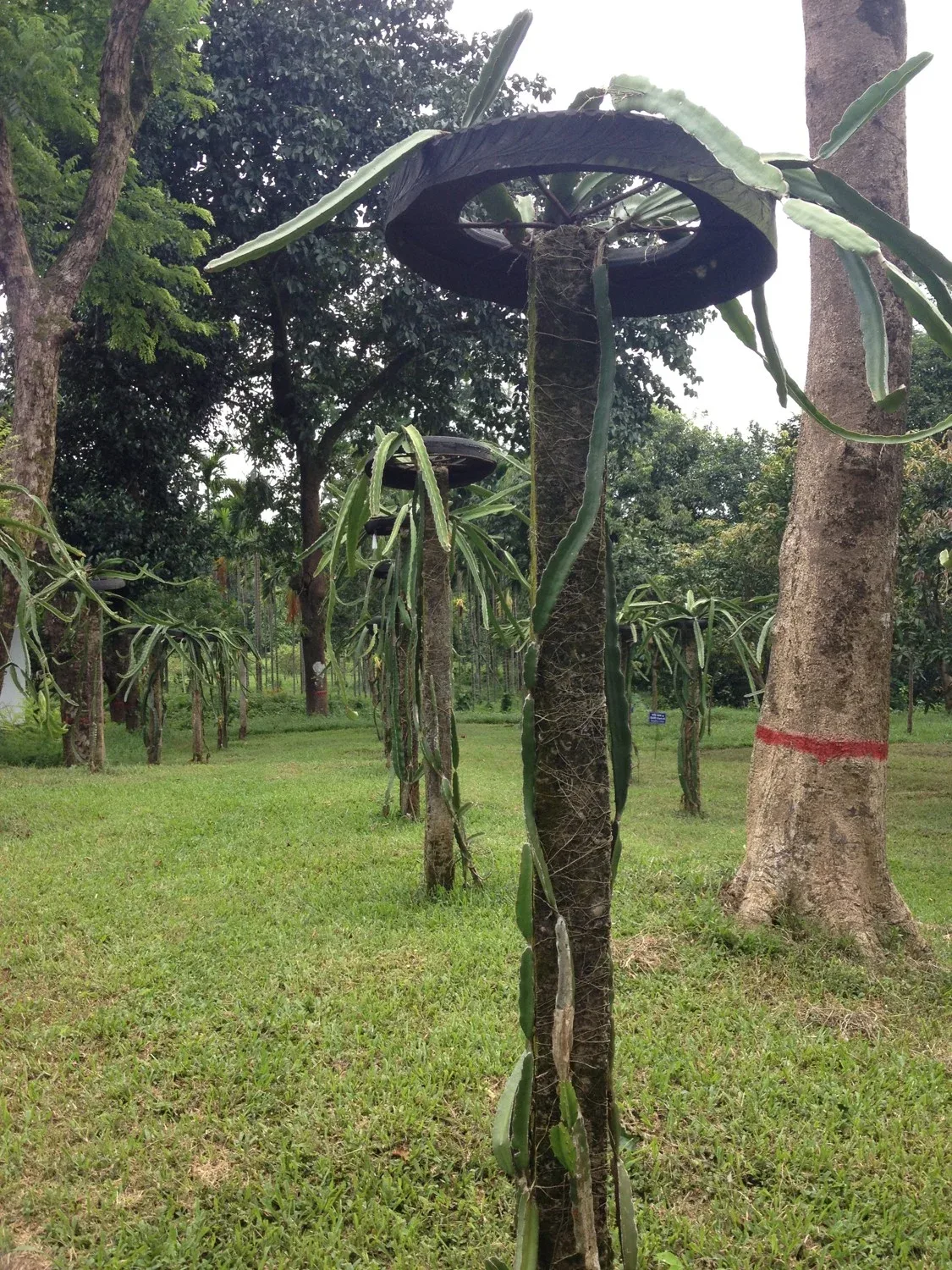
| ☀️ Light | Full sun |
|---|---|
| 💧 Water | Moderate (lightly moist) |
| 🪴 Soil | Free-draining cactus mix with coarse mineral particles |
| 🐾 Safety | Cats: not verified · Dogs: not verified |
Where It Grows & Climate Tolerance
Pet & Companion Animal Toxicity (Dragon Fruit Plant)
A rooted cutting from a named parent is a practical start for an Indian terrace. Use a low, stable container for the post, with afternoon protection where an exposed roof heats up quickly.
Care instructions
Care Guide & Maintenance Routine
A rooted cutting from a named parent is a practical start for an Indian terrace. Use a low, stable container for the post, with afternoon protection where an exposed roof heats up quickly.
Light & Sunlight
Gradually introduce an established plant to several hours of sun. In extreme heat, use afternoon shade if stem surfaces start to bleach.
Watering Schedule
Water well in warm growing weather and let the top of the mix dry before watering again. Keep the stem base out of standing water.
Potting Mix & Drainage
Free-draining cactus mix with coarse mineral particles
Temperature & Humidity
Pitaya grows best in warmth and is frost sensitive. A greenhouse or a sheltered bright spot is needed where winters are cold.
A rooted cutting from a named parent is a practical start for an Indian terrace. Use a low, stable container for the post, with afternoon protection where an exposed roof heats up quickly.
Heat and monsoon care
In dry inland pockets, water the pot after checking below the surface and watch young stems for bleaching. During sustained monsoon rain, shelter the base without squeezing plants into a dark corner. Check ties ahead of storms.
Fruit set and planting stock
Ask growers nearby which cultivars flower together and whether the nursery stock sets fruit by itself. Once flower buds form, plan to look at the open flowers after dark. A compatible second cultivar can help when pollination is limiting.
Sources
Featured photo by Anik Sarker via Wikimedia Commons, CC BY-SA 4.0. Resized for display.

Seasonal rhythm
Seasonal Calendar
| Month | Care Tasks | Seasonal Focus |
|---|---|---|
| Jan | protect | Shelter young plants from cold in the northern plains. |
| Feb | Inspect supports and use loose ties. | |
| Mar | plant | Start healthy cuttings once the weather warms. |
| Apr | Acclimate growing stems to stronger light. | |
| May | protect | Shade young stems from severe afternoon heat. |
| Jun | Check drainage before regular monsoon showers. | |
| Jul | Remove standing water and inspect the lower stems. | |
| Aug | Check flowering plants for pollination on dry evenings. | |
| Sep | harvest | Collect ripe fruit and remove damaged stems. |
| Oct | Check whether heavy arms need additional support. | |
| Nov | Water less often when nights begin to cool. | |
| Dec | protect | Protect frost-sensitive plants on cold terraces. |
Diagnostics
Common Problems & Troubleshooting
Soft, dark stem bases can develop in persistently wet mix. Bleached patches after a move into strong sun can be scorch. If flowers drop, check cultivar compatibility and night pollination.
Q&A
Frequently Asked Questions
Can you grow dragon fruit in a pot?
Yes. Use a stable container with fast drainage and a strong support. Give the mature arms space to dangle and check the pot often in hot weather.
Why does my dragon fruit flower without fruit?
Check whether the cultivar requires cross-pollination. Lack of compatible pollen, very wet weather and heat stress can all affect fruit set.
Is dragon fruit a desert cactus?
Pitaya is a climbing cactus from warm regions. Give roots air and avoid standing water, but water established plants regularly during hot, active growth.
Similar Botanical Matches
Grower field notes
Reader Field Notes in India
Share how this plant performs in your local India climate.