| ☀️ Light | Full sun |
|---|---|
| 💧 Water | Moderate (lightly moist) |
| 🪴 Soil | Fertile, well-drained loam or multipurpose potting mix |
| 🌡️ Temp | -29°C – 32°C |
| 🐾 Safety | Cats: toxic · Dogs: toxic |
| 📏 Mature size | 45 cm |
Where It Grows & Climate Tolerance
Pet & Companion Animal Toxicity (How to Grow Chives in India)
Chives are a cool-season herb in most of India. Sow after the rains in the plains for picking from December to March, or grow them through summer in the hills.
Care instructions
Care Guide & Maintenance Routine
Plains: sow from September to November and harvest from December until the heat of April. Move pots to afternoon shade from March. Hills: sow or divide in March and April. In the monsoon, raise pots off the ground and water only when the top is dry.
Light & Sunlight
NC State Extension lists full sun to partial shade, and the RHS says chives grow well in either. In hot climates, light afternoon shade keeps leaves tender. Indoors, a bright sunny window is needed.
Watering Schedule
Keep the soil lightly moist while plants are growing, especially in pots. NC State notes chives are fairly drought resistant once established, but leaves become tough and tips yellow when dry for long.
Potting Mix & Drainage
Fertile, well-drained loam or multipurpose potting mix
Temperature & Humidity
Hardy to frost and snow in the hills, where tops die back in winter. Plains winter suits it well. Above about 32°C in April and May, leaves toughen and growth slows; humid heat in coastal cities shortens its life.
Chives in Indian kitchen gardens
Chives have no common Hindi name and are often confused with hara pyaz (spring onion). Grow them once and the difference is clear: the leaves are thin as grass, hollow, and taste of mild onion without the bite. They are a favourite topping for omelettes, raita, potato dishes and dips in many city homes.
Seed or clump?
Seed is cheap and easy to buy online. It comes up in one to two weeks in cool weather but needs about three months to give a decent clump. A potted clump from a nursery gives leaves straight away and can be split into three or four pots.
Sowing time across regions
- Punjab, Haryana, Delhi, UP, Bihar: sow in late September or October, after the monsoon withdraws (IMD normal date: Delhi 25 September, Patna 8 October). Pick from December until March.
- Rajasthan and Gujarat: sow in October and November. Dry heat arrives early in Jaipur and Ahmedabad, so the season usually ends by March.
- Pune, Bengaluru, Hyderabad: October to December sowings do well. In Bengaluru, plants in light shade often carry on into May.
- Chennai, Kochi, Mumbai, Kolkata: warm, humid weather makes chives short-lived. Sow in November for a winter crop in a pot that gets morning sun.
- Himachal, Uttarakhand, Kashmir, Sikkim, Meghalaya: sow or divide in March and April. Clumps grow through summer and die back in the cold, then return.
Pots that work
A 20 cm plastic or clay pot holds a good clump. Use a mix of garden soil, cocopeat and vermicompost with good drainage holes. Grow bags work too, but sit them on bricks in the rains so they do not stay wet.
Heat and the monsoon
From March in the plains, move pots where they get sun only until about noon. In May, leaves turn tough and strong-tasting; harvest hard and let the plant rest. During heavy rain from June to September, keep pots on a covered balcony or under a shade net and remove any yellow, mushy leaves.
Picking and storing
Snip leaves with scissors a few centimetres above the soil. Wrap extra leaves in a damp kitchen towel in the fridge, or chop and freeze them in ice-cube trays with a little water. Drying in an Indian summer leaves them flavourless.
Common questions
- Will chives survive a Delhi summer? Sometimes, in light shade with careful watering, but most people re-sow in October.
- Our cat chews grass on the balcony. Safe? ASPCA lists chives as toxic to cats and dogs. Keep the pot on a high shelf.
Pairing on a terrace
Chives sit well next to dhaniya and methi in a long balcony planter during the cool months. Use the leaves on poha, upma, raita and egg bhurji just before serving.
Seasonal rhythm
Seasonal Calendar
| Month | Care Tasks | Seasonal Focus |
|---|---|---|
| Jan | feed, harvest | Delhi, Chandigarh, Lucknow: regular picking. Feed pots lightly after a heavy cut. |
| Feb | harvest | Peak leaves in the northern plains and Rajasthan. Bengaluru and Pune: steady harvest. |
| Mar | plant, harvest | Hills of Himachal and Uttarakhand: sow or plant divisions. Plains: afternoon shade from now. |
| Apr | plant, harvest | Kashmir and Sikkim: divide old clumps. Plains: final pickings before the heat. |
| May | protect | Hot winds in Punjab and Rajasthan: cut back and keep the pot in shade. Hills: first harvests. |
| Jun | protect | Raise pots onto bricks before the rains reach your city. |
| Jul | harvest, protect | Monsoon: avoid wet roots on the plains. Hill clumps: harvest freely. |
| Aug | protect | Remove soggy leaves in Mumbai, Kochi and Kolkata pots. Hills: cut back after flowering. |
| Sep | sow | Sow seed in trays in Delhi, Punjab and UP as rains withdraw late in the month. |
| Oct | sow, plant | Main sowing in the plains and Deccan. Pot up nursery clumps into fresh mix. |
| Nov | sow | Last sowing for Chennai, Mumbai and Kolkata. Hill clumps start to die back. |
| Dec | harvest | First cuttings from September and October sowings in the northern plains. |
Diagnostics
Common Problems & Troubleshooting
Yellow leaf tips from dry soil, old age or crowding; thin, weak leaves in deep shade; tough, strong-tasting leaves in heat; root rot in waterlogged pots; clumps declining when not divided.
Pests & seasonal watch: Thrips and aphids on leaves in February and March in the northern plains. Root rot in waterlogged pots in July and August. Leaf yellowing from dry soil on hot terraces in April.
- Yellow leaves — Leaves fade from green to yellow, often starting at the bottom.
- Root rot — Roots turn brown and mushy in soil that stays wet.
- Thrips — Silvery streaks and twisted new leaves, sometimes with black specks of frass.
- Aphids — Clusters of small soft insects on new tips, often sticky.
- Overwatering — Soil stays wet, leaves yellow or droop, and the pot feels heavy.
- Underwatering — Soil is bone dry and leaves are crispy, curled or dull.
- Nutrient shortage — Overall pale growth, or yellowing between veins, on a plant that is otherwise watered well.
Q&A
Frequently Asked Questions
Are chives the same as spring onions?
No. Chives are a separate perennial species with thin, hollow leaves and a milder flavour. Spring onions (hara pyaz) are young onion plants grown for both leaves and bulbs.
How do I harvest chives?
Once leaves are about 15 cm long, cut a few leaves about 5 cm above the base, as Wisconsin Horticulture suggests. Cutting the whole clump at once means waiting several weeks for regrowth.
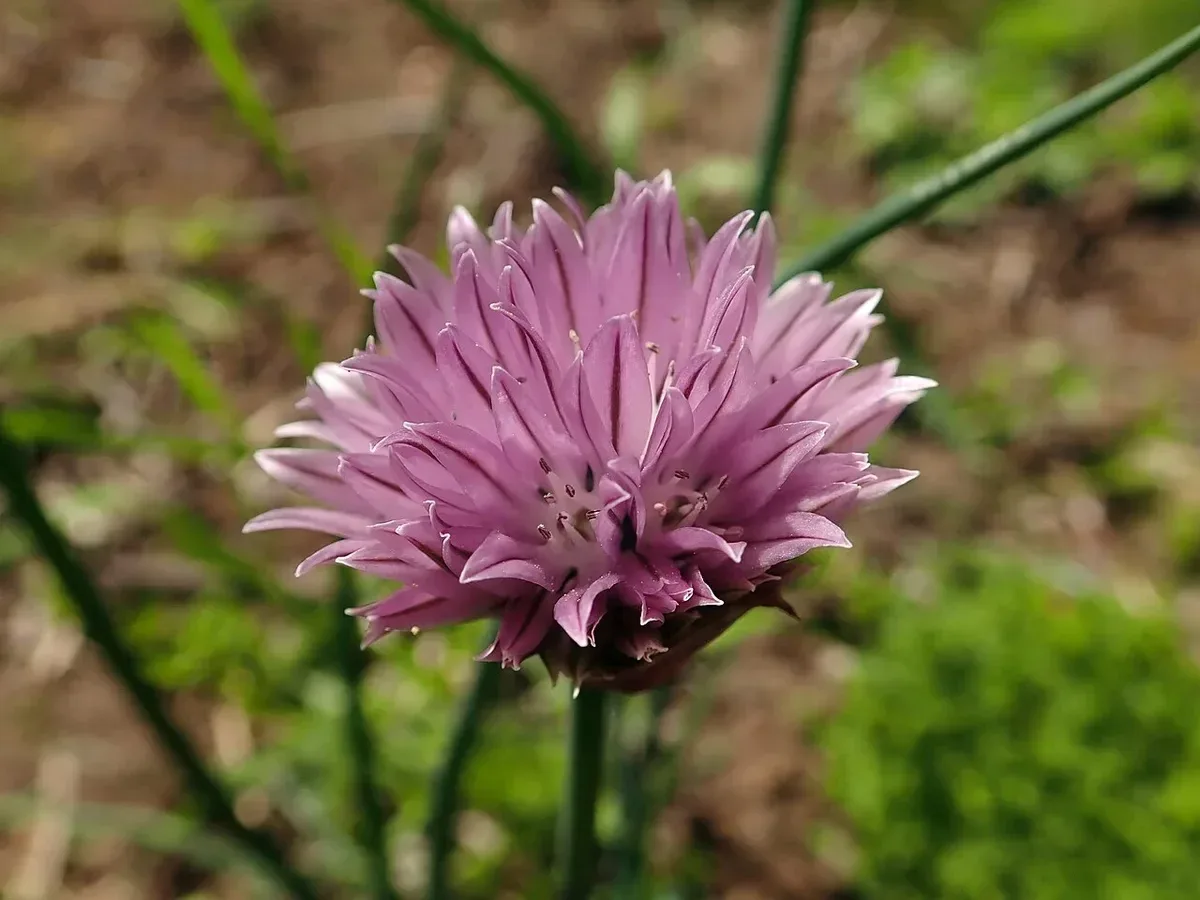
Can you eat chive flowers?
Yes. NC State notes the flowers are edible, with a mild onion flavour. Pull the florets apart and scatter them on salads.
Why are my chives turning yellow?
Common causes are dry soil, a crowded old clump, waterlogged roots or simply old leaves. Cut the clump back, divide it if crowded and check drainage.
Can chives grow indoors?
Yes. Wisconsin Horticulture suggests potting up a small clump in autumn for a bright windowsill so you have fresh leaves through winter.
Are chives toxic to dogs and cats?
Yes. ASPCA lists chives as toxic to dogs, cats and horses; the onion-family compounds can damage red blood cells. Keep pots out of reach.
How do I store chives?
Wisconsin Horticulture says cut chives keep about a week in the refrigerator. They freeze better than they dry; dried leaves lose much of their flavour.
Should I let chives flower?
You can. The flowers feed bees. Afterwards, cut stems back so the plant makes new leaves, and remove seed heads if you do not want seedlings.
How often should I divide chives?
The RHS advises lifting and dividing clumps every three or four years. Do it in spring or autumn and replant the pieces in fresh soil.
Similar Botanical Matches
Grower field notes
Reader Field Notes in India
Share how this plant performs in your local India climate.