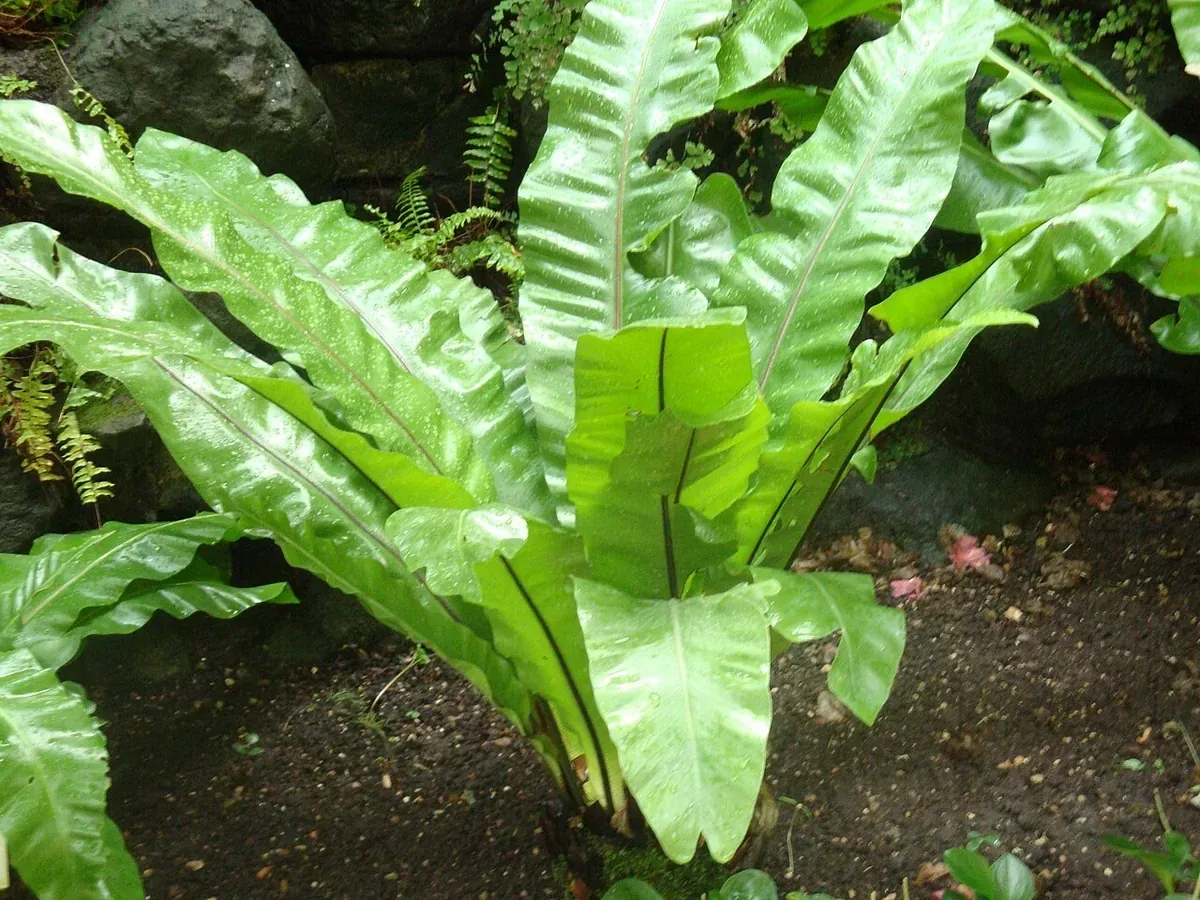
| ☀️ Light | Bright indirect light |
|---|---|
| 💧 Water | Moderate (lightly moist) |
| 🪴 Soil | Rich, porous, slightly acidic fern or houseplant mix with bark or grit for drainage |
| 🌡️ Temp | 16°C – 27°C |
| 🐾 Safety | Cats: not verified · Dogs: not verified |
| 📏 Mature size | 90 cm |
Where It Grows & Climate Tolerance
Pet & Companion Animal Toxicity (Bird's Nest Fern Care in India)
Bird's nest fern is at home in humid Kerala, Goa, Mumbai, Kolkata and the Northeast, where it can sit in a shaded veranda or garden corner all year. In Delhi, Jaipur or Lucknow it is an indoor fern, kept away from May's dry heat and January's cold nights.
Care instructions
Care Guide & Maintenance Routine
Coast, South and East: shaded veranda or garden, rain kept out of the rosette. Deccan: indoors or deep shade from April to June. Northern plains and hills: indoors, bright but sunless, with a pebble tray in the loo months and away from heaters in winter. Water at the pot edge, never into the cup.
Light & Sunlight
NC State Extension says bright light or light shade suits it, such as a north-facing window, and too much sun can turn the fronds yellow or stop growth. The RHS also recommends bright indirect light.
Watering Schedule
Keep the compost moist but not soggy, as the RHS advises. Water around the edge of the pot so water does not sit in the central rosette, where new fronds unfurl. Water less in cool months.
Potting Mix & Drainage
Rich, porous, slightly acidic fern or houseplant mix with bark or grit for drainage
Temperature & Humidity
NC State gives 16 to 21°C as ideal and says it will not survive below about 4°C. Winter nights in Punjab, Haryana, Delhi and the hills can get close, so it stays indoors there. Above 40°C with dry wind in May and June, an outdoor plant scorches; indoors with shade it copes.
A fern for humid Indian homes
Bird's nest fern is a rosette fern whose broad, apple-green fronds rise from a central cup. In Kerala, Goa, coastal Karnataka, Kolkata and the Northeast, the warm, moist air suits it so well that it can live outdoors under a tree or a veranda roof for years. In the drier North it is happier inside. Nurseries sell it as bird's nest fern or simply "Asplenium"; there is no widely used Hindi name.
Buying
Nurseries in Kerala, Karnataka and Maharashtra stock it all year, and online plant stores ship it in plastic nursery pots. The crinkled 'Crispy Wave' type is common in malls and gift shops. Choose a plant with a firm, clean centre and no brown, mushy patches where the fronds meet. Avoid courier orders in May and June; cardboard boxes in a hot van bruise the fronds.
By region
- Kerala, Goa, Konkan, coastal Karnataka, Andaman and Nicobar: outdoors in shade all year. Tuck it under a tree or a chhajja so monsoon downpours do not fill the cup.
- Kolkata, Bhubaneswar, Guwahati, Silchar: grows well in humid air; the main risk is waterlogged pots in July and August.
- Bengaluru, Hyderabad, Pune: indoors or in deep shade from April to June, when afternoons are hot and dry. Mild winters suit it.
- Delhi NCR, Punjab, Haryana, UP, Rajasthan: an indoor plant. The loo dries fronds within hours, and December nights get too cold.
- Shimla, Mussoorie, Darjeeling: strictly indoors near a bright window that gets no direct sun.
Loo and coastal heat
In the northern plains, April to June brings hot, dry wind. Keep the fern in a room with curtains drawn against the afternoon sun, set it on a tray of wet pebbles, and do not put it in the direct airflow of a cooler or AC. On the coast the heat is sticky, and the fern copes; airflow matters more than extra watering.
Monsoon
IMD's normal monsoon onset is about 1 June in Kochi, 5 June in Goa and 11 June in Mumbai. Rain pooling in the rosette is what kills these ferns, so in heavy weeks move outdoor pots under a roof or tilt them slightly. Snails come out at night; check with a torch.
Winter in the North and the hills
From December to February in Lucknow, Chandigarh or Dehradun, keep it in a bright room away from oil heaters and blowers, and water less. In the hills, keep it back from window glass on frosty nights.
Balcony or indoors?
A north- or east-facing balcony with a solid roof is fine in the South and East. Indoors, it does well in a bathroom with a window, where shower steam lifts humidity.
Spotting pests
- Scale: brown bumps along the frond midrib that lift off with a fingernail. Do not confuse them with spore lines, which are neat brown stripes under the frond.
- Mealybugs: white cotton in the centre of the rosette.
- Snails: irregular holes and slime trails after rain.
Questions
- Brown stripes under the fronds? Usually spore lines, which are normal.
- Pet safe? ASPCA has no entry, so we have not marked it either way.
Seasonal rhythm
Seasonal Calendar
| Month | Care Tasks | Seasonal Focus |
|---|---|---|
| Jan | protect | Fog over the Indo-Gangetic plains: keep the fern in the warmest bright room, clear of oil heaters. Kochi, Mangaluru, Panaji verandas: water once the surface dries. |
| Feb | protect | Chandigarh and Lucknow: still an indoor month. Chennai, Bengaluru: fresh fronds start unrolling. Konkan gardens: run a thumb along midribs for scale. |
| Mar | feed, repot | Before Holi, shift crowded rosettes into a pot one size up. Half-strength feed from now. Shimla, Darjeeling: hold off until April. |
| Apr | feed, protect | Hyderabad, Nagpur, Delhi: bright shade only, and a tray of wet pebbles below. Mumbai, Kolkata: sticky air suits it; usual watering. |
| May | feed, protect | Loo blowing across Haryana and Rajasthan: inside, curtains drawn, humidity tray full. Tamil Nadu pre-monsoon heat: deepest shade. Hill towns: busy growth. |
| Jun | protect | Rains hit Kerala around 1 June and Goa around 5 June: tilt outdoor pots so water does not sit in the cup. |
| Jul | protect | Monsoon over most states: torch round at night for snails, press the crown for softness. |
| Aug | protect | Cherrapunji, Sikkim and the Ghats at their wettest: cut off spotted fronds, prop pots on bricks. |
| Sep | feed | Final feed until spring. Delhi rains pull back late in the month and growth perks up. Coastal South: still humid. |
| Oct | protect | No more fertilizer. Punjab and UP nights turn nippy; carry balcony ferns indoors by Diwali. Hill homes: inside already. |
| Nov | protect | Northern flats and hill cottages: brightest window, no sun on the fronds. Chennai's northeast monsoon: keep rain out of the rosette. |
| Dec | protect | Peak winter in Patna, Agra, Amritsar: away from blowers and gaps under doors. Kerala and Goa: slow growth, light watering. |
Diagnostics
Common Problems & Troubleshooting
Brown, crispy frond edges from dry air or drafts; yellowing fronds from too much sun or overwatering; rotting centre from water sitting in the rosette; brown patches spreading between veins from leaf nematodes or bacterial disease; scale along the midrib.
Pests & seasonal watch: Scale and mealybugs along frond midribs, worst indoors in dry North Indian winters and pre-monsoon weeks. Snails in monsoon gardens. Bacterial leaf spot in wet, still air. NC State warns that chemical sprays damage this fern.
- Yellow leaves — Leaves fade from green to yellow, often starting at the bottom.
- Brown tips — Leaf tips and edges turn dry, brown and papery.
- Root rot — Roots turn brown and mushy in soil that stays wet.
- Mealybugs — White cottony clumps in leaf joints, often with sticky honeydew.
- Scale — Hard or soft brown bumps stuck to stems and leaf ribs, often with sticky honeydew.
- Leaf spot — Brown or tan spots with a yellow halo, sometimes with tiny dots in the centre.
- Overwatering — Soil stays wet, leaves yellow or droop, and the pot feels heavy.
- Underwatering — Soil is bone dry and leaves are crispy, curled or dull.
- Sun scorch — Bleached or crispy patches on the side that faces strong sun.
- Cold damage — Dark, water-soaked or blackened patches after a cold night or an AC blast.
- Stem rot — The stem goes soft, dark or black at soil level and the top collapses.
Care encyclopedia · 1 guide
Guides & Articles for Bird's Nest Fern Care in India
Q&A
Frequently Asked Questions
How often should I water a bird's nest fern?
Keep the mix moist but not soggy. Check it every few days in warm weather and water when the surface starts to dry, pouring around the edge of the pot.
Why are the edges of my bird's nest fern turning brown?
Usually dry air, a heater or AC draft, or the mix drying out. Check where the plant sits and whether the pot dried fully since the last watering.
Can I put water in the centre of the fern?
Avoid it indoors. Water sitting in the rosette can rot the young fronds. Water the soil around the edge instead.
Is bird's nest fern safe for cats and dogs?
ASPCA has no listing for Asplenium nidus and NC State lists no poison information, so we have marked it as not verified. Keep it out of reach if your pet chews plants.
Can bird's nest fern grow in low light?
It manages in light shade, such as a north window, but growth slows a lot in dim corners. Avoid direct sun, which yellows the fronds.
Why are there brown lines under the fronds?
Neat brown lines along the veins on the underside of mature fronds are spore cases, which are normal. Raised bumps that scrape off are scale insects.
How big does it get?
NC State lists 0.9 to 1.5 m tall outdoors in the tropics. Indoor plants usually stay smaller and grow slowly.
Can I use insecticide spray on it?
NC State notes it is sensitive to chemical insecticides. Wipe pests off by hand with a damp cloth instead.
Similar Botanical Matches
Grower field notes
Reader Field Notes in India
Share how this plant performs in your local India climate.