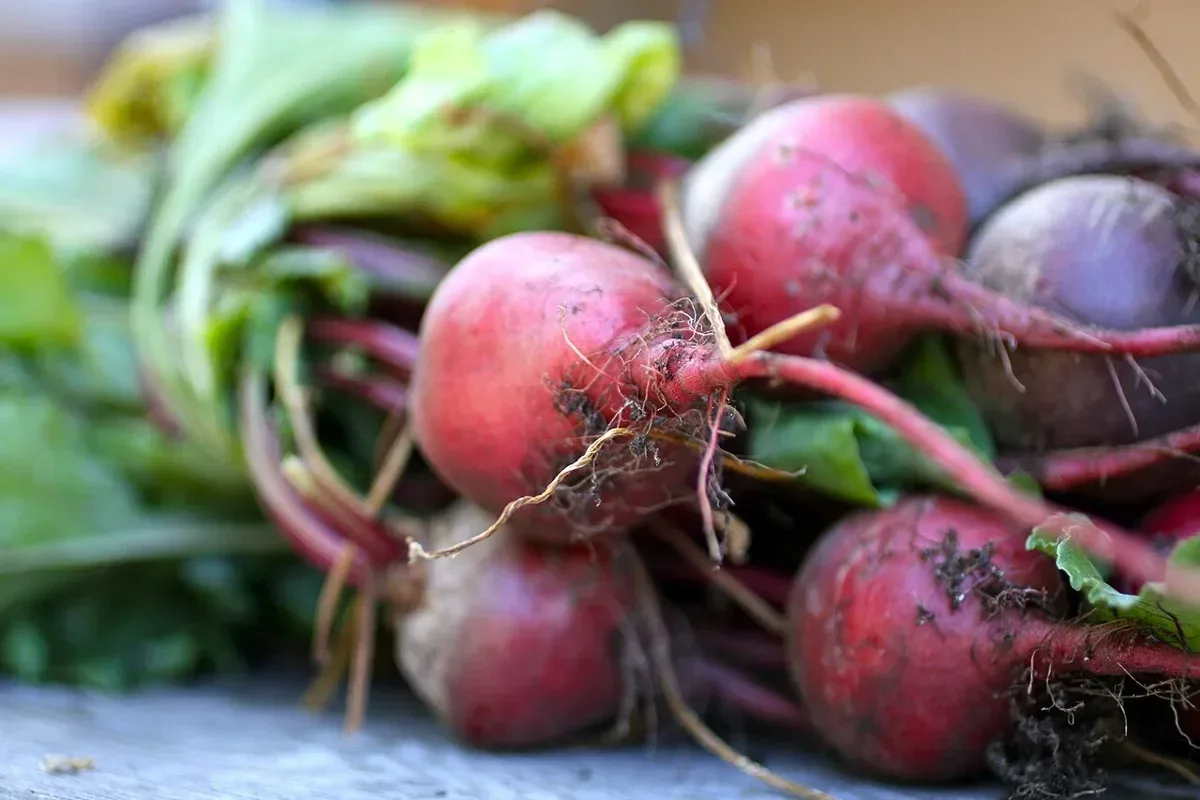
| ☀️ Light | Full sun |
|---|---|
| 💧 Water | Moderate (lightly moist) |
| 🪴 Soil | Loose, fertile, well-drained loam; pH about 6.0 to 7.0 |
| 🌡️ Temp | -3°C – 28°C |
| 🐾 Safety | Cats: non-toxic · Dogs: non-toxic |
| 📏 Mature size | 35 cm |
Where It Grows & Climate Tolerance
Pet & Companion Animal Toxicity (How to Grow Beetroot (Chukandar) in India)
In India chukandar is a cool-season crop: sown after the monsoon on the plains for winter harvests, and in spring and summer in the hills. TNAU recommends Ooty 1, Crimson Globe, Detroit Dark Red and Red Ball.
Care instructions
Care Guide & Maintenance Routine
Plains: sow from late September to December once the heat breaks. Nilgiris: TNAU gives July to August. Northern hills: sow from March. Thin to 10 cm after about 20 days, water evenly, and pull roots before the March heat on the plains.
Light & Sunlight
Full sun gives the best roots. Beetroot tolerates a few hours of shade, which grows more leaf and smaller roots.
Watering Schedule
Even moisture is the key to smooth, tender roots. Dry spells make roots woody and can trigger bolting; heavy watering after drought splits them. Water deeply once or twice a week and mulch.
Potting Mix & Drainage
Loose, fertile, well-drained loam; pH about 6.0 to 7.0
Temperature & Humidity
Plains winter suits beetroot well; ground frost in Punjab and Haryana in January rarely harms established plants. Heat from March on the plains makes roots woody and can cause bolting. Hills: sow after hard frosts end.
Chukandar in Indian gardens
Chukandar is a favourite for winter salads, halwa, raita and fresh juice, and it is one of the easiest roots to grow in a terrace grow bag. TNAU calls it a cool weather crop, and most Indian gardeners grow it between October and March.
Sowing time by region
- Punjab, Haryana, Delhi, UP: sow from late September to November, once the monsoon has withdrawn (IMD normal date for Delhi is 25 September). Successive sowings to December give roots until March.
- Rajasthan and Gujarat: October to December. Jaipur and Ahmedabad warm up quickly in March, so finish harvesting by then.
- Bengaluru, Pune, Hyderabad: mild winters allow sowing from September to January. Bengaluru gardeners often grow it almost all year in light shade.
- Nilgiris and Kodaikanal: TNAU gives a July to August season. The Nilgiris, Coimbatore, Dindigul and Theni are the main growing districts, with Mettupalayam a major market.
- Chennai, Kolkata, Mumbai: November and December sowings work best; humid heat later gives small roots.
- Himachal, Uttarakhand, Kashmir: sow from March to June after frosts.
Varieties
TNAU names Ooty 1, Crimson Globe, Detroit Dark Red and Red Ball as popular. Detroit Dark Red is the most common packet in city seed shops.
Ridges and spacing
TNAU forms ridges 30 cm apart and sows on them at 10 cm, then thins to one seedling per spot about 20 days after sowing. On a chhat, a 30 to 40 cm grow bag at least 25 cm deep holds 8 to 12 roots.
Watering through the winter
TNAU advises a good soaking right after sowing and then irrigation as needed. In Delhi and Lucknow, January fog slows drying, so check the mix before watering. In Pune or Hyderabad, dry winter winds may mean watering every two or three days.
Pests in Indian beds
TNAU lists leaf miner, flea beetle, Cercospora leaf spot and Rhizoctonia root rot. In a home garden, pick off mined leaves and keep beds drained. Ask the nearest KVK before using any spray.
Using the whole plant
Young chukandar leaves cook well in saag with palak or methi. Thinnings can go into a salad the same day.
Grow bag mix for the terrace
Many terrace gardeners in Delhi, Bengaluru and Pune use roughly equal parts garden soil, cocopeat and vermicompost or well-rotted gobar khad. That mix stays loose enough for round roots. Sieve out pebbles and keep the bag on bricks so water drains.
Questions from Indian growers
- Can I sow in April? On the plains, roots stay small and woody in heat. Wait for September or move to the hills.
- Why are my roots pale inside? Heat or patchy watering during root growth is a common reason. Sow in the cool months and water on a regular schedule.
- Is it safe for pets? ASPCA lists beets as non-toxic to dogs and cats.
Seasonal rhythm
Seasonal Calendar
| Month | Care Tasks | Seasonal Focus |
|---|---|---|
| Jan | sow, harvest | Delhi, Punjab, UP: pull roots and make a last small sowing. Bengaluru: steady harvest. |
| Feb | harvest | Northern plains and Rajasthan: main harvest. Pune and Hyderabad: pull before heat. |
| Mar | sow, harvest | Plains: finish harvesting. Himachal and Uttarakhand: first hill sowings. |
| Apr | sow, protect | Kashmir and higher hills: sow. Plains: too hot. |
| May | harvest, protect | Hills: thin and water. First pickings of baby beets. |
| Jun | harvest | Hills: main harvest from spring sowings. Plains: rest beds. |
| Jul | sow | Nilgiris and Kodaikanal: sow on ridges (TNAU July to August season). |
| Aug | sow, protect | Nilgiris: thin to one seedling after about 20 days. Plains: monsoon; no sowing. |
| Sep | sow | Late month: first sowings in Punjab and Delhi after the rains end. Bengaluru: sow. |
| Oct | sow, protect | Main sowing on the northern plains, Deccan and Gujarat. Thin earlier sowings. |
| Nov | sow, harvest | Successive sowings. Nilgiris: harvest July sowings. Chennai, Kolkata: sow. |
| Dec | sow, harvest | First roots from September and October sowings. Last plains sowing. |
Diagnostics
Common Problems & Troubleshooting
Crowded, tiny roots when seedlings are not thinned; woody or split roots after uneven watering; bolting in heat or after cold on young plants; white rings inside roots after stress; leaf spots in wet weather.
Pests & seasonal watch: Leaf miner and flea beetle on young plants in winter; Cercospora leaf spot in humid spells; Rhizoctonia root rot in poorly drained beds (TNAU). Ask the local KVK before spraying.
- Yellow leaves — Leaves fade from green to yellow, often starting at the bottom.
- Root rot — Roots turn brown and mushy in soil that stays wet.
- Aphids — Clusters of small soft insects on new tips, often sticky.
- Leaf spot — Brown or tan spots with a yellow halo, sometimes with tiny dots in the centre.
- Underwatering — Soil is bone dry and leaves are crispy, curled or dull.
- Nutrient shortage — Overall pale growth, or yellowing between veins, on a plant that is otherwise watered well.
- Tired mix — Water races down the inside of the pot and the root ball stays dry, or the mix is a hard brick.
Q&A
Frequently Asked Questions
Why do so many seedlings come up from one seed?
Most beetroot 'seeds' are corky clusters holding several true seeds, as the RHS notes. Thin to one seedling every 8 to 10 cm; snip extras with scissors rather than pulling them.
When is beetroot ready to harvest?
The University of Saskatchewan suggests pulling roots at 5 to 7 cm across for the most tender beets. That is usually eight to twelve weeks after sowing.
Can I eat beetroot leaves?
Yes. Young leaves go into salads and older leaves are cooked like spinach. ASPCA notes large mature leaves contain oxalic acid, so eat them in normal amounts.
Why are my beetroots small?
The usual causes are crowding, shade, dry soil, too much nitrogen or compacted soil. Thinning makes the biggest difference.
What causes white rings inside beetroot?
Pale rings often form when growth stops and starts with heat or uneven watering. Some varieties, such as Chioggia, have rings naturally.
Can I grow beetroot in a pot?
Yes. Use a pot at least 20 to 25 cm deep and choose a round variety. Keep the mix evenly moist.
Why did my beetroot flower?
Bolting can follow cold spells on young plants or heat and drought. Those roots turn woody; pull them and resow.
Is beetroot safe for pets?
ASPCA lists beets as non-toxic to dogs, cats and horses, and notes that large mature leaves contain oxalic acid.
How do I store beetroot?
Twist off the leaves, leaving 2 to 3 cm of stalk, and do not trim the root tip. Store unwashed roots in a cold, humid place, such as the fridge crisper or a box of damp sand in a cold room.
Similar Botanical Matches
Grower field notes
Reader Field Notes in India
Share how this plant performs in your local India climate.