
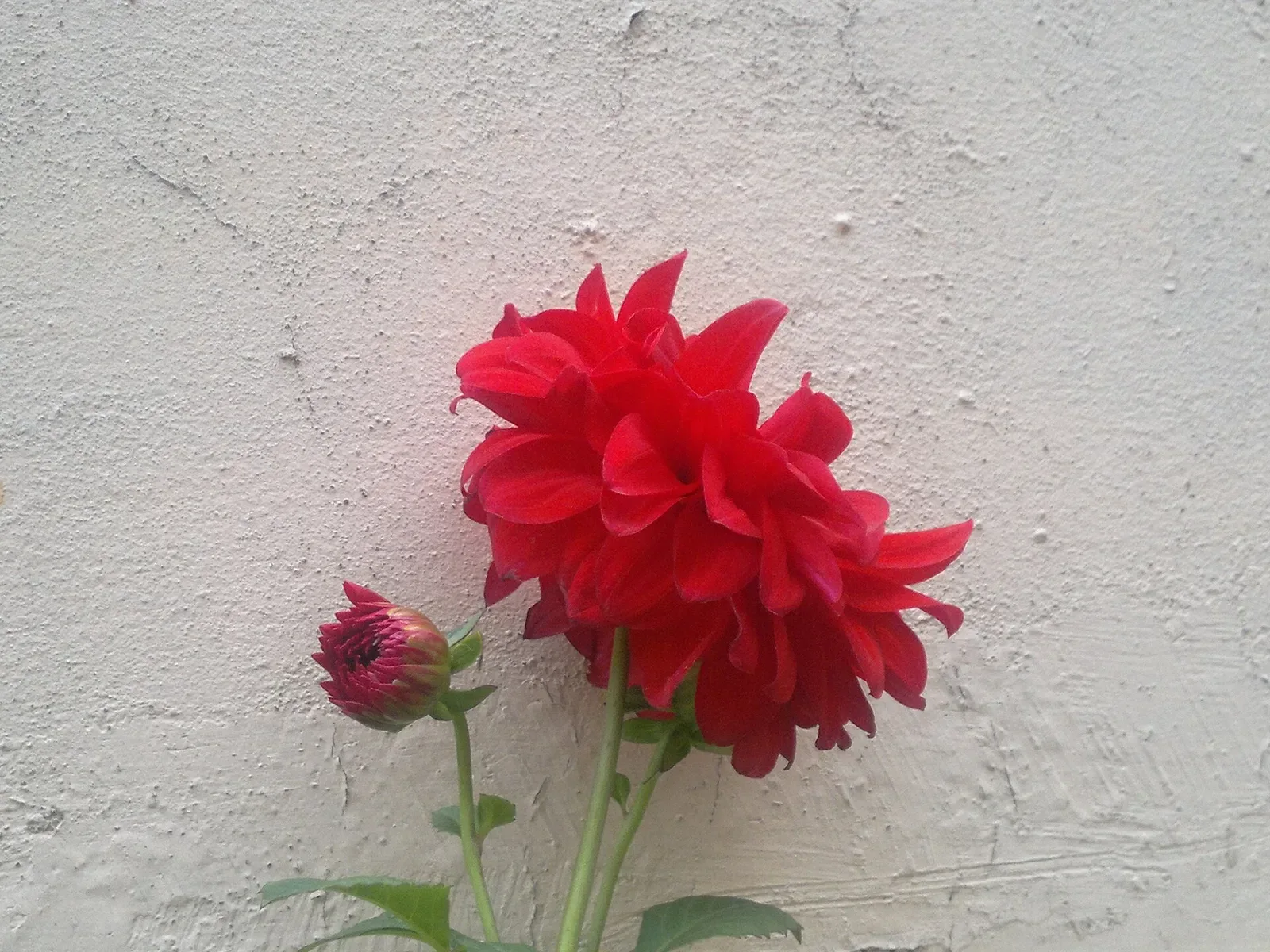
To grow dahlias in pots in North India, plant tubers, rooted cuttings or seedlings in October, in a pot at least 30 cm wide with very good drainage. Keep them in six or more hours of direct sun, pinch young plants once, stake early, and protect them from frost in December and January. Expect flowers from about mid January into April.
Dahlia season in North India
In the northern plains, the dahlia is a winter and spring flower. A Tribune gardening column for North India (2016) gives the pattern: nursery seed sown mid September to mid October, seedlings planted three to four weeks later, flowering beginning about 90 to 100 days after planting, from around mid January, and continuing to April if faded flowers are removed.
A 2024 trial by Dr YS Parmar University of Horticulture and Forestry at Dhaulakuan, in the low hills of Himachal Pradesh, compared planting on 15 September, 15 October and 15 November. It found 15 October the most suitable date for tuber production across five cultivars (Anarkali, Gargi, Giani Zail Singh, Matungini and Suryadev).
| Region | Plant | Flowers | Confidence |
|---|---|---|---|
| Northern plains (Punjab, Haryana, Delhi, UP, Rajasthan) | October | Mid January to April | Tribune column; consistent with low-hill trial |
| Low hills and foothills (for example around Ponta Sahib) | Mid October | Winter to spring | University trial (tuber production) |
| Mid and high hills with hard frost | Usually spring, after frost | Summer | General practice; no Indian source found |
| Central plains (for example Chhattisgarh) | Autumn | Winter | IGKV Raipur grows dahlias in the cool season from cuttings |
| South India and the coast | Not covered by this guide | Varies | Seasons differ from the North. Ask your state university or a local nursery |
Summer heat in the plains is too much for dahlias. Plants die back in April to May, and the tubers rest until the next autumn.
What to plant: tubers, cuttings or seed
Tubers
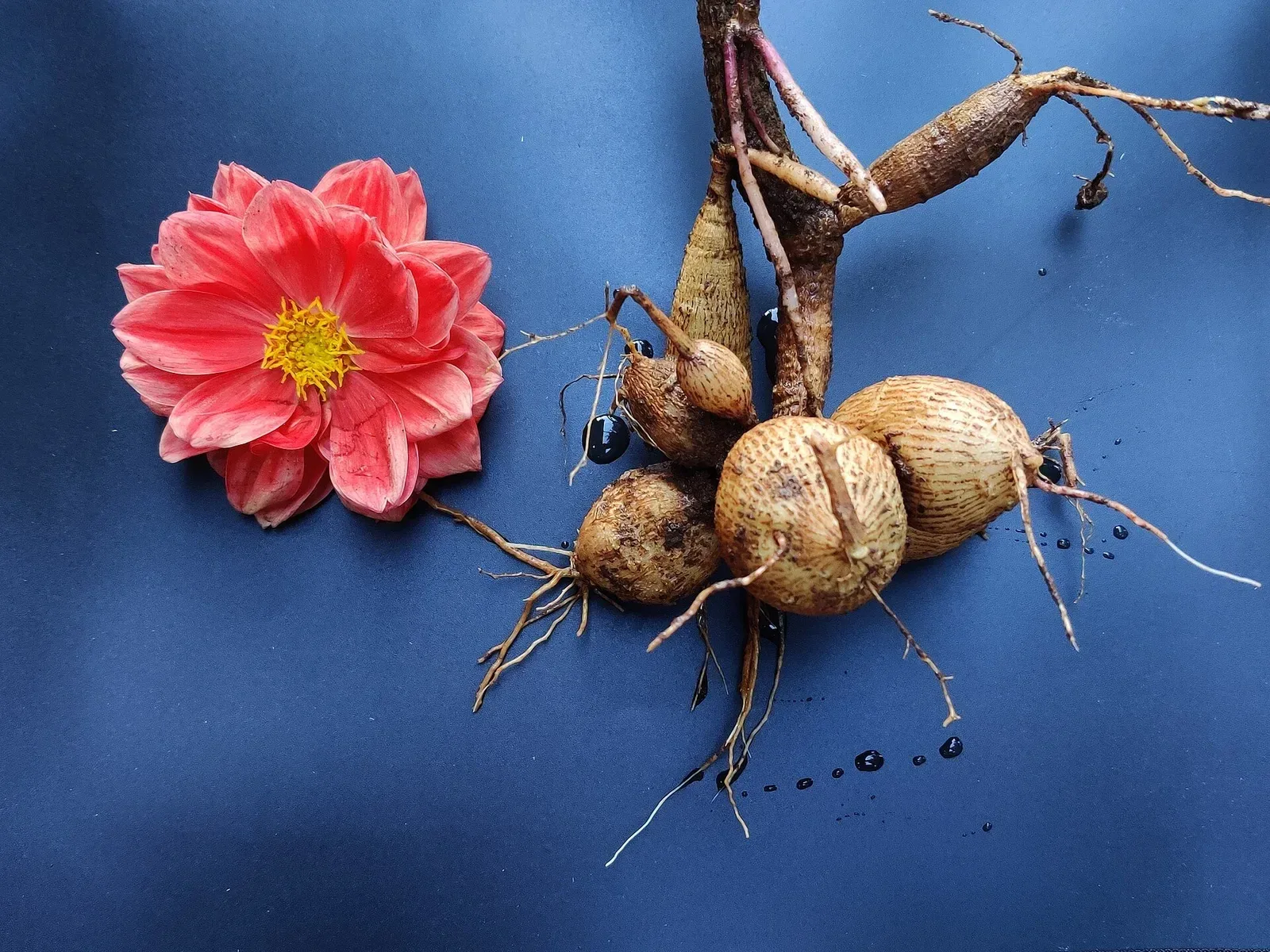
The dahlia "bulb" is really a cluster of tuberous roots. A tuber sprouts only from an eye on the old stem at its neck. A loose root with no piece of stem will stay alive but never grow a shoot. When you buy or divide tubers, check that each has a firm body and an eye or small shoot at the top.
Rooted cuttings
Most nurseries in the North sell rooted cuttings or small plants in October and November. They are the easiest start for a balcony. The Tribune column notes that many of these are brought in from other states. Choose sturdy, dark green plants without yellow lower leaves.
Seed
Seed is cheap and fun, but flowers vary. According to the same column, seed from single types gives single flowers, and seed from double types gives a mix of single and double. Use seed for a bright mixed display, not for an exact variety.
Pot, soil and planting
- Choose a pot at least 30 cm (12 inches) wide and deep for one plant. Giant decorative types do better in 35 to 40 cm pots. The pot must have drainage holes.
- Mix: 2 parts garden soil, 1 part well-rotted compost or farmyard manure, 1 part coarse sand. This is a practical home mix, not an official recipe. Dahlias do not tolerate waterlogging.
- Tubers: lay the tuber on its side about 8 to 10 cm deep with the eye facing up. Water once and then keep the mix only slightly moist until shoots appear. Wet soil before shoots form is the most common cause of rotten tubers.
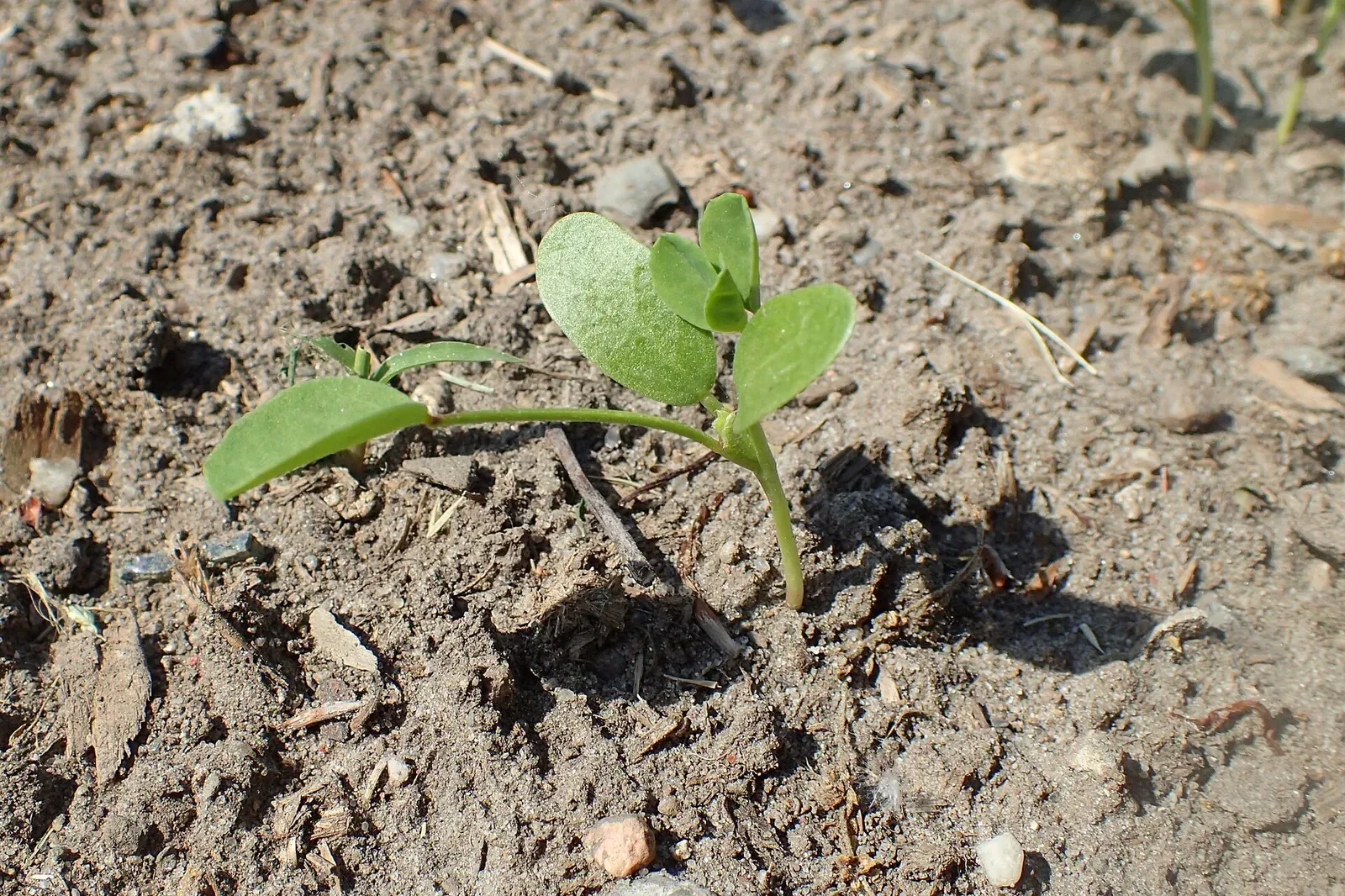
- Cuttings and seedlings: plant at the same depth they were in the nursery pot, water in, and keep out of harsh afternoon sun for two days.
- Put a stake in at planting time for tall varieties. Pushing a stake in later can spear the tubers.
Care through the season
Sun
The Tribune column recommends six to eight hours of sun and warns that dahlias in part shade become lanky and weak. On a balcony, give them the sunniest corner.
Water
Water when the top 3 to 4 cm of mix is dry. Young plants need water more often; large plants need deeper, less frequent watering. Never leave water standing in the saucer.
Feeding
Add compost at planting. Once buds form, a light liquid feed every two to three weeks helps. The column advises against frequent urea, which gives soft growth without better flowers.
Pinching
For a bushy plant with several flowers, pinch out the growing tip when the plant is about 30 cm tall (Tribune). Side shoots grow and each carries flowers. For giant exhibition blooms, leave one main stem unpinched.
Disbudding
Large decorative dahlias form a central bud with two side buds. For a big flower, keep the centre bud and remove the side buds when they are pea-sized.
Staking
Dahlia stems are hollow and break easily in wind, especially with a heavy flower on top. Tie the main stem loosely to the stake every 20 to 30 cm as it grows.
Deadheading
Cut off faded flowers down to the next pair of leaves. This keeps the plant flowering into April.
Cold and frost
Dahlias are tender. Frost can blacken leaves overnight and kill young plants. On nights with a frost warning in late December and January, move pots under a roof, against a wall, or cover them with a cloth after sunset. Remove the cover in the morning so the plants get full sun.
After flowering: saving tubers
When flowering stops and leaves turn yellow in April or May, cut the stem down to about 10 cm. In the plains, you can either keep the pot dry and shaded through summer, or lift the tubers, let them dry for a few days in shade, and store them in dry sand, sawdust or cocopeat in a cool, airy place. Do not water a resting pot through the monsoon or the tubers will rot. Check stored tubers once a month and remove any that turn soft. This is general practice; we did not find an Indian institutional source on home tuber storage.
Common problems
- Tuber did not sprout: no eye on the tuber, or the soil was kept too wet before shoots appeared.
- Tall, weak, few flowers: too little sun or too much nitrogen.
- Powdery white coating on leaves: likely powdery mildew. Improve air movement and remove affected leaves. See powdery mildew.
- Curled, sticky young leaves: check for aphids on the shoot tips. See aphids.
- Collapsed plant with soft stem base: rot from waterlogging. See stem rot.
Pets
ASPCA lists dahlia as toxic to dogs, cats and horses, with mild stomach upset and skin irritation as signs. Keep pots out of reach of pets that chew plants.
Watch: growing dahlias at home
An Indian home gardener's full walkthrough from planting to flowering. Use the North Indian timing above for your planting date.
Related plants and guides
- Dahlia plant profile
- Chrysanthemum, another favourite winter flower in pots
- Balcony and terrace gardening in India
- Winter flowering plants for North Indian balconies
Sources
- Kumar M. et al. (2024): Effect of different planting dates on tuber production in dahlia in low hill conditions of Himachal Pradesh. Plant Cell Biotechnology and Molecular Biology 25(7-8):71-78 (15 Sept, 15 Oct and 15 Nov planting compared; 15 Oct best for tubers; abstract read). Accessed 10 Nov 2026.
- Nag K. et al. (2022): Evaluation of different dahlia cultivars for cut flower and garden display under Chhattisgarh plains. The Pharma Innovation Journal 11(9):2001-2005 (IGKV Raipur cool-season trial from terminal cuttings). Accessed 10 Nov 2026.
- The Tribune (2016): Impressive dahlia display, by Amarjeet Singh Baath (North Indian timing, propagation, sun, pinching, disbudding, staking, frost; newspaper gardening column, used as secondary source). Accessed 10 Nov 2026.
- ASPCA: Dahlia (toxic, mild signs). Accessed 10 Nov 2026.


Comments
No comments yet — share what worked in your climate.