| ☀️ Light | Full sun |
|---|---|
| 💧 Water | Moderate (lightly moist) |
| 🪴 Soil | Free-draining loam or a coarse container mix for fruit trees |
| 🐾 Safety | Cats: not verified · Dogs: not verified |
Where It Grows & Climate Tolerance
Pet & Companion Animal Toxicity (Mango Tree)
Grow a mango in warm Australian gardens or a sheltered pot. Learn how to handle summer storms, disease and cooler districts.
Care instructions
Care Guide & Maintenance Routine
Mangoes thrive in warm areas of northern Australia and in suitable sheltered sites farther south. A small garden or frost-prone suburb calls for a compact tree in a pot that can be moved to shelter.
Light & Sunlight
A fruiting mango needs direct sun. Acclimate young leaves gradually when moving an indoor or nursery plant outside.
Watering Schedule
Water deeply after planting and check the root ball during dry spells. Let the surface begin to dry before watering a container again.
Potting Mix & Drainage
Free-draining loam or a coarse container mix for fruit trees
Temperature & Humidity
Mango is a warm-climate tree. Protect young growth from frost and avoid cold windows or persistent cold, wet soil.
Wet summers and flowering
Dark patches on leaves or fruit during wet spells can be anthracnose. When planting, give the canopy room to dry after rain. In warm production areas, the harvest period depends on the cultivar and location.
Sites farther south
Find the warmest, sunniest site with room for the mature canopy. Wind protection and free drainage are especially important when cool nights and winter rain arrive together. Move small containers to shelter before frost.
Do mango trees need protection in southern Australia?
Small pots benefit from frost-free shelter during cold nights. In a cooler garden choose a warm microclimate, and expect more reliable growth where summers are longer and hotter.
Sources
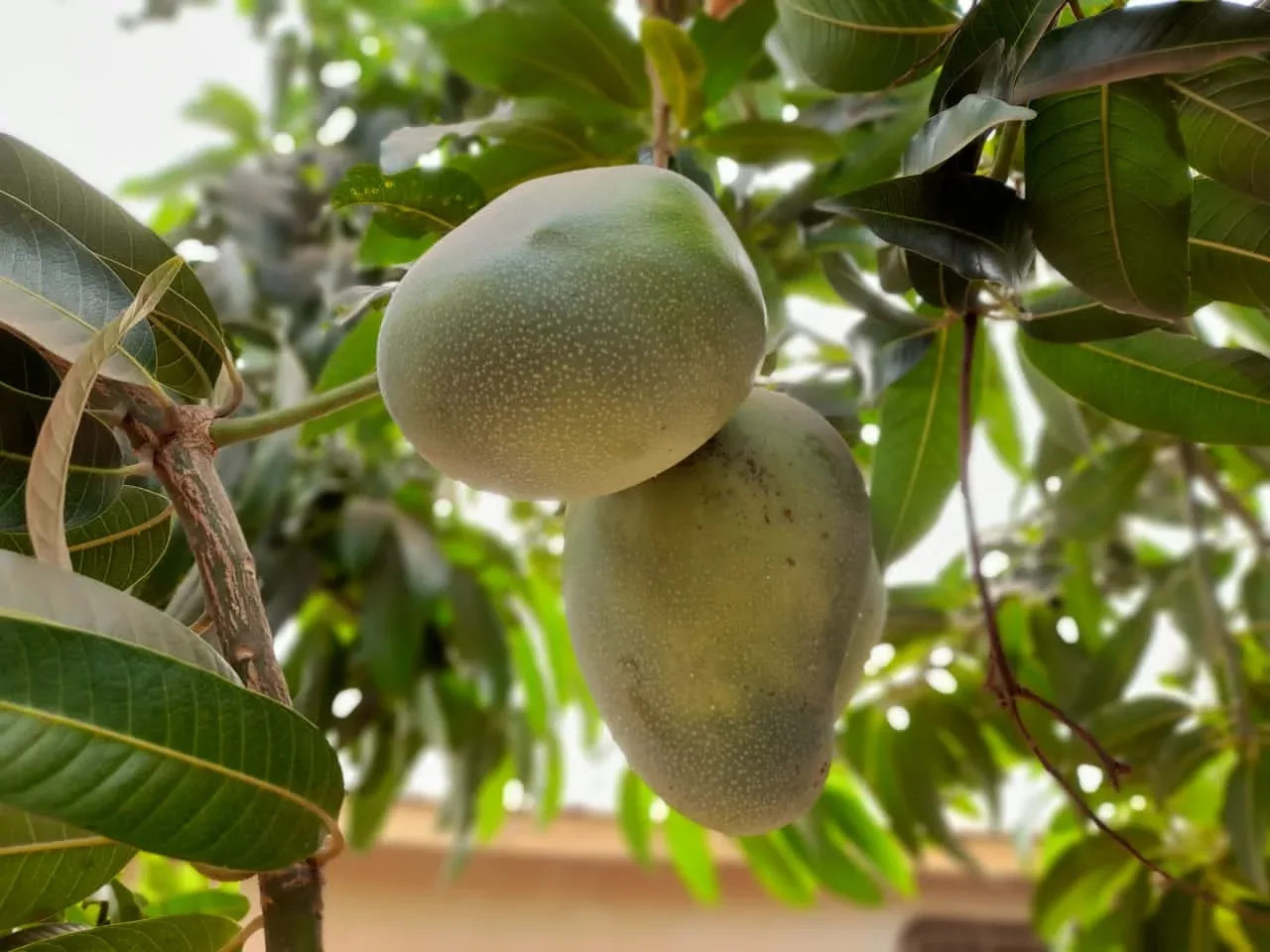
Featured photo by daSupremo via Wikimedia Commons, CC BY-SA 4.0. Resized for display.

Seasonal rhythm
Seasonal Calendar
| Month | Care Tasks | Seasonal Focus |
|---|---|---|
| Jan | harvest | Pick mature fruit where the local season has started. |
| Feb | Remove fallen fruit during humid summer weather. | |
| Mar | prune | Lightly shape a tree after its crop is finished. |
| Apr | Check drainage and water less often as autumn cools. | |
| May | protect | Move southern container trees under shelter ahead of frost. |
| Jun | Keep frost protection ready on cold nights. | |
| Jul | Avoid leaving containers in cold standing water. | |
| Aug | Look for buds and clear mulch from the trunk. | |
| Sep | Inspect flower panicles during wet weeks if flowering starts. | |
| Oct | Water young trees as warmer weather increases demand. | |
| Nov | Keep the root ball evenly moist on recently planted trees. | |
| Dec | Check fruit and foliage for dark marks after summer rain. |
Diagnostics
Common Problems & Troubleshooting
Black marks on blossoms and leaves can indicate anthracnose, especially in wet weather. Check drainage and the trunk base if a tree wilts while the soil is damp.
Similar Botanical Matches
Grower field notes
Reader Field Notes in Australia
Share how this plant performs in your local Australia climate.