
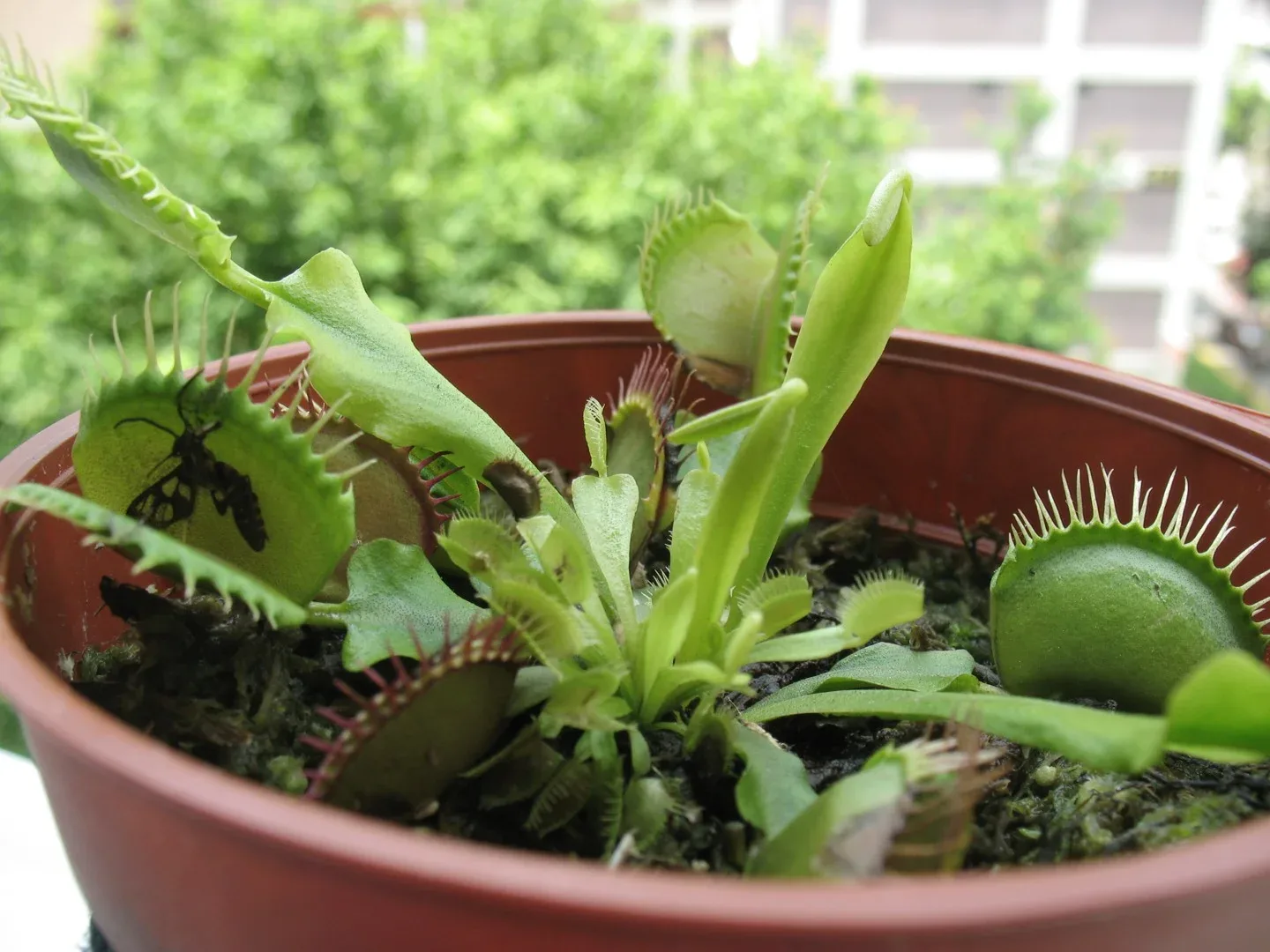
| ☀️ Light | Full sun |
|---|---|
| 💧 Water | High (consistently moist) |
| 🪴 Soil | Unfertilized carnivorous plant mix or long-fiber sphagnum |
| 🐾 Safety | Cats: non-toxic · Dogs: non-toxic |
Where It Grows & Climate Tolerance
Pet & Companion Animal Toxicity (Venus Flytrap)
Give a Venus flytrap clean low-mineral water, strong balcony light and a sheltered winter rest where local conditions allow.
Care instructions
Care Guide & Maintenance Routine
For a Venus flytrap in India, set out distilled water or collect clean rainwater before choosing the balcony spot. In the north Indian plains, the shoulder seasons usually offer a gentler starting point than an exposed terrace during the hottest weeks.
Light & Sunlight
Use a bright spot with direct sun or a strong grow light. Acclimate a nursery plant over several days. A dim terrarium can lead to long, weak leaves.
Watering Schedule
Use clean rainwater, distilled water or low-mineral reverse-osmosis water. A shallow tray works during active growth. Keep the medium damp through dormancy without keeping the crown submerged.
Potting Mix & Drainage
Unfertilized carnivorous plant mix or long-fiber sphagnum
Temperature & Humidity
The plant is a temperate perennial. Most naturally lit pots need a cooler winter rest. Protect container roots from prolonged hard freezing and use the local hemisphere's season.
Dry-season heat
Put a heat-sensitive nursery pot in uninterrupted morning light and acclimate gradually. Shade the container and water tray during the hottest afternoon hours if they heat up quickly. A bright, ventilated site is easier to manage than a sealed glass tank.
Monsoon and winter
Position the pot where downpours can drain without washing mix out of the pot. In North India and the foothills, plan a cool, bright winter rest away from hard freezes. Warm coastal sites may need a separate, deliberate indoor lighting plan if they lack a cool season.
Pet safety
The ASPCA lists Dionaea muscipula as non-toxic to cats and dogs.
Photo by Mokkie via Wikimedia Commons. CC BY-SA 3.0. Resized and converted to WebP under the same license.
Seasonal rhythm
Seasonal Calendar
| Month | Care Tasks | Seasonal Focus |
|---|---|---|
| Jan | Protect from frost/heat | Keep resting northern pots damp and out of hard freezes. |
| Feb | Routine check | Check the centre for firm new growth as natural light increases. |
| Mar | Plant out | Resume the shallow water tray as active traps appear. |
| Apr | Routine check | Build up direct balcony light while keeping the pot cool. |
| May | Protect from frost/heat | Check the tray daily through dry heat and shelter it from hot concrete. |
| Jun | Routine check | Check that the pot drains when heavy rain starts. |
| Jul | Protect from frost/heat | Shield pots from the strongest downpours without cutting off light. |
| Aug | Routine check | Keep the area airy and top up only with clean low-mineral water. |
| Sep | Routine check | Check new traps for weak growth and move to stronger light if needed. |
| Oct | Routine check | Reduce tray depth where nights and days begin cooling. |
| Nov | Protect from frost/heat | Prepare a cool, bright sheltered position for northern winter. |
| Dec | Routine check | Keep the mix damp through the resting period. |
Diagnostics
Common Problems & Troubleshooting
Old traps blacken naturally. Check light and water quality when new traps also decline. In winter, a firm growing centre and smaller traps often indicate seasonal dormancy.
Q&A
Frequently Asked Questions
What water is best for a Venus flytrap?
Use distilled water, clean rainwater or reverse-osmosis water with low mineral content. Avoid hard tap water, which can leave damaging mineral deposits in the mix.
Why are my Venus flytrap traps turning black?
Individual old traps turn black naturally, and seasonal dieback is common as days shorten. If new traps also decline during active growth, check light levels, water quality and the condition of the growing point.
Do I have to feed a Venus flytrap?
An outdoor plant usually catches enough live prey on its own. Avoid meat and repeated trigger tests. Strong light remains essential.
Similar Botanical Matches
Keep exploring
Related plants

Grower field notes
Reader Field Notes in India
Share how this plant performs in your local India climate.