| ☀️ Light | Full sun |
|---|---|
| 💧 Water | Moderate (lightly moist) |
| 🪴 Soil | Fertile, well-drained loam rich in organic matter; pH about 6.0 to 6.5 |
| 🌡️ Temp | -5°C – 30°C |
| 🐾 Safety | Cats: non-toxic · Dogs: non-toxic |
| 📏 Mature size | 60 cm |
Where It Grows & Climate Tolerance
Pet & Companion Animal Toxicity (How to Grow Snapdragon (Dog Flower) in India)
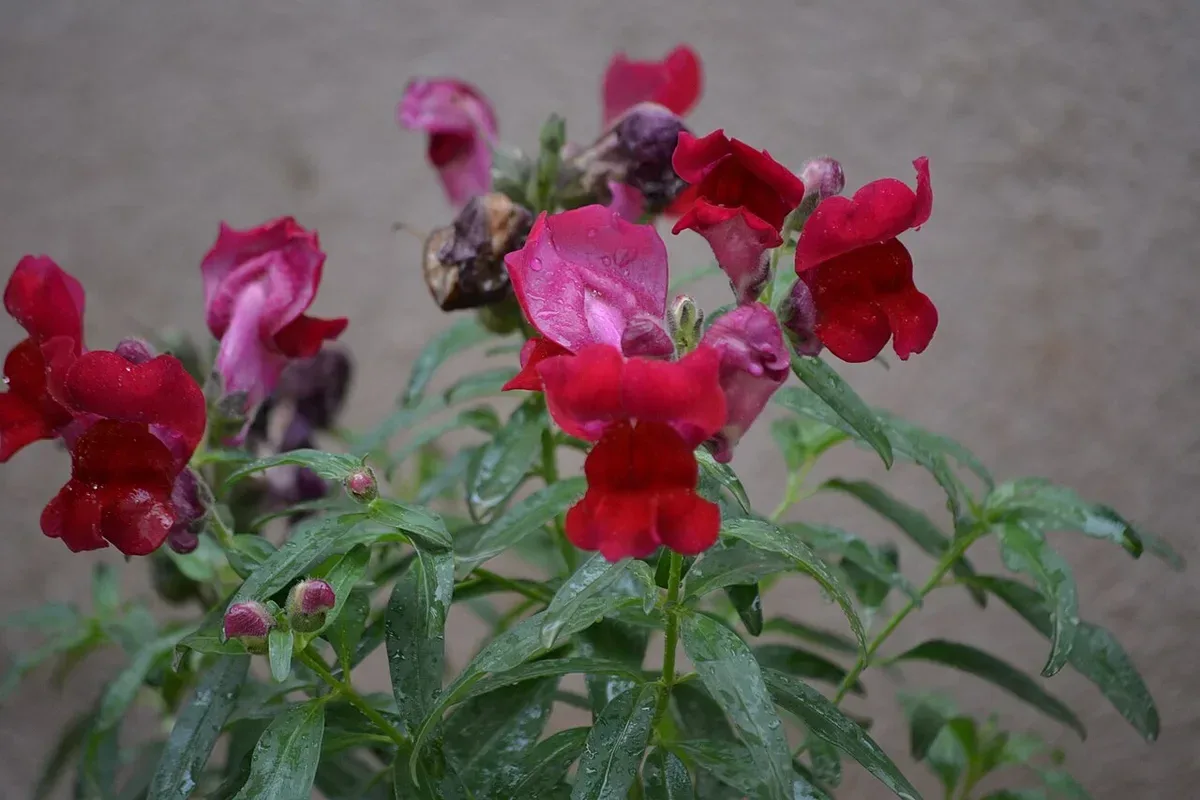
Snapdragon, often called dog flower in Indian nurseries, is a classic winter annual. Sow in September and October in the plains for flowers from January to April, and in spring in the hills.
Care instructions
Care Guide & Maintenance Routine
Plains: sow in nursery trays in September and October and transplant in October and November (PAU), spacing plants 30 to 40 cm apart. Peak bloom comes in March and April in Punjab. Hills: sow in March and April for summer flowers. Keep roots on the dry side and protect from rain.
Light & Sunlight
NC State Extension lists full sun to partial shade; PAU says it grows best in full sun. Plants in too much shade stretch and flower less. In hot spells, light afternoon shade lengthens flowering.
Watering Schedule
NC State notes low drought tolerance and advises avoiding overhead watering. PAU says the plant prefers some dryness around the roots and rots when overwatered. Water at the base when the top centimetre is dry.
Potting Mix & Drainage
Fertile, well-drained loam rich in organic matter; pH about 6.0 to 6.5
Temperature & Humidity
Hardy to light ground frost in Punjab and Haryana nights. PAU gives 18°C as optimum. Flowering slows sharply once days pass about 30°C in late March and April in Rajasthan, Gujarat and Central India.
Dog flower in Indian winter gardens
Snapdragon arrived with the British along with most of India's winter annuals, and the nickname dog flower stuck. SKUAST-Jammu lists it as "dog flower" in its floriculture package, and Punjab Agricultural University counts it among the principal cut flowers. PAU has also bred Indian varieties: Punjab Antirrhinum-1 (yellow), -2 (cream), -3 (magenta) and -4 (pink), which take about 87 to 92 days to flower and keep blooming for 72 to 81 days.
Sowing and transplanting in the plains
PAU advises sowing in September and October in nursery beds or seedling trays, with the fine seed mixed with sand. Seeds germinate in six to seven days, and seedlings 7 to 8 cm tall go into pots or beds 30 to 40 cm apart. The best transplanting window under Punjab conditions is October and November, and flowering peaks in April.
Region by region
- Punjab, Haryana, Delhi, western UP: follow PAU dates. Fog in late December slows growth; flowers run from February to April.
- Rajasthan and Gujarat: sow in October once the rains have gone (IMD normal withdrawal: Jaipur 23 September, Ahmedabad 28 September). Plants finish by late March as heat builds.
- Madhya Pradesh, Maharashtra, Telangana: sow in October and November. Pune and Bhopal winters give a good display from January to March.
- Bengaluru, Mysuru, hill towns of the South: sow from September to November. Yercaud, Ooty and Kodaikanal can carry plants for longer in the cool season.
- Himachal, Uttarakhand, Kashmir: SKUAST-Jammu groups antirrhinum with winter annuals sown September to October in the subtropical belt; at higher altitudes, sow in March and April for summer flowers.
- Kerala, coastal Tamil Nadu, Konkan: hard work in the heat and humidity. Try dwarf types in pots from November to February.
Keep it out of the rain
PAU notes that the plant does not do well during the rains, because it likes some dryness around the roots and rots when overwatered. Do not sow before the monsoon has fully withdrawn from your area.
Pots and terraces
Dwarf mixes suit 20 cm pots and window boxes on a sunny terrace. Tall types need 25 to 30 cm pots, a bamboo stake and shelter from strong winds, which snap the spikes in February and March.
Pests in Indian gardens
- Helicoverpa caterpillars: SKUAST-Jammu records them on antirrhinum; check buds for holes and pick caterpillars off.
- Damping off: seedlings collapse at soil level in wet, crowded trays. Sow thinly and water from below.
- Rust: brown pustules under leaves in humid spells, worse in crowded beds.
Saving seed
PAU suggests picking pods when completely dry. If they do not rattle, let them dry a few more days, but do not wait too long or they burst. Saved seed from mixed colours will not come true.
Seasonal rhythm
Seasonal Calendar
| Month | Care Tasks | Seasonal Focus |
|---|---|---|
| Jan | prune, feed | Northern plains: plants growing slowly in fog. Feed lightly; stake tall types. Bengaluru: first flowers. |
| Feb | feed, protect | Spikes forming in Punjab and Delhi. Tie tall stems against wind; watch for rust. |
| Mar | prune | Main bloom in Pune, Bhopal, Jaipur. Cut faded spikes back to side shoots. |
| Apr | prune | Peak flowering in Punjab (PAU). Hills of Himachal: sow for summer flowers. |
| May | harvest | Plains: plants finish in the heat; collect dry seed pods. Hill seedlings transplanted. |
| Jun | protect | Store seed in an airtight jar. Hill plants in flower; shelter from early rains. |
| Jul | protect | Monsoon: no sowing in the plains. Hill gardens: deadhead between showers. |
| Aug | sow | Buy fresh seed. Prepare trays and fine seed mix; wait for rains to ease. |
| Sep | sow | Sow in trays as monsoon withdraws from Punjab, Haryana and Delhi (PAU: September to October). |
| Oct | sow, plant | Transplant 7 to 8 cm seedlings 30 to 40 cm apart (PAU). Deccan and Bengaluru: sow now. |
| Nov | plant, prune | Finish transplanting in the North. Pinch young plants for more spikes. |
| Dec | feed | Light feed for pots. Water at the base in the morning; avoid wetting leaves. |
Diagnostics
Common Problems & Troubleshooting
Rust pustules under leaves; leaf spot and grey mould in damp weather; root rot from overwatering; floppy tall stems without support; flowering stops in heat; caterpillars boring into buds.
Pests & seasonal watch: Helicoverpa caterpillars on buds (SKUAST-Jammu). Damping off in seedling trays in October. Rust and leaf spot after winter rain or fog. Aphids on tips in February.
- Drooping — Stems and leaves hang limp even though the plant was recently fine.
- Root rot — Roots turn brown and mushy in soil that stays wet.
- Aphids — Clusters of small soft insects on new tips, often sticky.
- White powder — A white powdery film on leaves, usually in still, humid air with dry soil at the roots.
- Leaf spot — Brown or tan spots with a yellow halo, sometimes with tiny dots in the centre.
- Grey mould — Fuzzy grey mould on faded flowers, damaged leaves or soft stems.
- Overwatering — Soil stays wet, leaves yellow or droop, and the pot feels heavy.
- No flowers — A flowering houseplant stays leafy and will not bloom.
Q&A
Frequently Asked Questions
When should I sow snapdragons?
In warm climates, sow in autumn so plants flower in late winter and spring; PAU advises September to October in North India. In cold climates, start seed indoors in late winter and plant out in spring.
Why are my snapdragons not flowering?
Common causes are too much shade, heat, or rich feeding that pushes leaves. They flower best in full sun and mild temperatures around 18°C, according to PAU.
Should I pinch snapdragons?
Yes. Pinching the tip of young plants makes them branch and gives more flower spikes.
What are the orange spots under the leaves?
Most likely rust, which NC State lists as a significant problem. Remove affected leaves, water at the base and improve airflow.
Are snapdragons safe for pets?
NC State tags Antirrhinum majus as non-toxic for cats, dogs and horses.
Can you eat snapdragon flowers?
NC State says the flowers are edible but bitter, so they are best used only as a garnish.
Do snapdragons come back every year?
They are short-lived perennials usually grown as annuals. In mild climates they may survive a second year, but flowering is weaker.
Why is it called dog flower?
The flower looks like an animal's snout. The genus name comes from Greek words meaning like a nose or snout, as NC State explains.
Are snapdragons good cut flowers?
Yes. Cut spikes in the morning when the lower third of the flowers are open, strip the lower leaves and put them straight into water. Tall varieties give the longest stems.
Similar Botanical Matches
Grower field notes
Reader Field Notes in India
Share how this plant performs in your local India climate.