
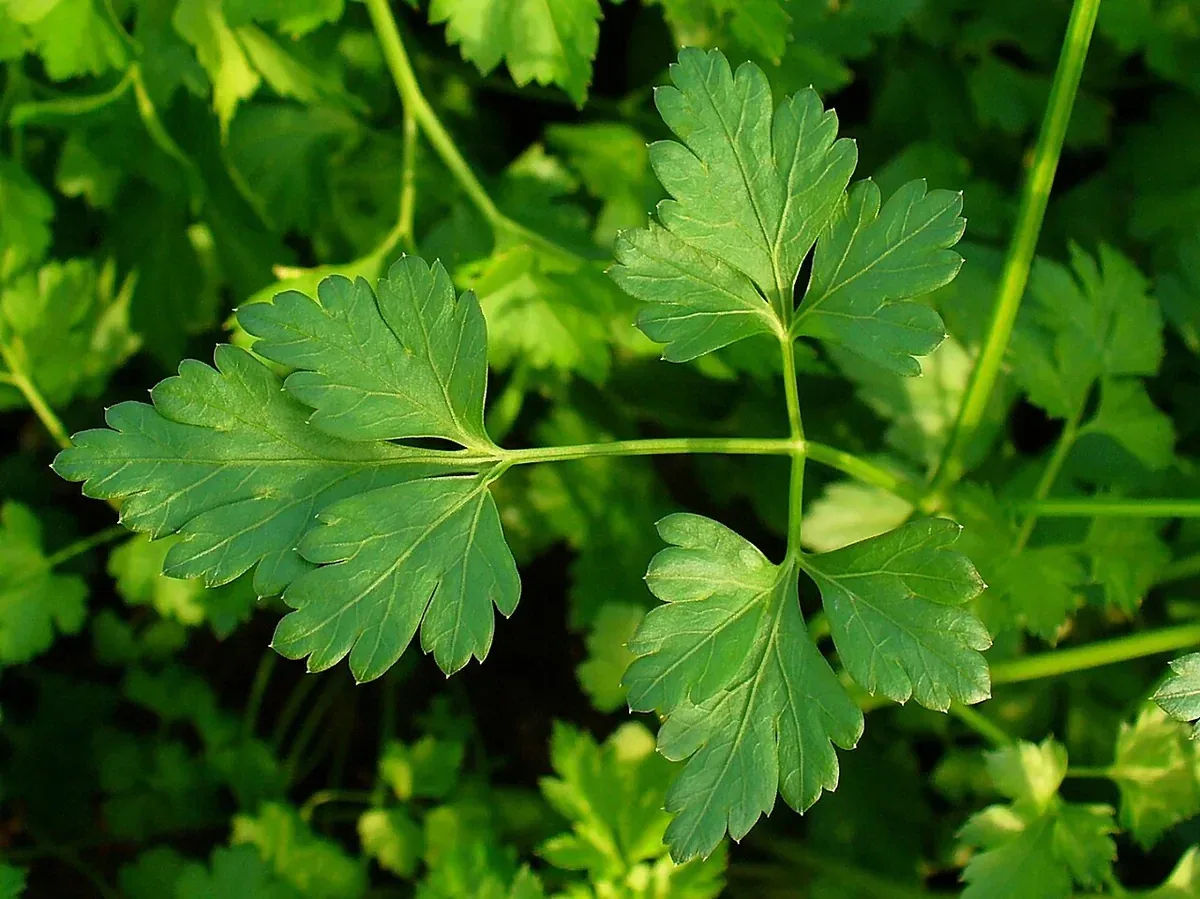
| ☀️ Light | Full sun |
|---|---|
| 💧 Water | Moderate (lightly moist) |
| 🪴 Soil | Fertile, moisture-retentive, well-drained loam or quality potting mix |
| 🌡️ Temp | -5°C – 25°C |
| 🐾 Safety | Cats: toxic · Dogs: toxic |
| 📏 Mature size | 30 cm |
Where It Grows & Climate Tolerance
Pet & Companion Animal Toxicity (How to Grow Parsley in India)
In Indian kitchen gardens, parsley is a rabi-season herb: sown after the rains retreat, picked from December to March in the plains, and grown through summer in Kashmir, Himachal and the Northeast hills.
Care instructions
Care Guide & Maintenance Routine
Plains: sow September to November, harvest until the April heat makes it bolt. J&K and high hills: sow under cover in February, in the open from March. Northeast: August to October sowing (NEC/NEDFi). Afternoon shade from March; well-drained pots during any rain.
Light & Sunlight
NC State Extension lists full sun or light shade, and the RHS says sun or partial shade. In hot climates, afternoon shade keeps it from wilting. Indoors it needs a bright, sunny window or grow light.
Watering Schedule
NC State says parsley prefers consistently moist, well-drained soil. Do not let pots dry out, but avoid waterlogged soil, which rots the taproot.
Potting Mix & Drainage
Fertile, moisture-retentive, well-drained loam or quality potting mix
Temperature & Humidity
NEC/NEDFi gives 7 to 16°C as the best range, which matches a Punjab or UP winter and a Kashmir summer. ICAR-CITH calls it highly frost tolerant. Once days pass about 25°C, particularly in muggy Kolkata or Chennai weather, it wilts and runs to seed.
Parsley in Indian kitchen gardens
Parsley has moved from five-star kitchens into home cooking in Indian cities, mainly for pasta, salads and garnish. It is a cool-weather herb, so in most of the country it belongs to the same season as methi, palak and dhania. The Hindi word "ajmod" is used for it in some places, but many sellers mean celery by that name, so go by the seed packet and the leaf.
Parsley or dhania?
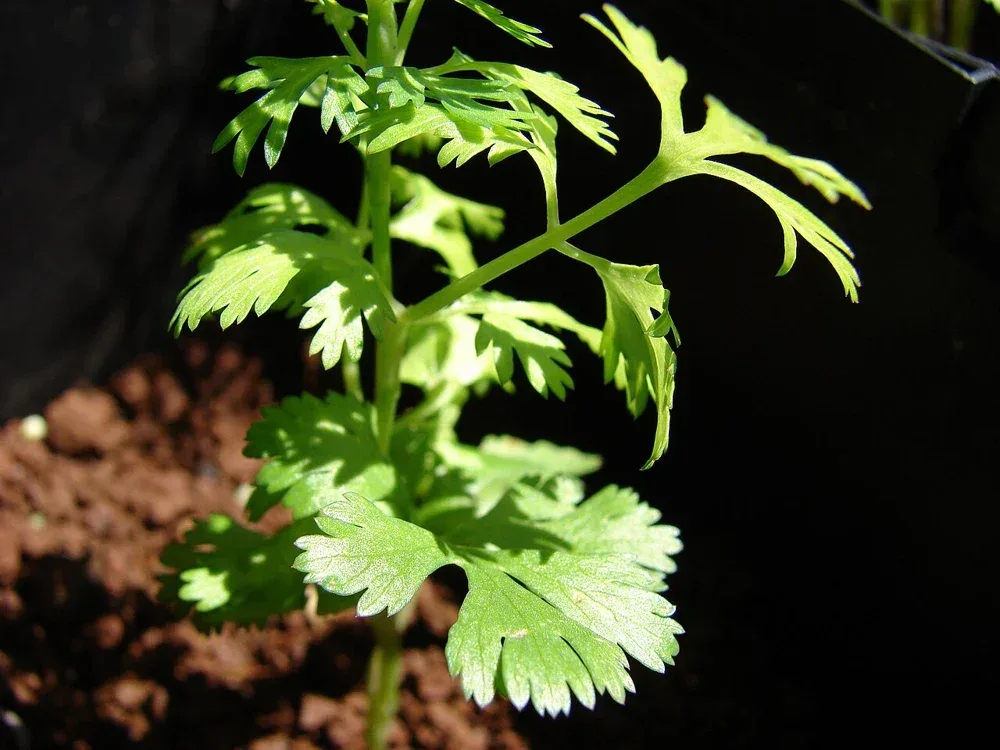
Flat-leaf parsley looks a lot like coriander at the seedling stage. Rub a leaf: coriander has its sharp, familiar smell, parsley is milder and grassier, and its leaflets are tougher and glossier. Curly parsley, the frilly kind, is hard to mistake.
Where to get seed
Online seed sellers and city seed shops stock 'Moss Curled' and plain-leaf types. ICAR-CITH notes 'Moss Curled' seed is available from IARI's Regional Station at Katrain in Kullu. Seed loses vigour quickly, so buy fresh packets each season. Potted plants show up in nurseries and some supermarkets between November and February.
When to sow, region by region
- Punjab, Haryana, Delhi, UP, Bihar, Rajasthan: sow from September to November once the monsoon has withdrawn (IMD's normal date for Delhi is about 25 September). Harvest runs from December until March, when warmth brings flower stalks.
- Maharashtra, Telangana, Karnataka, MP: October to December sowings do best; in Bengaluru and Pune the cool season is longer, so pickings can continue into March.
- Kerala, coastal Tamil Nadu, Konkan: difficult outdoors because the heat rarely breaks. Grow it in pots from November to February in the coolest, shaded spot, or try it in Ooty, Kodaikanal or Munnar.
- Jammu and Kashmir, high Himachal and Ladakh: ICAR-CITH advises protected sowing in the first fortnight of February and open sowing in the first fortnight of March. Harvest runs through summer.
- Assam, Meghalaya, Nagaland, Manipur: the North Eastern Council's package of practice sets August to October for the Brahmaputra plains and mid-hills.
Getting seed to come up
Parsley is slow. NEC/NEDFi says germination takes 18 to 24 days. Soak seed overnight in water, sow in a seedling tray or a wide gamla filled with cocopeat and compost, and keep it damp under a sheet of newspaper until shoots appear. Many people give up after a week, which is too soon.
Terrace, balcony or windowsill?
A sunny terrace in November is ideal. Grow bags work well because they drain fast. In flats, a south-facing window or balcony grill gives enough winter sun. From March, move pots to where they get morning sun only.
Spotting problems
- Aphids: green clusters under young leaves in February; leaves curl and feel sticky.
- Powdery mildew: white dusty patches on older leaves during humid spells.
- Damping off: seedlings keel over at the base when trays sit cold and soggy through foggy Lucknow or Kanpur mornings.
Common questions
- Can I grow it in summer? Not in the plains; it bolts. The hills are the exception.
- Our indie dog chews everything on the balcony; is that a problem? ASPCA lists parsley as toxic to dogs, cats and horses, so raise the trough out of reach.
- How soon to harvest? About 90 days from an early sowing, cutting outer stems first.
Seasonal rhythm
Seasonal Calendar
| Month | Care Tasks | Seasonal Focus |
|---|---|---|
| Jan | Harvest | Ludhiana, Meerut, Delhi: peak picking from outer stems. Kashmir: ready trays for protected sowing at month end. Bengaluru: cool-pocket harvests. |
| Feb | Sow, Harvest | Srinagar and high Himachal: sow under cover in the first fortnight (ICAR-CITH). Northern plains: harvests continue. |
| Mar | Sow, Harvest | Kashmir valley: open sowing in the first fortnight (ICAR-CITH). Plains: harvest; afternoon shade for pots. |
| Apr | Harvest | Plains: last pickings before heat; flower stalks appear. Hills: transplant seedlings. |
| May | Protect from frost/heat | Loo across the North: plants bolt or wilt, so move to shade or end the crop. Hill gardens: harvesting. |
| Jun | Harvest | Hill summer in Kashmir and Himachal is the main season. Plains: no parsley until autumn. |
| Jul | Harvest | Monsoon: hill harvests carry on in well-drained beds. Plains: no sowing in heavy rain. |
| Aug | Sow | Northeast plains and mid-hills: early sowings under cover as rains ease (NEC/NEDFi: August to October). |
| Sep | Sow | Northern plains: main sowing month as the rains withdraw. Soak seed overnight; sprouts take 18 to 24 days. |
| Oct | Sow, Plant out | After Dussehra: sow or transplant across the plains. Deccan: sow. Hills: last harvests before frost. |
| Nov | Fertilize | Thin seedlings and give a light feed. Coolest corners of Tamil Nadu and Kerala: sow now. |
| Dec | Harvest | First pickings from September sowings, about 90 days in. Hill beds rest or overwinter. |
Diagnostics
Common Problems & Troubleshooting
Seed that seems not to germinate (usually just slow); yellow outer leaves from age or waterlogging; wilting in heat; bolting to flower in its second year or after stress; brown leaf spots from septoria.
Pests & seasonal watch: Aphids on young leaves in February and March across the northern plains. Powdery mildew and leaf spot in humid spells (NEC/NEDFi). Damping off in cold, soggy seedling trays during foggy December weeks.
- Yellow leaves — Leaves fade from green to yellow, often starting at the bottom.
- Drooping — Stems and leaves hang limp even though the plant was recently fine.
- Root rot — Roots turn brown and mushy in soil that stays wet.
- Aphids — Clusters of small soft insects on new tips, often sticky.
- White powder — A white powdery film on leaves, usually in still, humid air with dry soil at the roots.
- Leaf spot — Brown or tan spots with a yellow halo, sometimes with tiny dots in the centre.
- Underwatering — Soil is bone dry and leaves are crispy, curled or dull.
- Nutrient shortage — Overall pale growth, or yellowing between veins, on a plant that is otherwise watered well.
Similar Botanical Matches
Keep exploring
Related plants
Grower field notes
Reader Field Notes in India
Share how this plant performs in your local India climate.