
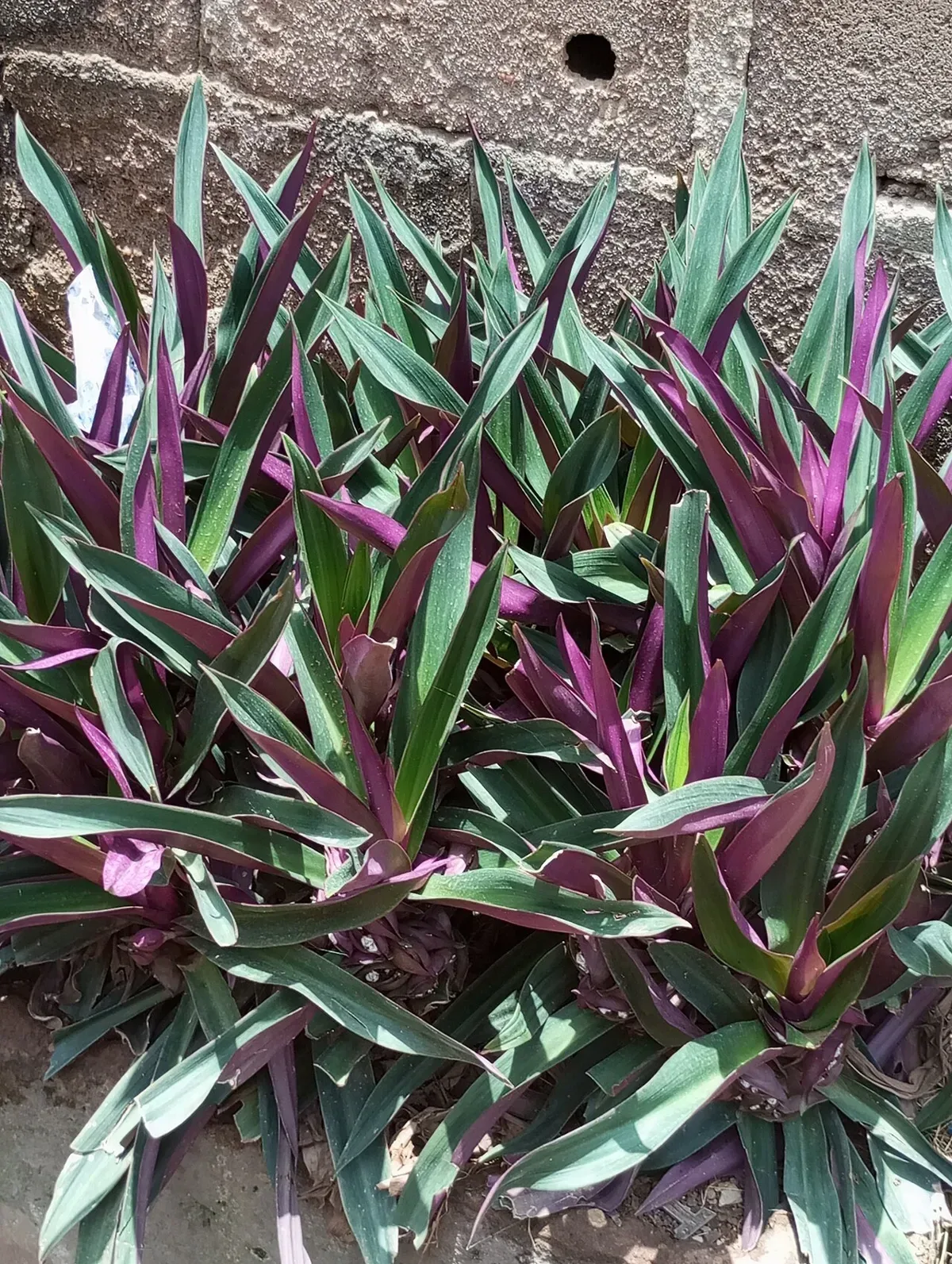
| ☀️ Light | Bright indirect light |
|---|---|
| 💧 Water | Low (allow soil to dry) |
| 🪴 Soil | Well-drained potting mix |
| 🌡️ Temp | 5°C – 38°C |
| 🐾 Safety | Cats: toxic · Dogs: toxic |
| 📏 Mature size | 30 cm |
Where It Grows & Climate Tolerance
Pet & Companion Animal Toxicity (How to Grow Moses-in-the-Cradle (Rhoeo) in India)
In India, moses-in-the-cradle is better known by its old nursery name, rhoeo. It is a common edging and pot plant in gardens, offices and housing societies across the plains and the south, coping with heat, the barsaat and some neglect.
Care instructions
Care Guide & Maintenance Routine
Plant in a well-drained gamla or kyari edge with bright shade or morning sun. Water when the top 2.5 to 5 cm of mitti dries: often in garmi, rarely in the barsaat. Divide crowded clumps in February or March or after the rains. Wear gloves, and keep it away from pets and small children.
Light & Sunlight
NC State recommends plenty of bright, indirect light, and notes that in low light the plant stretches and becomes lanky, or the purple leaves revert to green. Outdoors, it needs afternoon shade.
Watering Schedule
NC State advises letting the top 2.5 to 5 cm of soil dry between waterings in containers and cutting back on water in winter. Overwatering causes root rot.
Potting Mix & Drainage
Well-drained potting mix
Temperature & Humidity
Handles 40°C heat with water and afternoon shade. Below about 5°C, as on cold north Indian nights in January, leaves can be damaged; move pots to a sheltered verandah. Not suitable outdoors in the hills where pala is common.
Rhoeo in Indian gardens
Rhoeo is one of the most familiar purple-leaved plants in Indian gardens. It edges paths in housing societies, fills pots at office entrances and sits in rows of gamlas on terraces. NC State notes it grows outdoors in zones 9 and higher, which covers almost all of India below the hills. It handles heat well when it has water and some shade.
Light in Indian conditions
Morning sun and afternoon shade suit it best. In Delhi, Jaipur or Nagpur, full afternoon sun in May and June bleaches and scorches the leaves; move pots under a chajja or behind taller plants. In deep shade under trees or indoors in dim rooms, rosettes stretch and turn green, as NC State notes.
Water through the year
- Garmi: water when the top few centimetres dry, often every two or three days in pots.
- Barsaat: water rarely; make sure gamlas drain and beds do not hold water, since wet roots rot.
- Sardi: water less, about once a week in the north.
Region notes
- Kerala, Goa, coastal Karnataka, Mumbai, Chennai, Kolkata: grows year-round outdoors; watch drainage in the monsoon and remove self-sown seedlings.
- Delhi, Punjab, UP, Rajasthan: outdoors from March to November; in cold December and January nights, move pots to a verandah.
- Bengaluru, Pune, Hyderabad: outdoors all year in bright shade.
- Hill stations: grow indoors on a bright windowsill.
Dividing and sharing
Clumps fill a gamla within a year or two. Tip the plant out in February or March, or in September after the rains, pull apart the rosettes, and pot them in fresh mitti mixed with sand and a little vermicompost. Wear gloves; NC State notes the sap can cause contact dermatitis.
Mealybugs
White, cottony mealybugs hide deep in the leaf bases, especially in the dry months. Check regularly and wipe them out with a cotton bud. For heavy infestations, ask a nursery expert or your nearest KVK before spraying.
A typical year in Chennai
Rhoeo grows steadily through the hot months with regular watering and shade at midday. The northeast monsoon in October and November is the risky time, when heavy rain can waterlog pots. Divide clumps in January and February in the cool, dry weather.
Rhoeo in housing societies and offices
Maalis in Indian housing societies often plant rhoeo in long rows under palms and along driveways, because it needs little care and tolerates the splash of drip irrigation. In corporate lobbies in Gurugram or Bengaluru, it survives in bright atriums for months, though it fades under weak tube lights. If you are buying for an office, choose a pot near a window and ask the maali to water only when the top mitti is dry.
Questions from Indian growers
- Is rhoeo safe near children and pets? NC State lists it as toxic if eaten and its sap irritates skin. Keep it out of reach.
Seasonal rhythm
Seasonal Calendar
| Month | Care Tasks | Seasonal Focus |
|---|---|---|
| Jan | Protect from frost/heat | Sardi: water weekly; move pots in on cold nights. |
| Feb | Repot | Basant: divide crowded clumps; wear gloves. |
| Mar | Fertilize | Holi: start light monthly feeding. |
| Apr | Protect from frost/heat | Garmi: shade from afternoon sun; water often. |
| May | Protect from frost/heat | Loo: move pots under a chajja; check for mites. |
| Jun | Protect from frost/heat | Barsaat: water rarely; clear drainage holes. |
| Jul | Prune | Remove seedlings and rotting lower leaves. |
| Aug | Protect from frost/heat | Check leaf bases for mealybugs after rain. |
| Sep | Repot | After the rains: divide and pot up rosettes. |
| Oct | Fertilize | Navratri: last light feed of the year. |
| Nov | Protect from frost/heat | South India: northeast monsoon; avoid waterlogging. |
| Dec | Protect from frost/heat | North India: verandah shelter as nights cool. |
Diagnostics
Common Problems & Troubleshooting
Green, stretched rosettes in low light; root rot in wet soil; brown tips in very dry air; mealybugs at the leaf bases; skin irritation from sap; seedlings spreading in warm gardens.
Pests & seasonal watch: Mealybugs in leaf bases in the dry months, whiteflies and spider mites in garmi, root rot in waterlogged gamlas during the barsaat, and leaf spots in prolonged humidity. Ask a KVK before spraying.
- Root rot — Roots turn brown and mushy in soil that stays wet.
- Mealybugs — White cottony clumps in leaf joints, often with sticky honeydew.
- Leggy — Long weak stems with big gaps between small leaves, leaning to the window.
- Spider mites — Fine webbing and pale speckled leaves, worse in dry heated rooms.
- Whitefly — Tiny white insects fly up in a cloud when you touch the plant.
- Leaf spot — Brown or tan spots with a yellow halo, sometimes with tiny dots in the centre.
- Overwatering — Soil stays wet, leaves yellow or droop, and the pot feels heavy.
- Fading variegation — Variegated leaves come in greener, or whole shoots turn fully green.
Q&A
Frequently Asked Questions
Why is it called moses-in-the-cradle?
The small white flowers sit inside purple, boat-shaped bracts at the leaf bases, like a baby in a cradle or boat. NC State notes the species name spathacea refers to these bracts.
Is moses-in-the-cradle toxic to pets?
NC State lists it as toxic to humans and pets if eaten and notes the sap can cause contact dermatitis. ASPCA has no listing. Keep it away from pets and children.
Why are the purple leaves turning green?
Too little light. NC State notes that in low light the purple leaves may revert to green and the plant stretches.
How often should I water it?
NC State advises letting the top 2.5 to 5 cm of soil dry between waterings in pots and watering less in winter.
Can I grow it in a hanging basket?
Not well. NC State notes it grows upward rather than trailing.
How do I propagate it?
By seed, division or stem cuttings, according to NC State. Dividing side rosettes is the simplest.
Is it the same as Rhoeo?
Yes. NC State notes it was formerly called Rhoeo spathacea and is still sold under that name. Rhoeo discolor is another older name.
Can it become invasive?
In warm climates it can. NC State warns it naturalises easily and tends to become weedy. Remove seedlings and do not dump plants in natural areas.
Does it flower?
Yes, at any time of year, NC State notes, though the white flowers are small and hidden in the bracts.
Similar Botanical Matches
Keep exploring
Related plants
Grower field notes
Reader Field Notes in India
Share how this plant performs in your local India climate.