
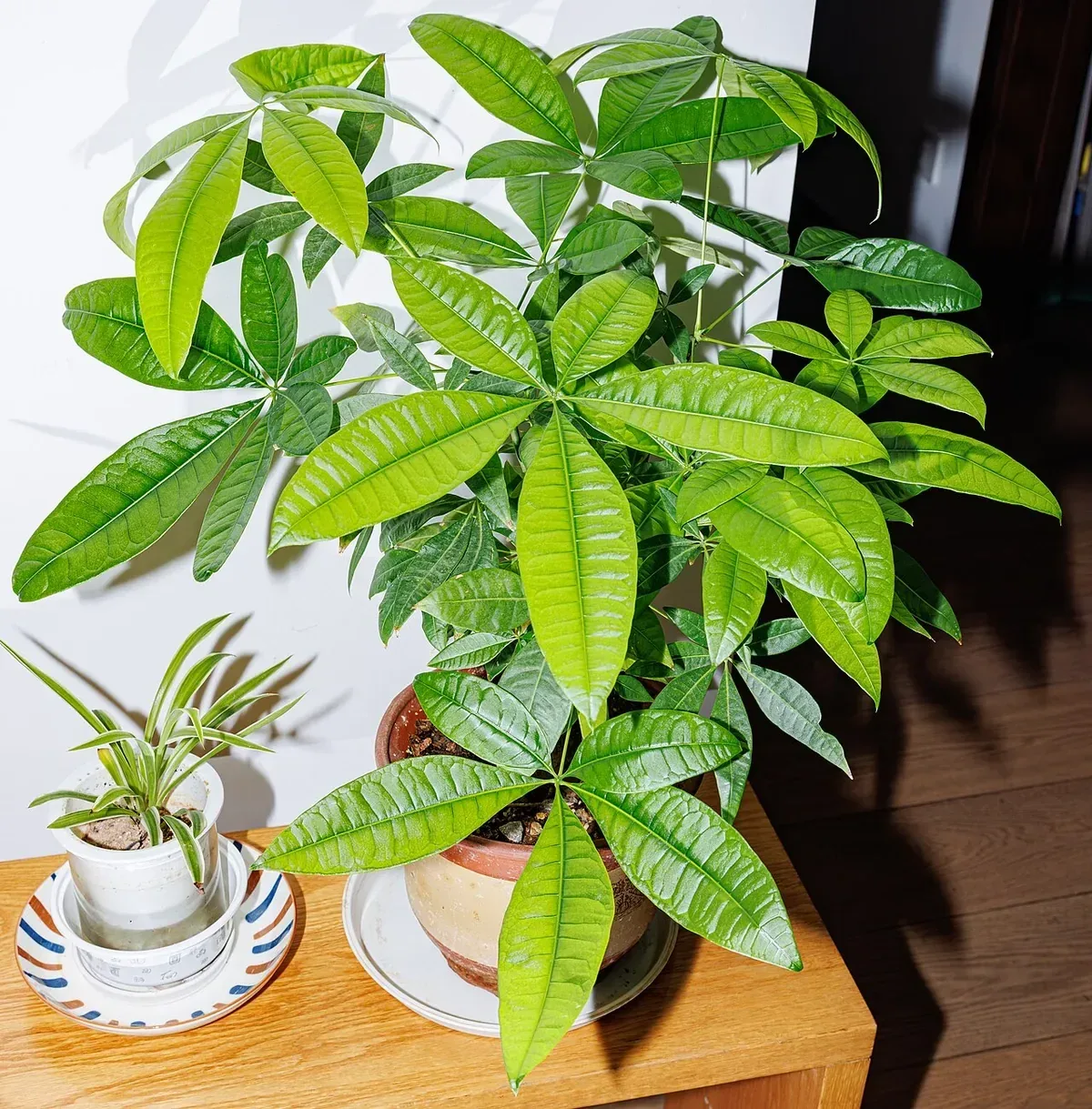
| ☀️ Light | Bright indirect light |
|---|---|
| 💧 Water | Moderate (lightly moist) |
| 🪴 Soil | Free-draining peat or coir-based potting mix with perlite or coarse sand |
| 🐾 Safety | Cats: non-toxic · Dogs: non-toxic |
Where It Grows & Climate Tolerance
Pet & Companion Animal Toxicity (Money Tree (Pachira) Care in India)
Pachira is the upright, often braided 'money tree' of Indian nurseries and Diwali gift hampers. It suits bright flats in Bengaluru or Pune, sheltered balconies in Kochi and Mumbai, and needs indoor shelter from Delhi's loo and foggy December nights.
Care instructions
Care Guide & Maintenance Routine
South and coast: a shaded balcony or bright living room all year. North: indoors from December to February and behind curtains during April to June loo. Hills: indoors only. Monsoon (roughly June to September): stretch out watering and empty saucers after every downpour.
Light & Sunlight
An east window or a spot a little back from a south or west window suits it. NC State Extension notes that direct sun can scorch the leaves. In weak light the stems stretch and the plant drops lower leaves.
Watering Schedule
Water thoroughly, let the excess drain out, then wait until the top few centimetres are dry before watering again. Standing water leads to root rot. Water less in cool months when growth slows.
Potting Mix & Drainage
Free-draining peat or coir-based potting mix with perlite or coarse sand
Temperature & Humidity
Comfortable at 18 to 24°C (NC State), and should be under shelter before 7°C. Delhi, Amritsar and Lucknow winter nights can drop below that, so move pots in. Shield from 40°C-plus May afternoons in Rajasthan and Vidarbha. Kerala, Goa and Tamil Nadu: no cold risk.
Pachira in an Indian flat
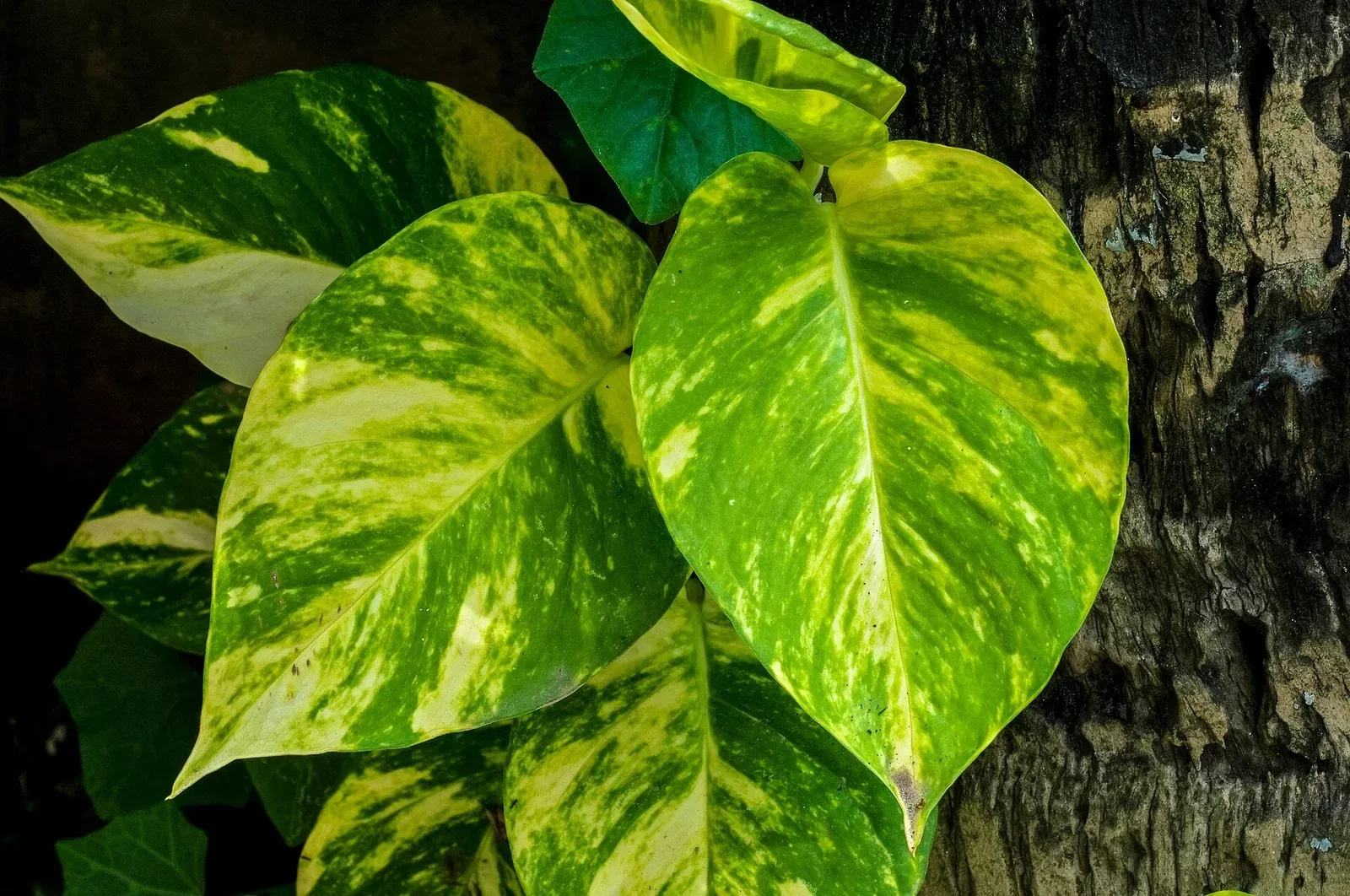
Ask for a "money tree" at a roadside nursery in Pune or Lucknow and there is a fair chance the seller hands you a pothos vine, because in Hindi-speaking homes that vine is the money plant. Say "Pachira" or "braided money tree" to get the upright one. There is no common Hindi or regional name for it. Many families buy it as a vastu or feng shui gift for Diwali, a griha pravesh or a new office, and those gift plants are often sold in a glazed ceramic pot with no drainage hole. Repot those into a pot that drains before the first watering at home.
Where to buy and what size
City nurseries, plant shops in malls and online stores such as Ugaoo and Nurserylive sell it. Small plants come in plastic nursery pots labelled by diameter in inches, and the bigger braided ones in heavier plastic or fibre pots. Pick one with firm trunks at soil level, no soft or wrinkled bark, and fresh leaves at the tips. Plants that sat in a hot delivery van can look limp on arrival, so give them a few shaded days before judging.
Summer: loo in the North, stickiness on the coast
From April to June, Delhi, Jaipur, Ludhiana and Agra get the loo, a hot, dry westerly wind. Leaves on an open west-facing balcony can crisp within a day of it. Shift the pot indoors or behind a curtain, and keep it out of the direct blast of a desert cooler or split AC. Mumbai, Chennai, Kochi and Kolkata stay humid, which Pachira enjoys, but airless corners there breed mealybugs and fungus gnats, so leave a little space around it and open the windows on breezy days.
Monsoon
The India Meteorological Department gives 1 June as the normal monsoon arrival in Kerala, 11 June for Mumbai and 27 June for Delhi, with the whole country covered by about 8 July. From then until withdrawal (25 September in Delhi, 8 October in Mumbai) the mix dries slowly. Check with a finger before every watering, empty the outer pot after rain, and lift balcony pots onto bricks so they do not sit in puddles. A trunk base that feels squashy is the warning sign.
Winter in the North and in the hills
December and January nights in Punjab, Haryana, Delhi and UP get cold, and foggy weeks cut daylight. Bring balcony plants into the brightest room and keep them a little away from oil heaters and blowers. In Shimla, Mussoorie, Darjeeling and Srinagar it is a strictly indoor plant all year, placed at a sunny window and moved back from the glass on frosty nights.
Balcony or living room?
An east-facing balcony with a grill and a chhajja overhead suits it well in the South. On high floors, wind can tear the leaves and dry the pot fast, so a sheltered corner is better than a railing. Indoors, a spot beside a bright window beats a dark corner chosen for vastu. Under office tube lights alone it slowly thins out.
Spotting pests in Indian homes
- Mealybugs (common in Kolkata and Chennai flats): cottony tufts tucked into the braid. Squash one; a pinkish smear confirms it.
- Scale: flat brown bumps that a fingernail lifts off, with a sticky film on the floor tiles below.
- Spider mites (April to June in Delhi, Jaipur, Nagpur): tiny pale speckles. Tap a leaf over a white notebook page and watch for moving dots.
- Ants: a line marching up the pot usually means sap-suckers already live there.
Questions Indian readers ask
- Will it bring wealth? That is vastu and feng shui belief, not botany.
- Bedroom? Fine, provided daylight reaches it.
- Yellowing in an air-conditioned office? Chilled air hitting foliage, plus overwatering because the soil stays damp under AC.
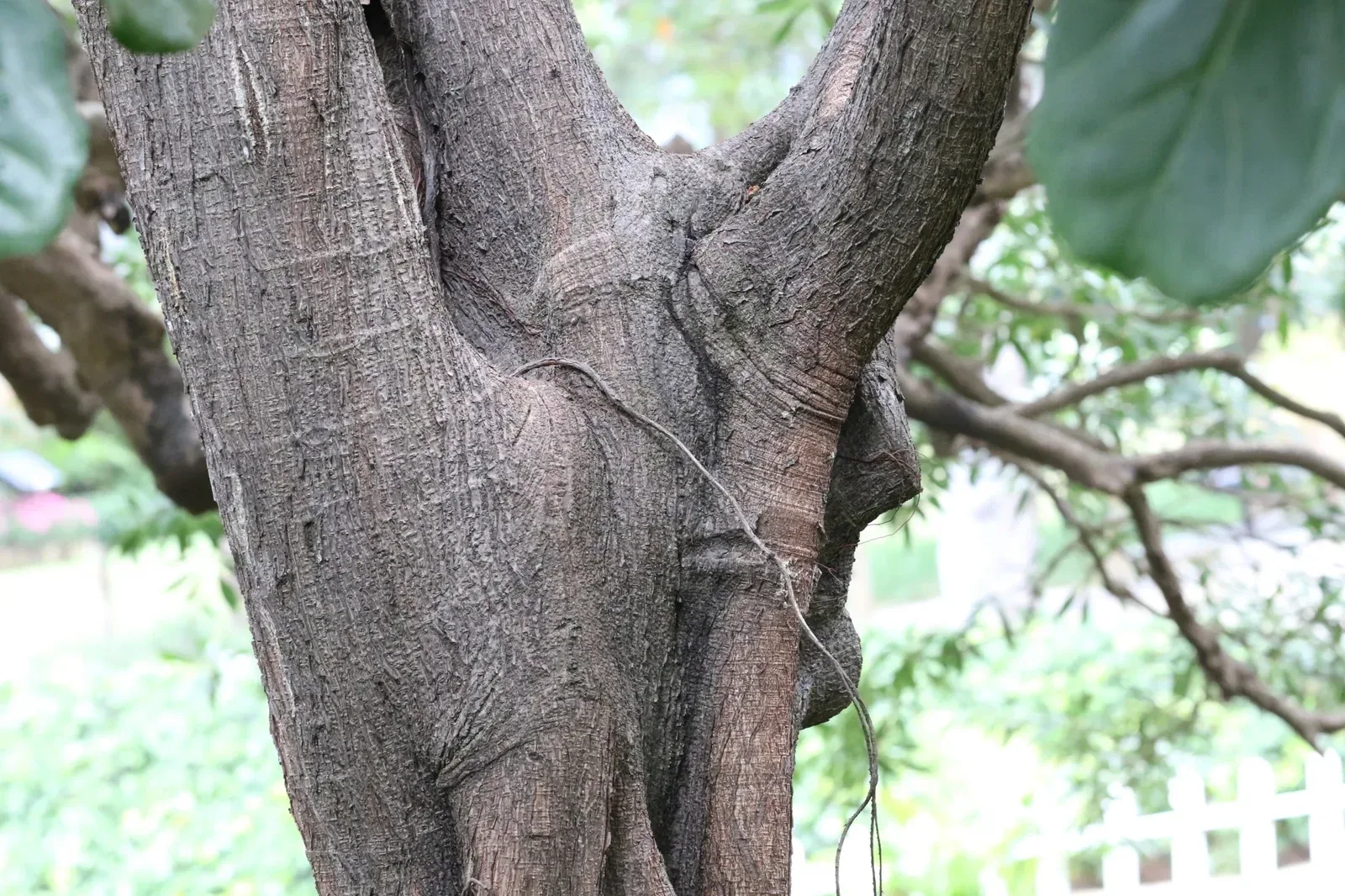
- Untwisting the braid? Not possible; those stems have fused into shape.
- Gift from Diwali, now drooping? Check for a missing drainage hole first.
Seasonal rhythm
Seasonal Calendar
| Month | Care Tasks | Seasonal Focus |
|---|---|---|
| Jan | Protect from frost/heat | Delhi, Lucknow, Chandigarh: indoors in the brightest room, watered every two to three weeks. Chennai and Kochi: normal care. Shimla: away from frosty glass. |
| Feb | Prune | Northern plains: light trim once the fog lifts. Bengaluru and Hyderabad: start shaping. Coastal Konkan: look under leaves for scale. |
| Mar | Fertilize, Repot | Repot almost everywhere before Holi heat. Begin monthly feeding. Hill towns: hold repotting until April. |
| Apr | Fertilize | Plains: pull pots off west-facing ledges. South: shade cloth for afternoons. Darjeeling and Mussoorie: cuttings root now. |
| May | Fertilize | Loo season in Rajasthan, Punjab and Delhi: check the mix every few days. Mumbai: humid, water moderately. Hills: best growth month. |
| Jun | Protect from frost/heat | Monsoon reaches Kerala around 1 June and Mumbai around 11 June: cut watering, empty saucers. Delhi still hot until late June. |
| Jul | Protect from frost/heat | Rains cover the country by about 8 July. Water only when the top layer is dry. Fungus gnats appear in soggy pots. |
| Aug | Protect from frost/heat | Wettest weeks on the west coast and in the Northeast. Feel trunk bases for softness; raise balcony pots on bricks. |
| Sep | Prune, Fertilize | Delhi rains withdraw around 25 September. Final feed of the year, tidy straggly shoots. Mumbai stays humid. |
| Oct | Protect from frost/heat | Tamil Nadu's northeast monsoon begins: water sparingly in Chennai. Plains: stop feeding. Hill homes: bring pots inside. |
| Nov | Protect from frost/heat | Diwali gifts: move them out of drainless ceramic pots. North: shift balcony plants in on cold nights. |
| Dec | Protect from frost/heat | Fog weeks in the Indo-Gangetic plains: wipe dust off leaves for light. Keep clear of room heaters. South: slow growth. |
Diagnostics
Common Problems & Troubleshooting
Yellow lower leaves and soft trunk base from overwatering; leaf drop after a move or a cold draft; brown crispy edges from dry air or underwatering; scorched patches from direct sun; leggy growth in low light.
Pests & seasonal watch: Pre-monsoon dry heat in North and Central India: spider mites. Humid Mumbai, Kolkata and Chennai flats: mealybugs and scale in the braid. July and August: fungus gnats over soggy mix. Ant trails on the pot point to sap-suckers.
- Yellow leaves — Leaves fade from green to yellow, often starting at the bottom.
- Brown tips — Leaf tips and edges turn dry, brown and papery.
- Root rot — Roots turn brown and mushy in soil that stays wet.
- Mealybugs — White cottony clumps in leaf joints, often with sticky honeydew.
- Leggy — Long weak stems with big gaps between small leaves, leaning to the window.
- Spider mites — Fine webbing and pale speckled leaves, worse in dry heated rooms.
- Fungus gnats — Tiny dark flies hover around wet potting mix.
- Scale — Hard or soft brown bumps stuck to stems and leaf ribs, often with sticky honeydew.
- Overwatering — Soil stays wet, leaves yellow or droop, and the pot feels heavy.
- Leaf drop — Many leaves fall in a short time, sometimes still green.
- Sun scorch — Bleached or crispy patches on the side that faces strong sun.
- Cold damage — Dark, water-soaked or blackened patches after a cold night or an AC blast.
Q&A
Frequently Asked Questions
Is a money tree the same as a money plant?
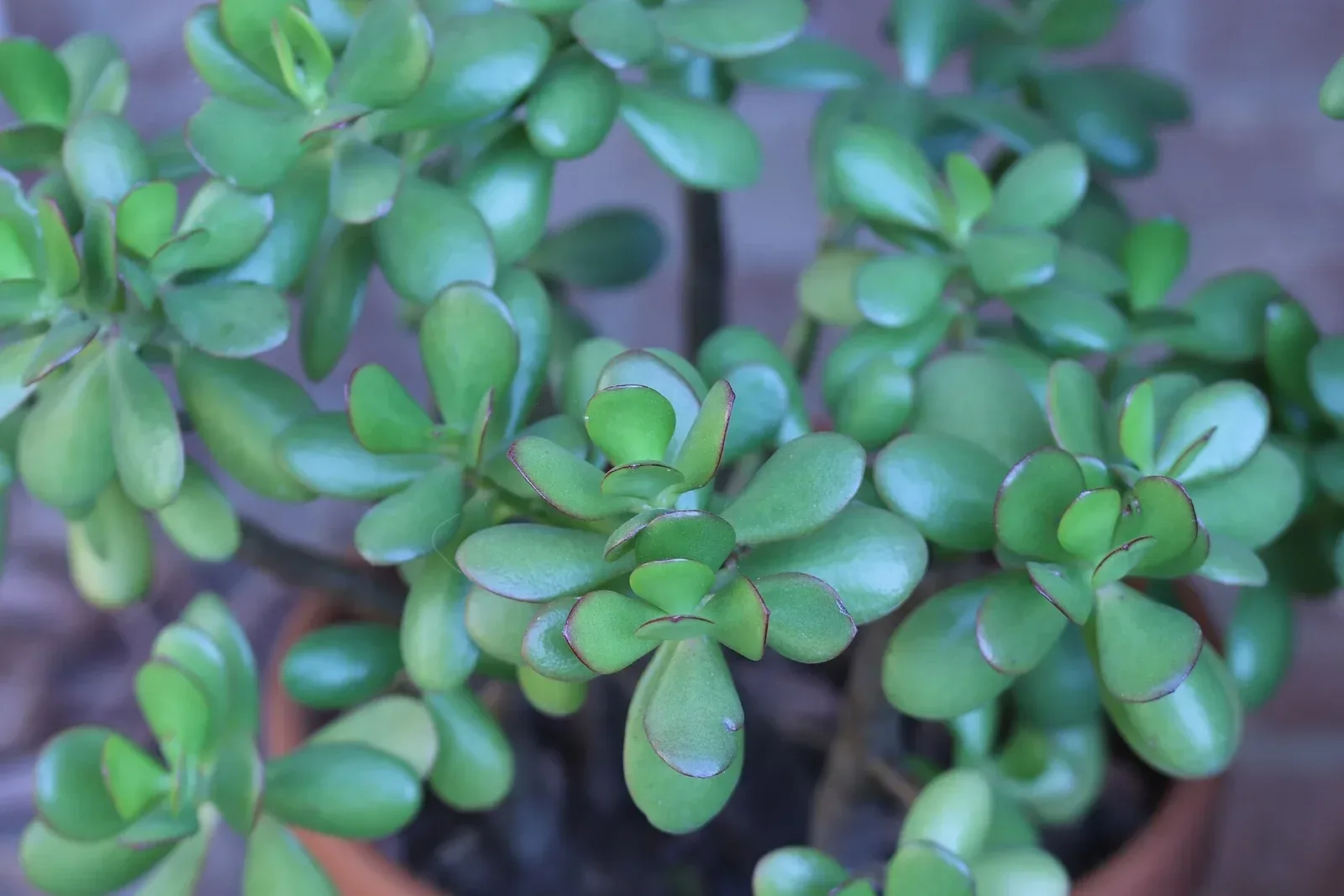
No. In India, money plant usually means pothos (Epipremnum aureum), a trailing vine. Money tree is Pachira aquatica, an upright tree with hand-shaped leaves. Jade (Crassula ovata) is a succulent that is also sometimes called a money plant.
Is a money tree safe for cats and dogs?
ASPCA lists Pachira aquatica as non-toxic to dogs, cats and horses. NC State notes the seeds may be harmful, but plants grown indoors do not produce seed.
Why are my money tree leaves turning yellow?
Check the soil first. Wet, sour-smelling mix points to overwatering or a blocked drainage hole. If the soil is fine, look at light, a recent move, or a cold draft.
How often should I water a money tree?
Water when the top few centimetres of mix feel dry. In a warm room that may be weekly; in winter it can be every two to three weeks. Never let it sit in a full saucer.
Can I keep a money tree in low light?
It survives for a while, but growth gets thin and leaves drop. Bright light without direct afternoon sun gives the best results.
Should I untie the braid?
Keep the braid, but loosen or remove any wire or tape once the trunks hold their shape so it does not cut into the bark.
Will my money tree flower indoors?
Very unlikely. NC State says indoor and braided plants do not flower. Outdoor trees in frost-free tropics can bloom after four to five years.
How big does a money tree get indoors?
Usually 1.8 to 2.4 m over several years, according to NC State. Pruning in spring keeps it smaller.
Can I grow a money tree outdoors in Canada?
Only as a summer patio plant in a sheltered, shaded spot. Bring it inside well before nights drop to about 7°C.
Similar Botanical Matches
Keep exploring
Related plants
Grower field notes
Reader Field Notes in India
Share how this plant performs in your local India climate.