
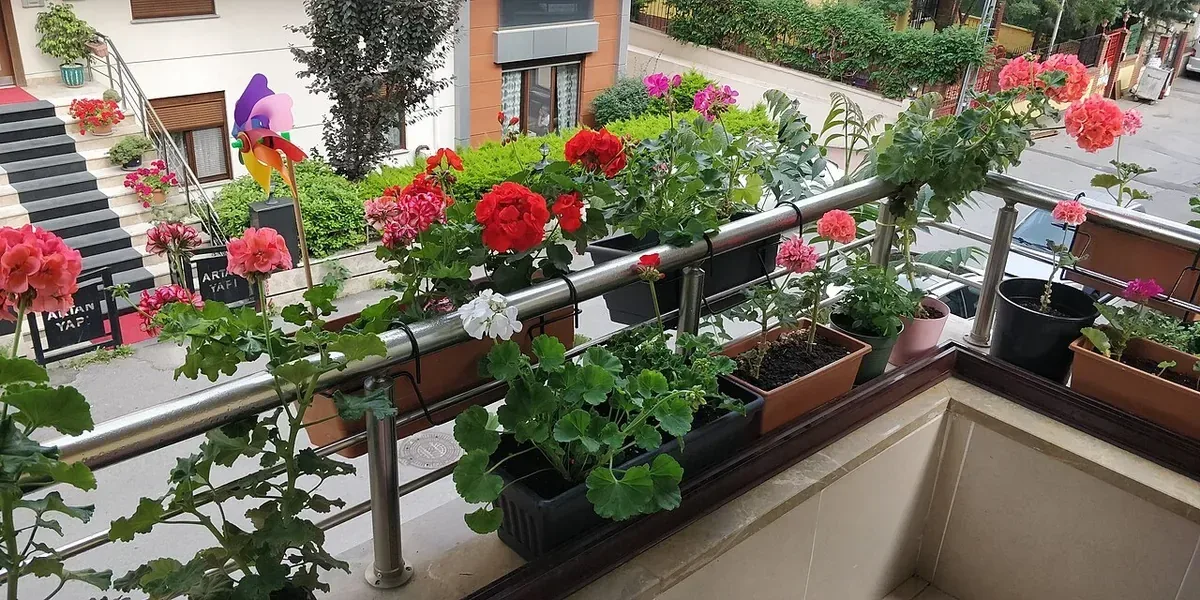
| ☀️ Light | Full sun |
|---|---|
| 💧 Water | Moderate (lightly moist) |
| 🪴 Soil | Free-draining potting mix or fertile garden soil, neutral to alkaline |
| 🌡️ Temp | 7°C – 30°C |
| 🐾 Safety | Cats: toxic · Dogs: toxic |
| 📏 Mature size | 60 cm |
Where It Grows & Climate Tolerance
Pet & Companion Animal Toxicity (Geranium Care in India: Winter Balcony Flowers)
Across the northern plains, zonal geranium is a Diwali-to-Holi balcony flower in red, salmon and pink. In Shimla, Mussoorie and Ooty it switches to a summer bloomer, and during the monsoon it wants a roof over its head.
Care instructions
Care Guide & Maintenance Routine
Plains: buy in October, flowers until March, rests through May and June heat. Hills: plant out once frost ends, bloom from April to October, indoors for winter. Monsoon: under the chhajja, barely moist, spotted leaves removed. Coastal Kerala and Konkan: dry months only.
Light & Sunlight
NC State Extension says zonal pelargonium needs full sun and becomes leggy and blooms poorly in low light. Indoors in winter it needs your brightest window or a grow light.
Watering Schedule
The RHS describes pelargoniums as not thirsty: water moderately from spring to summer and sparingly in winter. NC State notes established plants are drought tolerant, though they flower better with moderate moisture. Pots may dry out between waterings.
Potting Mix & Drainage
Free-draining potting mix or fertile garden soil, neutral to alkaline
Temperature & Humidity
The RHS notes many keep blooming at 7 to 10°C, so a sunny Delhi or Jaipur winter balcony suits it if pots stay on the dry side. Frost in Himachal, Uttarakhand and Kashmir means indoor shelter from December to February. Above roughly 35°C in May, flowering stalls.
Geraniums on Indian balconies
In Delhi, Chandigarh, Lucknow and Jaipur, geraniums arrive in nurseries just as the heat breaks, and by Diwali the balcony railings are lined with red and salmon pots. The plant you buy is a zonal pelargonium; nurseries simply say "geranium", and there is no separate Hindi name in common use. It is a cool-season flower in the plains and a summer one in the hills, which flips most of the calendar you will read in foreign guides.
Buying
At weekly plant bazaars and city nurseries from October to February, pick bushy pots showing several unopened buds and no yellowing near the base. Shimla, Dehradun and Ooty nurseries restock in March and April. Avoid pots with black, shrivelled stem bases, a sign of stem rot. If you want the scented leaves used for oil, ask for rose-scented geranium, a different plant.
Plains calendar
- October to November: pot up new plants and rooted cuttings in full sun, in a gritty mix with cocopeat and sand.
- December to February: peak bloom. Keep pots dry on foggy nights; wet roots and cold together cause rot.
- March: pinch tips and deadhead. A light afternoon shade net helps in Ahmedabad and Hyderabad.
- April to June: rest season. Morning sun only, water early in the day, no feeding. Rajasthan and Vidarbha plants often go half dormant.
Hill calendar
In Himachal, Uttarakhand, Darjeeling and the Nilgiris, set pots out once frost ends in March or April. Flowering runs through summer and into October. Take cuttings in September and keep them indoors on a sunny sill from December, when frost returns.
Monsoon is the hard part
IMD's normal onset is about 1 June in Kerala, 10 June in Pune and 27 June in Delhi. From then until the rains withdraw, a geranium in the open is likely to rot. Move pots under a chhajja or covered balcony, raise them on bricks, water only when the top layer is dry, and snap off spotted leaves. Konkan and coastal Karnataka growers often treat it as an October to April plant and start afresh from cuttings each year.
Balcony or indoors?
This is a sun plant. A south- or west-facing balcony is ideal in winter. Indoors it gets leggy and stops flowering within weeks, even beside a window. In high-rise flats, wind snaps the brittle stems, so put pots against the wall rather than on the railing ledge.
What is eating it?
- Whitefly: shake a branch; a cloud of tiny white moths lifts off.
- Aphids: green or black clusters on buds, with sticky leaves.
- Grey mould: fuzz on faded petals during muggy August spells on Mumbai or Kolkata balconies.
- Blackleg: stems turn coal-black from the soil line upward after monsoon waterlogging; it is incurable, so root a clean tip in a fresh pot.
Common Indian questions
- Why no flowers in May? Heat. Bloom returns when nights cool.
- Safe near a curious cat or the family's Labrador? No; ASPCA lists it as toxic.
- Will it survive a Kolkata or Bhubaneswar summer? Rarely outdoors. Keep cuttings going on a bright, rain-free ledge.
- Can I save it for next year? Yes, cuttings in September root easily.
Seasonal rhythm
Seasonal Calendar
| Month | Care Tasks | Seasonal Focus |
|---|---|---|
| Jan | Fertilize | Delhi, Lucknow, Jaipur balconies in full colour: sun all day, light watering. Shimla and Srinagar: behind glass. Bengaluru: flowering. |
| Feb | Fertilize | Punjab and UP: potassium-rich feed while buds keep coming. Hills: frost still likely. Goa and Konkan: dry season, good blooms. |
| Mar | Prune | Before Holi: deadhead and pinch tips. Hill nurseries: plant out after frost. Hyderabad: a little afternoon shade. |
| Apr | Plant out | Mussoorie, Darjeeling, Ooty: main planting month. Plains: afternoon shade and water when dry. Chennai: heat building. |
| May | Protect from frost/heat | Loo over Rajasthan and Haryana: shade, water only at dawn. Hill gardens: in flower. South: plants resting. |
| Jun | Protect from frost/heat | Kerala and Konkan rains begin: pots under a roof. Delhi: hot, almost no feeding. |
| Jul | Protect from frost/heat | Monsoon nationwide: pots covered and on the dry side; snap off spotted leaves. Hill plants: watch for grey mould. |
| Aug | Protect from frost/heat | Heaviest rain on the west coast: look for blackleg at stem bases. Hills: keep deadheading. |
| Sep | Prune | Rains withdraw from the North: take cuttings and cut back tired plants. Hills: root cuttings for winter. |
| Oct | Plant out | Dussehra to Diwali in the plains: best time to buy and pot new plants. Hills: bring pots inside before frost. |
| Nov | Plant out, Fertilize | Set rooted cuttings out in full sun across the North. Chennai's northeast monsoon: keep pots sheltered. |
| Dec | Protect from frost/heat | First winter blooms in Chandigarh and Agra; keep pots dry on cold, foggy nights. Hill homes: sunny indoor sill. |
Diagnostics
Common Problems & Troubleshooting
Grey fuzzy mould on old flowers and leaves; rusty pustules under leaves; black, rotting stems on cuttings; leggy growth with few flowers in low light; corky bumps under leaves (edema) when soil stays wet in cool, humid weather; yellow lower leaves from overwatering.
Pests & seasonal watch: Whitefly and aphids on dry, dusty winter balconies in the plains. Grey mould, leaf spots and blackleg stem rot during July and August. Caterpillars chewing buds in the hills in spring.
- Yellow leaves — Leaves fade from green to yellow, often starting at the bottom.
- Root rot — Roots turn brown and mushy in soil that stays wet.
- Leggy — Long weak stems with big gaps between small leaves, leaning to the window.
- Thrips — Silvery streaks and twisted new leaves, sometimes with black specks of frass.
- Aphids — Clusters of small soft insects on new tips, often sticky.
- Whitefly — Tiny white insects fly up in a cloud when you touch the plant.
- Leaf spot — Brown or tan spots with a yellow halo, sometimes with tiny dots in the centre.
- Grey mould — Fuzzy grey mould on faded flowers, damaged leaves or soft stems.
- Overwatering — Soil stays wet, leaves yellow or droop, and the pot feels heavy.
- No flowers — A flowering houseplant stays leafy and will not bloom.
- Edema — Corky or blistered spots on leaf undersides after the plant takes up more water than it can lose.
- Stem rot — The stem goes soft, dark or black at soil level and the top collapses.
Similar Botanical Matches
Keep exploring
Related plants
Grower field notes
Reader Field Notes in India
Share how this plant performs in your local India climate.